
Many farmers also could not stay because they found that joining PGS required complying with strict standards, working in an organized manner, and respecting discipline. Over time, not only farmers, but most people participating in PGS came to realize many things, understanding how PGS had transformed them. Everyone became more conscious, more confident, and especially, farmers better recognized the benefits they gained from joining PGS while linking their responsibilities to the community and society.
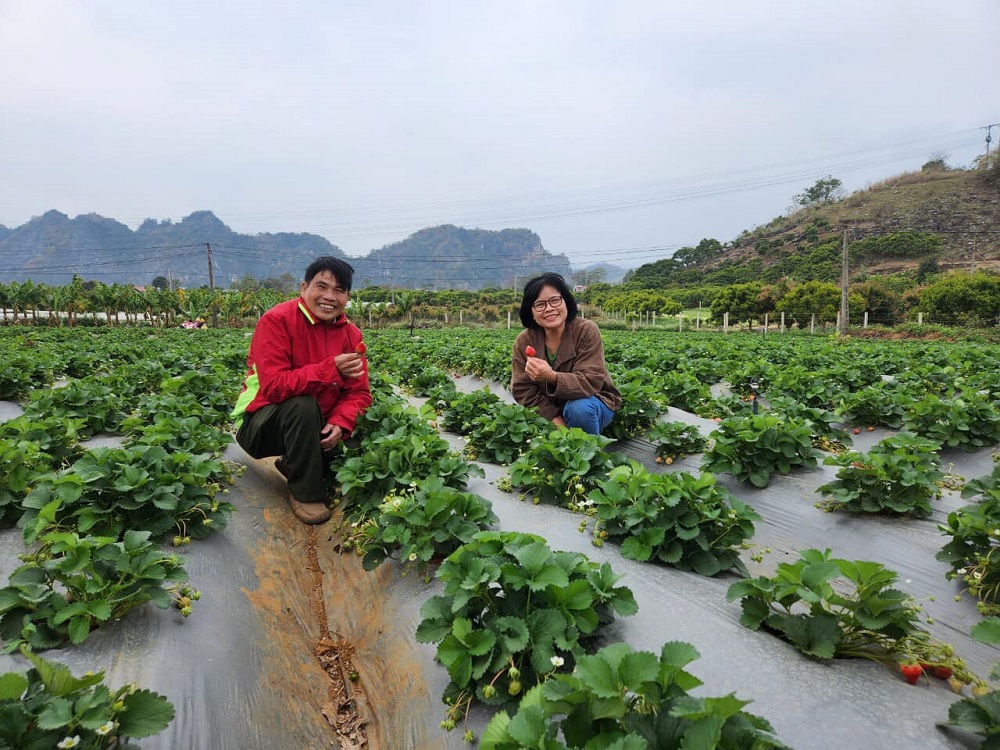
To better understand the role, functions, responsibilities, and development of PGS Vietnam, a reporter from Vietnam Organic Magazine interviewed Ms. Tu Thi Tuyet Nhung, Head of the PGS Vietnam Coordination Committee.
**Accomplishing the "impossible" mission**
Initial steps in building the PGS system
PGS (Participatory Guarantee System) is a term that perhaps not everyone thoroughly and accurately understands. However, Ms. Nhung and her colleagues have been carrying out what seemed to be an "impossible" mission: explaining it so that farmers understand and voluntarily follow it.
Ms. Nhung stated that when they started applying PGS in 2008, not only farmers but everyone did not truly know what PGS was, even though the phrase was translated into Vietnamese as "Participatory Quality Assurance System" (Participatory Guarantee System).
The project invited experts from IFOAM to provide support, organized workshops introducing PGS, and developed guidelines along with supporting forms. Only when truly getting down to building the system—with the direct participation of farmers and enterprises who operate, learn through practice, draw lessons, and make improvements by handling practical situations—did a thorough understanding gradually emerge.
The essence of a PGS is a quality assurance system that encompasses a participatory network of multiple stakeholders who monitor, assure quality, support production, build capacity for all participants, and help farmers connect their products to the market.
**PGS Vietnam continues to grow strongly**
Established in late 2008 against a backdrop where the Government had no policies for Organic Agriculture. A market that had lost trust in safe food posed a huge challenge when introducing organic products to the market and convincing consumers that the produce was grown without chemicals.
It was the determination of farmers, the immense land policy support from local authorities, and especially the decisive role of businesses and clean food stores such as Bac Tom, Tam Dat, Trang An, Soi Bien, etc., standing in solidarity and commitment alongside farmers, that brought consumers to witness farmers' production methods and share the difficulties they are striving to overcome.
The market has gradually embraced the first PGS organic products, and consumers actively seeking more PGS products have motivated farmers to confidently expand production. Increased media coverage of organics and the PGS system has also driven the development of policies supporting Organic Agriculture today.
From the very first PGS established and registered with IFOAM International under the name "PGS Vietnam" in 2009, a set of PGS organic standards was developed to guide farmers in their practices. Consumer trust has created strong motivation for farmers and stakeholders alike.
The PGS approach has been applied in numerous development projects to support smallholder farmers and has spread across many different localities. From a single initial PGS system with 200 farmers across 3 provinces—Hanoi, Ha Nam, and Hoa Binh—there are now 17 PGSs in 13 provinces and cities across all three regions of the North, Central, and South, involving more than 2,000 farmers. This is also a positive outcome of state policies that encourage farmers to participate in PGS, aiming to create stable and sustainable livelihoods for local farming communities.
**PGS is a bridge connecting farmers with businesses and consumers**
Ms. Nhung shared that whether they are farmers or anyone else, making organic or conventional products, everyone hopes their products will be a source of income to cover daily living expenses. PGS, with its function of ensuring quality, also carries an important mission of connecting farmers' organic products to the market.
Recognizing the role of PGS, right from its inception, the project sought and connected with retailers and businesses to participate in PGS, collectively monitor production quality, and integrate products into supply chains serving their customers.
They are a crucial factor driving production by bringing consumers closer to farmers, fostering understanding and empathy for the hard work involved in producing and consuming organic products. This is precisely how PGS helps farmers sell their products and generate a stable income to support their daily lives.
Furthermore, when practicing organic farming, farmers limit their exposure to chemicals, which improves their health and makes the living environment of both farmers and the local community increasingly fresh and clean.
For consumers, organic products bearing the PGS label serve as an assurance of quality amid the lack of market control.
Farmers are able to sell their organic produce, businesses make sales, and consumers have reliable places to turn to — this is precisely the role and mission of PGS.
Need advice on PGS certification?
Contact the PGS Vietnam Coordination Committee for support.
Contact now