
Organic agriculture is not simply about substituting inorganic inputs with organic ones. It carries a much broader meaning rather than merely focusing on production techniques to guarantee quality and yield. Organic agriculture emphasizes producing safe, wholesome, quality products, ensuring fair relationships among humans, between humans and nature, ecological environments, livestock, and all related beings.
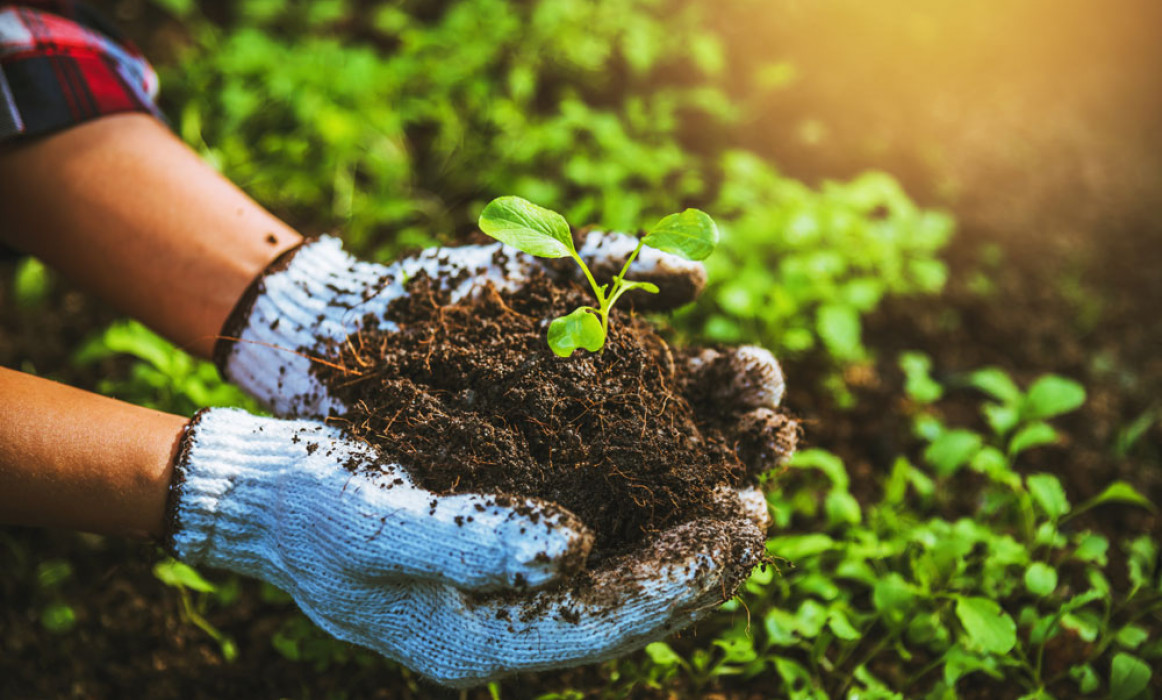
Organic production refers to production in accordance with standards established based on the 4 principles of organic agriculture by the International Federation of Organic Agriculture Movements - IFOAM (https://www.ifoam.bio), certified for compliance by a certification body, and labeled and marketed as organic products according to regulations.
What is Organic Agriculture
Ecological foundation of organic production systems
Organic agriculture is a production system that sustains the health of soils, ecosystems, and people. It relies on ecological processes, biodiversity, and cycles adapted to local conditions, rather than the use of inputs with adverse effects. Organic agriculture combines tradition, innovation, and science to benefit the shared environment and promote fair relationships and a good quality of life for all involved. (According to IFOAM-2005).
Four basic principles of organic agriculture
In 2005, the IFOAM annual conference held in Adelaide, Australia agreed on a common definition of organic agriculture and established 4 principles—Health, Ecology, Fairness, and Care—guiding production and standard-setting for organic agriculture worldwide.
IFOAM developed principles as the foundation for building and developing organic agriculture worldwide. These principles also demonstrate what organic agriculture contributes to the world; combined with ethical principles, they serve as a guiding light for developing standards and organic farming programs tailored to each country across the globe.
Principle of Health
Organic agriculture should sustain and enhance the health of soil, plant, animal, human, and planet as one and indivisible. This principle points out that the health of individuals and communities cannot be separated from the health of ecosystems. Healthy soils produce healthy crops that foster the health of animals and people.
The role of organic agriculture, whether in cultivation, processing, distribution, or consumption, must ensure the maintenance and enhancement of the health of ecosystems and living organisms, from the smallest in the soil to humans. In particular, organic agriculture focuses on producing high-quality, nutrient-rich foods to provide for and protect human health.
Based on this principle, organic agriculture must avoid the use of synthetic chemical fertilizers, pesticides, antibiotics, and stimulants – inputs that have adverse effects on health.
Principle of Ecology
Organic agriculture is based on living ecological systems and natural cycles. Components within the ecosystem work with each other, compete, and sustain life together. This principle roots organic agriculture within living ecological systems. It states that production is to be based on ecological processes and recycling. Nourishment and well-being are achieved through the ecology of the specific production environment. For example, in the case of crops, this is the living soil; for animals, it is the farm ecosystem; for fish and marine organisms, the aquatic environment.
Organic farming systems, grazing pastures, and wild harvesting must fit ecological cycles and natural balances. Management processes must be appropriate to the scale, culture, ecology, and local conditions. Inputs should be minimized through reuse, recycling, and efficient management of energy and materials to maintain and improve environmental quality and conserve resources.
In organic agriculture, achieving ecological balance requires designing farming systems, establishing habitats for organisms, and maintaining biodiversity. Anyone who produces, processes, trades, or consumes organic products should protect habitats and common landscapes, and will benefit from doing so.
Principle of Fairness
Organic agriculture should be built on relationships that ensure fairness regarding the common environment and life opportunities for all living organisms. Fairness is characterized by equity, respect, justice, and stewardship of the shared world, both among people and in their relations to other living beings.
This principle emphasizes that everyone involved in organic agriculture should treat all levels and stakeholders fairly: farmers, workers, intellectuals, distributors, traders, and consumers. It also implies that organic livestock should be respected, provided with living conditions and opportunities consistent with their natural instincts and behavior, and ensured animal welfare.
Fairness is also reflected in the way natural resources are used and managed, ensuring not only ecological integrity but also social justice and trust for future generations. This fairness requires production, distribution, and trade systems to be open and to account for genuine environmental and social costs.
Principle of Care
Organic agriculture should be managed in a precautionary and responsible manner to protect the health and well-being of current and future generations and the environment. Selection of management, development, and application of technologies in organic agriculture must be scrutinized to prevent potential risks beforehand. Organic agriculture does not accept the use of unpredictable technologies such as genetic engineering.
Organic farmers can seek to increase productivity and efficiency, but not at the expense of risking the health and well-being of all living beings. Consequently, new technologies should be evaluated and existing methods considered. Incomplete knowledge of agriculture and ecology requires careful reflection before implementation.
This principle aims at precaution and responsibility as key concerns in management when selecting technologies for organic agriculture. Science is necessary to ensure that organic agricultural products are healthy, safe, and do not harm the ecological environment. However, scientific knowledge alone is not enough—practical experience, indigenous knowledge, traditional methods, and accumulated skills offer valuable, time-tested solutions.
Source: Coordination Committee – PGS Vietnam.
Need advice on PGS certification?
Contact the PGS Vietnam Coordination Committee for support.
Contact now