
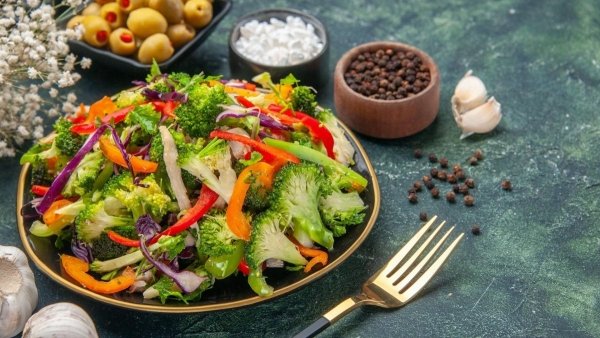
Why can eating raw vegetables cause bloating and flatulence?
Fullness and abdominal bloating are uncomfortable sensations that can occur after eating salads or fresh vegetables. This condition is often related to the amount of fiber, indigestible carbohydrates, and certain compounds found in food.
When these substances are not fully digested in the small intestine and pass into the colon, they are fermented by gut bacteria, producing gas. The accumulation of gas can cause bloating and abdominal discomfort.
Raw vegetables that can cause bloating
Green vegetables and root vegetables are key components of a healthy diet. However, some types contain high amounts of fiber or hard-to-digest carbohydrates, especially when eaten raw, which can cause bloating in sensitive individuals.
Broccoli
Broccoli is rich in vitamins A, C, K, B6, and antioxidants. However, as a cruciferous vegetable, it can also cause increased gas production in some people.
Broccoli contains fiber and raffinose—a carbohydrate that the body lacks enough enzymes to fully break down in the small intestine. When it reaches the large intestine, raffinose is fermented by gut bacteria, producing gas.
Cauliflower
Similar to broccoli, cauliflower contains fiber and raffinose. Certain sulfur-containing compounds in this vegetable can also contribute to gas production during fermentation in the colon.
Bloating and flatulence may be more noticeable when consumed in large portions, especially in people with sensitive digestive systems.
Cabbage
Cabbage is a great source of fiber and many nutrients, but when eaten raw in large amounts, it can cause bloating in some people.
The combination of fiber, raffinose, and sulfur-containing compounds makes cabbage prone to increasing gas production during digestion.
Brussels sprouts
Brussels sprouts also belong to the cruciferous vegetable family and are high in fiber and raffinose. When eaten raw or lightly cooked, some indigestible components can reach the large intestine and be fermented by bacteria, causing gas.
People with a sensitive digestive system may experience more noticeable bloating after eating this vegetable.
Garlic and onion
Garlic and onions contain fructans, a group of carbohydrates classified under FODMAPs. These carbohydrates can be difficult to absorb in the small intestine and are fermented in the colon.
Therefore, eating raw garlic or onions can cause gas and bloating in some people, particularly those with irritable bowel syndrome (IBS).
Bell pepper
Bell peppers are rich in vitamin C and carotenoids. However, their skin and fiber content may cause discomfort for some people with sensitive digestive systems when eaten raw.
The level of response depends on individual constitution and the amount consumed. Not everyone who eats raw bell peppers experiences bloating.
How to reduce bloating when eating raw vegetables
There is no need to completely eliminate vegetables from your diet if you frequently experience bloating. A few adjustments in food selection, preparation, and eating habits can help relieve discomfort.
Opt for cooking: Steaming, boiling, or gently cooking can help soften the texture of vegetables, making them easier to eat and digest.
Eat in moderate portions: Instead of eating a large amount of raw vegetables at once, gradually increase your intake so your digestive system has time to adapt to the fiber.
Chew thoroughly: Chewing thoroughly helps break down food before it reaches the stomach and intestines, aiding the digestive process.
Drink enough water: Drinking enough water throughout the day helps fiber work effectively and supports the smooth transit of food through the digestive tract.
Track foods that cause symptoms: Each person has a different tolerance level. If a vegetable regularly causes bloating, you can reduce the portion size or switch to cooked preparation.
Use certain herbs: Ginger or peppermint can be incorporated into the diet to promote digestive comfort.
Feeling bloated after eating vegetables is not necessarily an abnormal sign. However, if bloating, abdominal pain, diarrhea, constipation, or changes in bowel habits persist or recur frequently, you should consult a doctor to evaluate the cause.