
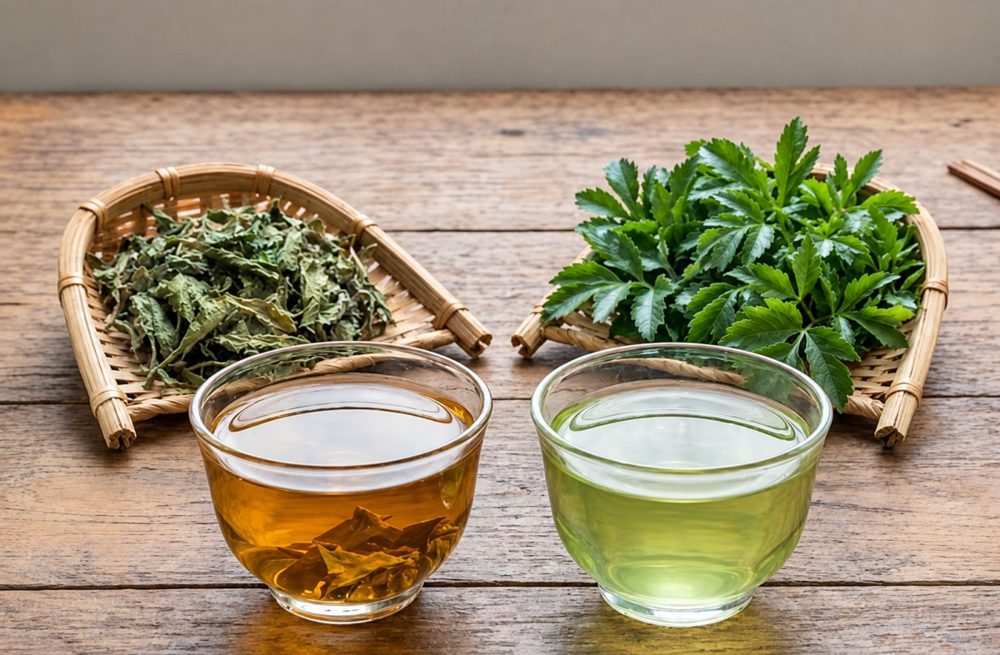
Is fresh or dried Polyscias fruticosa leaf tea better?
Illustration.
Polyscias fruticosa leaf tea has long been used as an herbal beverage. The leaves can be used fresh or dried. However, there is currently insufficient scientific evidence to confirm whether tea brewed from fresh or dried leaves is better for health.
The drying and preservation process can alter the moisture content, flavor, and levels of certain compounds in the leaves. Therefore, choosing between fresh or dried polyscias fruticosa (dinh lang) leaves should be based on your intended use, taste preferences, source of ingredients, and convenience.
1. What is the difference between fresh and dried Polyscias fruticosa leaves?
Dinh lang contains several natural compounds such as saponins along with many other constituents. However, the composition and concentration of these substances can vary depending on the plant variety, the part used, growing conditions, harvest time, and processing methods.
Fresh ming aralia leaves: It has high moisture content and retains the distinctive aroma of freshly picked leaves. When brewed, the tea typically has a pronounced herbal fragrance and a relatively bold flavor. The advantage of fresh leaves is that they can be used immediately, provided they come from a clean and safe source.
Dried Ming aralia leaves: More convenient for storage and use. After sun-drying or dehydrating, the leaves lose most of their water, so the required weight of ingredients differs from that of fresh leaves. The flavor of the tea brewed or decocted from dried leaves may be milder or different compared to fresh ones, depending on the processing method.
One should not rely solely on whether an item is fresh or dried to determine which contains more active compounds or offers greater health benefits.
2. Which type to choose?
If your family has a safely grown and cared-for Ming aralia (Polyscias fruticosa) plant, fresh leaves can be harvested, washed thoroughly, and used immediately. Avoid using leaves from plants that have recently been sprayed with pesticides or are of unknown origin.
Meanwhile, dried leaves are convenient for those who want long-term storage or wish to use them as an herbal tea. When purchasing dried products, one should choose reputable vendors and check the origin, expiration date, and condition of the raw ingredients; do not use products showing signs of mold, discoloration, or abnormal odors.
3. How to Brew Polyscias fruticosa (Ming Aralia) Leaf Tea
For fresh leaves, select clean, disease- and pest-free leaves and rinse them thoroughly under running water. Add a moderate amount to water, bring to a boil, then reduce the heat to a simmer for a few minutes before turning off the stove.
For dried leaves, rinse briefly if necessary, then steep in hot water as you would tea, or simmer in water.
The concentration of Ming aralia (Polyscias fruticosa) tea depends on the amount of raw ingredients and water used. You should not arbitrarily brew it too concentrated under the belief that the more ingredients used, the better the effect.
4. Precautions when drinking ming aralia leaf water
Dinh lang is an ingredient used in folk and traditional medicine, but that does not mean it can be used arbitrarily or as a replacement for prescribed medication.
Consumers should not drink Ming aralia water as a complete replacement for plain water throughout the day or use it in large quantities over a prolonged period without professional guidance. If abnormal symptoms such as nausea, dizziness, abdominal pain, or digestive disorders occur after drinking, stop using it and monitor your health.
Pregnant or breastfeeding women, children, the elderly, individuals with chronic illnesses, and those taking medication should consult a doctor or healthcare professional before regular use.
Brewed Polyscias fruticosa (ming aralia) leaf tea should be stored hygienically. It is best to prepare only as much as needed and avoid leaving it at room temperature for long periods, especially in hot and humid weather.
Overall, both fresh and dried Ming aralia leaves can be used to brew or boil herbal tea. Rather than debating which is 'better', consumers should pay attention to ingredient sourcing, preparation methods, dosage, and their individual health condition.