
Unexpected benefits of xuong song leaves thanks to their unique essential oil
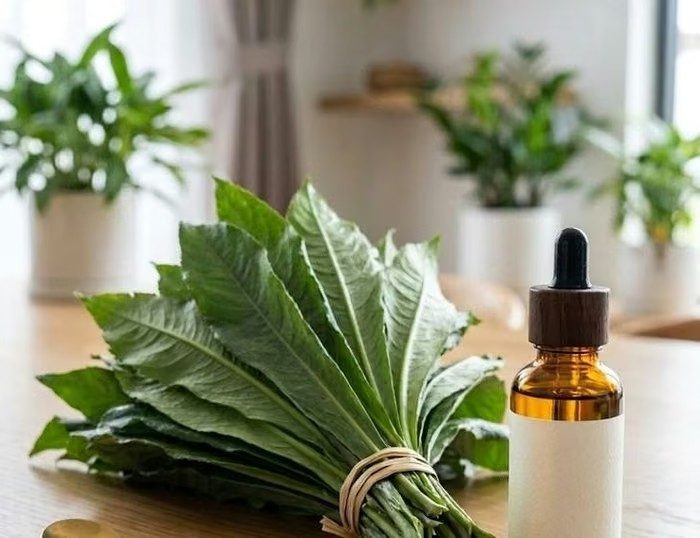
Research shows that Blumea lanceolaria essential oil exhibits anti-inflammatory activity in both cell and animal experiments. Illustrative photo
From a familiar culinary herb, xuong song leaves reveal numerous benefits when viewed from a scientific perspective. Their distinctive aroma, established use in traditional medicine, and experimentally documented anti-inflammatory properties constitute the remarkable value of this plant.
Imparts a distinct aroma to dishes
The scientific name of xuong song leaf is Blumea lanceolaria (Roxb.) Druce, belonging to the Asteraceae family. This culinary herb is quite familiar in Vietnamese cuisine, especially in fresh rolls, fried patties, or dishes requiring a distinctive aroma.
The leaves are oblong with serrated margins and have a distinctive fragrance when crushed or finely sliced. This aroma comes from volatile compounds in the plant's essential oil.
Young leaves are often used to wrap meat, fish, and patties, or finely sliced as a herb. Just a moderate amount is enough to impart a distinctive character to dishes, enriching menus with diverse flavors.
Behind that distinctive aroma lies a complex blend of natural compounds. This is also what makes Blumea lanceolaria a plant of great interest in essential oil and bioactivity research.
From folk wisdom to research on essential oils
Research shows that Blumea lanceolaria essential oil exhibits anti-inflammatory activity in both cell and animal experiments. Illustrative photo
Sambong (Blumea lanceolaria) has long been used not only as a culinary herb but also in traditional medicine. Its leaves and other parts are traditionally employed for conditions such as coughs, colds and fevers, bloating, or respiratory ailments.
Today, scientists are also interested in the plant's chemical composition, especially its essential oils. A study published in Journal of Essential Oil Research in 1991 on the essential oil of Blumea lanceolaria collected in Vietnam noted that methyl thymol accounted for about 95% of the study sample.
Meanwhile, the study by Do Thi Thanh Huyen et al., published in Molecules in 2022, analyzed essential oils from the leaves, stems, and roots of Blumea lanceolaria, identifying 30 compounds. In leaf essential oil specifically, carvacrol methyl ether accounted for 58.28% and o-cymene accounted for 38.29%.
Two studies have shown that the essential oil composition of xuong song is not always identical. The differences may relate to the plant parts, raw material sources, growing conditions, harvest times, and analytical methods.
Essential oils possess remarkable anti-inflammatory activity
This is one of the notable findings about xuong song leaves in modern research. Studies show that xuong song essential oil exhibits anti-inflammatory activity in both cell and animal experiments. When tested on cells involved in inflammatory responses, the essential oil reduced several substances produced during inflammation and influenced the mechanisms involved in this reaction.
In another experiment, researchers induced paw edema in mice to create an inflammation model. The results showed that essential oils from the leaves, stems, and roots of Blumea lanceolaria all helped reduce the extent of swelling during the observation period.
These results show that xuong song essential oil has anti-inflammatory potential, while providing a basis for further research into the active compounds responsible. This remains laboratory and animal-based evidence, which is not yet sufficient to confirm therapeutic effects in humans.
Using Clausena indica leaves in meals
Xuong song leaves are used as a familiar culinary herb, such as wrapping meat, fish, patties, or finely chopped and added to various dishes. This is a simple way to take advantage of the leaves' natural aroma without needing large amounts.
Nutritionally, false ambrosia leaves (Clausena indica) are consumed in small amounts, so they should not be considered a primary source of any single nutrient. Their more notable value lies in their distinct flavor and unique plant compounds, including essential oils.