
Notes on eating Chung cake when suffering from hypertension
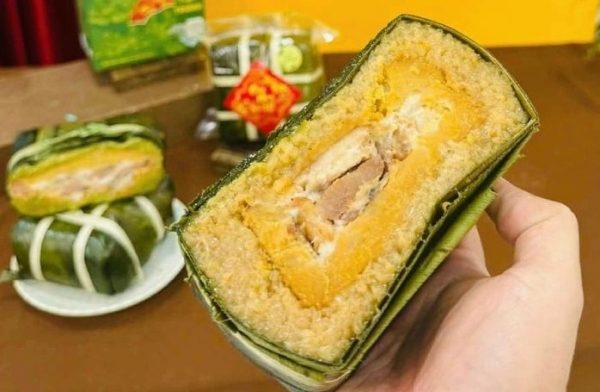
Banh chung is a high-calorie food that should be limited for many people. Photo: Huu TinhBanh chung is an indispensable traditional dish during the Vietnamese Lunar New Year. However, according to Specialist Doctor I Vo Van Long from the University Medical Center HCMC - Campus 3, with its high caloric content and starch-rich ingredients, banh chung can pose several health drawbacks, especially for people with hypertension.
Energy and nutritional composition of Banh Chung
An average square sticky rice cake (banh chung) weighing 1 kg contains between 2,000 and 2,500 calories, depending on the ingredients. Just one piece (about 200 g) already provides 400–500 calories, equivalent to 1–1.5 bowls of cooked rice.
The main ingredient of banh chung is glutinous rice—a carbohydrate with a high glycemic index. 100g of glutinous rice provides about 350 calories, easily spiking blood sugar and causing excess energy intake if consumed in large amounts.
Besides starch, bánh chưng also contains fatty pork—a high source of saturated fat. According to Dr. Long, 100g of fatty meat provides up to 900 calories, significantly increasing the total caloric intake of the meal.
Eating Many Pastries and the Cardiovascular Burden
Dr. Long notes that consuming high amounts of fat not only leads to weight gain but also increases the risk of dyslipidemia, a factor closely tied to hypertension and cardiovascular diseases. Although mung beans in banh chung are rich in fiber and help slow glucose absorption, they are not enough to compensate if the total amount of cake consumed is too high.
Associate Professor Dr. Lam Vinh Nien, Head of the Department of Nutrition and Dietetics at the University Medical Center HCMC, said that during Tet, the imbalance between energy intake and energy expenditure causes many people to gain weight rapidly. For patients with hypertension, weight gain increases the cardiovascular burden, making blood pressure harder to control.
Portion control and side dishes
Experts recommend that people with hypertension can still eat bánh chưng, but need to control their portion size. Each time, they should only eat about one-eighth of a cake as a light meal, without combining it with other carbohydrate-rich foods like rice, noodles, or sticky rice. The ideal time to eat is in the morning or at noon, avoiding the evening when physical activity is low.
In addition, patients should limit eating bánh chưng with pickled scallions and salty braised pork, as the high sodium content can cause water retention and raise blood pressure. They should pair it with plenty of green vegetables and non-starchy salads to add fiber and aid digestion. After eating, light physical activity such as walking for 20-30 minutes helps burn off excess energy.
In addition, individuals with high blood pressure can opt for vegetarian, low-fat, or smaller-sized bánh chưng to easily control their portion size, enjoying the full festive flavor of Tết while safeguarding their health.