
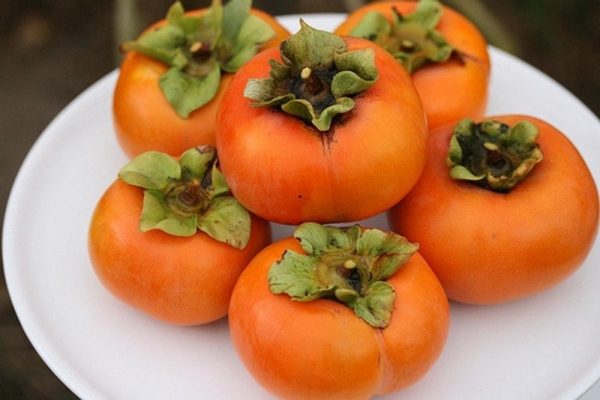
How to eat persimmons to avoid bloating, indigestion, and the risk of bowel obstruction?
Autumn persimmons are loved by many for their sweet, crunchy, or soft texture depending on the variety. However, this fruit contains tannins and fiber, so eating too many, especially when not fully ripe, can cause bloating, indigestion, or constipation in some people.
Why can eating persimmons cause bloating and indigestion?
One of the cited causes is tannins, the compounds responsible for the astringent taste in persimmons. Tannin levels are typically higher in unripe fruits. Persimmons also provide pectin and dietary fiber.
Eating large quantities of persimmons, especially unripe ones, can make it difficult for the body to digest all the fiber. In some cases, these indigestible components can clump with food particles to form a bezoar in the gastrointestinal tract.
This risk is more notable in people with gastrointestinal motility disorders or a history of gastric or intestinal surgery. In some cases, food residue can pass into the small intestine and cause obstruction.
Signs such as severe or cramping abdominal pain, abdominal bloating, nausea, vomiting, and inability to pass gas or stool may indicate intestinal obstruction. This condition requires timely medical examination and intervention.
Therefore, one should not be complacent if symptoms appear after consuming large quantities of fiber-rich foods, including persimmons.
How to eat persimmons deliciously and safely?
Do not eat too many persimmons at one time
Even sweet, ripe persimmons contain fiber. Eating large quantities in a short time can cause a prolonged feeling of fullness, bloating, or gastrointestinal discomfort.
Eat moderate portions and observe your body's reaction, especially if you frequently experience bloating or constipation.
Choose ripe persimmons that are no longer astringent
Green or unripe persimmons are often astringent due to higher tannin content. Therefore, it is advisable to choose persimmons that are ripe according to their variety and no longer noticeably astringent.
For crisp persimmons, it is recommended to consume products that have been properly treated to remove astringency.
Avoid eating persimmons on an empty stomach if you are prone to stomach upset
People with sensitive digestive systems should avoid eating large amounts of persimmons on an empty stomach. Persimmons can be enjoyed in moderation after meals rather than consumed in large quantities at once.
Chewing thoroughly while eating
Chewing food thoroughly helps break it down into small pieces before it reaches the stomach, aiding the digestive process. This is also an especially important habit for young children and the elderly.
Limit combining too many foods rich in tannins or fiber
Avoid consuming too many persimmons at the same time as foods high in tannins or large quantities of other hard-to-digest foods. The key is to manage total food intake and individual digestive tolerance.
Who should be cautious when eating persimmons?
People with a history of gastric or intestinal surgery: Certain post-surgical conditions can affect motility or the digestive process; therefore, be cautious with foods prone to forming bezoars.
The elderly: Chewing ability and gastrointestinal motility may decline with age. Choose appropriately ripe fruits, eat in moderation, and chew thoroughly.
Young children: Children should eat persimmons in age-appropriate quantities under adult supervision, avoiding unripened fruits with high astringency.
People frequently experiencing constipation or bloating: Limit eating too many persimmons at once and monitor your digestive response.
People experiencing abnormal gastrointestinal symptoms: If abdominal pain, vomiting, bloating, or inability to pass gas or stool occurs, seek medical evaluation instead of self-treating at home.
Notes
It should not be assumed that eating persimmons normally will cause intestinal obstruction. This risk is uncommon and typically associated with consuming large amounts, specific food properties, and individual risk factors. A safe approach is to select properly ripe persimmons, consume them in moderation, chew thoroughly, and watch for any unusual bodily signs.