
Changes that help control cholesterol in 30 days
Can cholesterol be reduced in 30 days?
Cholesterol levels can begin to shift within a few weeks when patients strictly follow lifestyle adjustments and, when prescribed, take cholesterol-lowering medication.
With statins, blood lipid levels can improve relatively quickly after starting treatment. However, individual response varies and must be evaluated through lipid profile tests ordered by a physician. Patients should not increase, decrease, or discontinue medication on their own simply because cholesterol levels have dropped.
Alongside medication, lifestyle modifications continue to play a vital role in long-term cholesterol management. A heart-healthy diet, regular physical activity, quitting smoking, weight management, and limiting alcohol consumption can all contribute to improving blood lipid profiles.
What changes should you focus on during the first 30 days?
Heart-healthy eating habits
One of the most important ways to improve cholesterol levels is dietary adjustment. Accordingly, you should reduce your intake of saturated fats, which are commonly found in red meat and full-fat dairy products. Saturated fats can increase LDL cholesterol in the blood.
At the same time, limit/avoid trans fats, which can often be found as partially hydrogenated vegetable oils in some processed foods. These fats are not beneficial to cardiovascular health. Instead, choose sources of unsaturated fats from plant-based foods such as olive oil, seeds, nuts and avocados.
The Mediterranean and DASH diets are highlighted as dietary patterns rich in fiber and unsaturated fats, well-suited to the goal of building a heart-healthy diet.
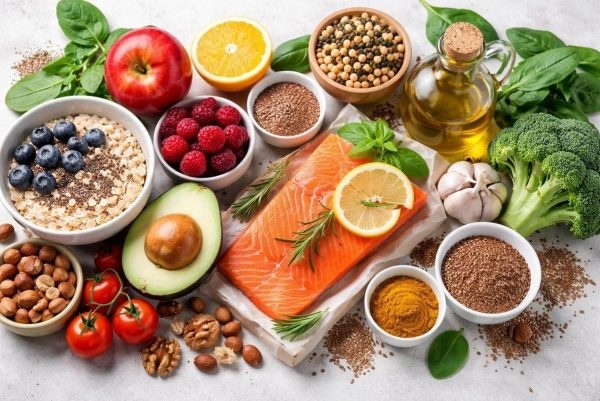
A balanced diet with oats, avocados, salmon, and olive oil is the foundation for effectively improving and controlling blood lipids.
Enhance / Boost fiber-rich foods
Foods rich in soluble fiber that can be included in the diet include oats, Brussels sprouts, beans, pears, apples, and whole grains; these foods can be incorporated into daily meals rather than relying on a single food in hopes of rapidly lowering cholesterol.
In addition, fatty fish such as herring, salmon, and mackerel, along with certain nuts and seeds like walnuts and flaxseeds, provide omega-3 fatty acids, making them suitable choices for a heart-healthy diet.
Maintain regular physical activity
Regular physical activity can help improve lipid profiles while supporting weight management. The recommended target is about 150 minutes of moderate-intensity physical activity per week, such as a 30-minute brisk walk, 5 days a week. Another option is 75 minutes of vigorous-intensity physical activity per week.
If you were previously sedentary, start at a level appropriate for your physical condition, then gradually increase the duration and intensity.
Weight control
If you are overweight or obese, losing about 5–10% of your body weight can help improve cholesterol levels and reduce the risk of certain chronic diseases. Weight loss should be achieved through a sensible diet and increased physical activity, rather than resorting to extreme short-term weight loss methods.
Maintaining regular physical activity combined with healthy nutrition is the golden key to improving blood lipid profiles within 30 days.
Quit smoking
Quitting smoking brings numerous benefits to cardiovascular and circulatory health. It is also an essential part of managing cardiovascular risk factors in people with high cholesterol. Therefore, during the first 30 days, smokers should aim to reduce and eventually quit smoking, rather than solely focusing on dietary adjustments.
Limit alcohol
Alcohol should not be consumed to raise HDL levels or improve cholesterol. The purported benefits associated with red wine are not strong enough to be considered a cholesterol-lowering measure. Alcohol can also interact with certain medications and worsen adverse effects such as dizziness, drowsiness, or impaired concentration. Anyone taking medication should consult their doctor about whether drinking alcohol is appropriate.
Which foods should be prioritized when cholesterol is high?
When cholesterol levels are high, you can prioritize the following food groups in your diet:
Foods rich in soluble fiber: Oats, Brussels sprouts, beans, apples, pears, and whole grains.
Foods providing unsaturated fats: Olive oil, seeds, nuts, and avocados.
Omega-3-rich fish: Salmon, mackerel, herring.
Some foods that provide whey protein: Dairy products.
The key is to build a balanced diet and maintain it over the long term, rather than relying on just a few foods claimed to lower cholesterol.
The goal of lowering cholesterol is not just about bringing a lab result to the desired level in the short term. More importantly, it is about sustaining heart-healthy changes over the long run. During the first 30 days, people with high cholesterol can focus on practical actions: eating a more balanced diet, reducing saturated and trans fats, increasing fiber-rich foods, exercising regularly, managing weight, quitting smoking, and limiting alcohol. For those prescribed cholesterol-lowering medication, it is essential to take the medicine as directed and attend follow-up visits and tests as scheduled. Do not discontinue medication on your own simply because cholesterol levels have returned to normal, as cholesterol management generally requires long-term maintenance.
Some information readers need to know
Cholesterol is an essential substance for the body, participating in numerous functions such as building cell membranes. However, excessively high blood cholesterol levels can be linked to the risk of atherosclerotic cardiovascular disease.
- LDL is often referred to as "bad" cholesterol. LDL transports cholesterol in the blood, and when LDL levels remain high, cholesterol can contribute to the formation and progression of atherosclerotic plaques in arterial walls.
- HDL is often called "good" cholesterol because HDL participates in transporting cholesterol back to the liver. However, one should not rely solely on an HDL level to assess total cardiovascular risk. Assessment must be based on overall lipid profiles and individual risk factors.
In addition to cholesterol, a lipid profile test can also assess triglycerides and several other lipid components. This serves as a basis for doctors to monitor blood lipid levels and determine an appropriate course of action.
What is the role of cholesterol-lowering medications?
When lifestyle changes are insufficient to control cholesterol or patients fall into a category requiring medical intervention, doctors may prescribe cholesterol-lowering medications, including statins.
Statins can help lower LDL relatively quickly, but specific efficacy depends on the type of medication, dosage, and individual response. Therefore, do not self-medicate, self-adjust dosages, or discontinue the medication simply because cholesterol levels have improved.
After starting treatment, scheduled lipid panel tests help assess the response level and allow doctors to decide whether to continue or adjust the treatment regimen.