
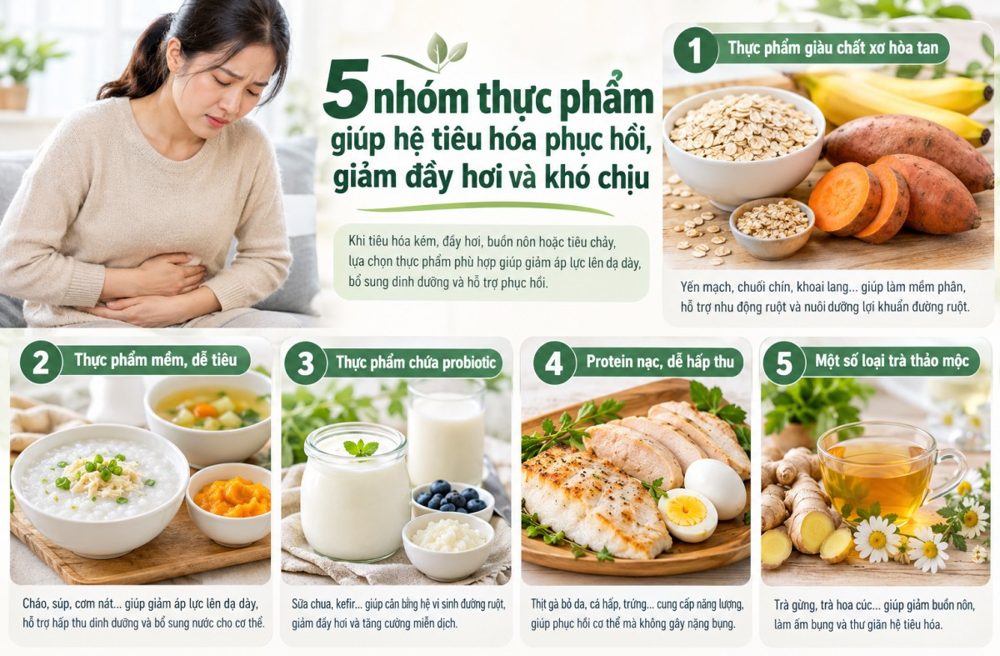
Foods that help the digestive system recover, reducing bloating and discomfort
When experiencing symptoms such as bloating, nausea, diarrhea, or indigestion, your diet should be adjusted to ease the burden on your stomach and intestines. Especially for those who are fatigued or recovering from surgery, choosing easily digestible, nutrient-dense foods can help support the recovery process.
Below are 5 food groups that can be prioritized in the diet when the digestive system is sensitive.
Foods rich in soluble fiber
Oats, ripe bananas, and sweet potatoes are foods that provide soluble fiber. Once in the digestive tract, soluble fiber absorbs water and forms a gel, helping to soften stool, support bowel movements, and prevent constipation.
Certain types of soluble fiber also act as prebiotics, serving as food for beneficial gut bacteria. Consequently, they help maintain microbiome balance and support digestive health.
However, when experiencing severe diarrhea or bloating, fiber intake needs to be adjusted appropriately. Increasing fiber too quickly can make bloating and flatulence more uncomfortable.
Soft, easy-to-digest foods
Porridges, soups, soft-cooked rice, or gently cooked dishes are suitable choices when the digestive system is weak. Soft food reduces the effort of chewing and limits mechanical irritation to the stomach and intestines.
Porridges and soups can also replenish fluids for the body, which is especially useful when patients have diarrhea or poor appetite. During the recovery phase, meals can be divided into smaller portions rather than eating too much at once.
When digestive symptoms subside, one should gradually return to a varied and balanced diet, rather than maintaining an overly monotonous diet for an extended period.
Probiotic-rich foods
Yogurt and certain fermented products contain probiotics, which can help maintain the balance of the gut microbiome. This is of particular interest when the gut flora is altered after antibiotic use.
However, probiotic tolerance varies from person to person. People experiencing diarrhea or lactose intolerance need to choose suitable products and monitor their body's response.
Along with probiotic supplementation, a diverse diet featuring vegetables, whole grains, and appropriate fiber-rich food sources also contributes to maintaining a healthy gut microbiome.
Lean, easily absorbed protein
During periods of physical weakness or recovery from illness, protein is essential for maintaining and repairing tissues. Skinless chicken, steamed fish, eggs, and several low-fat protein sources can be selected to replenish nutrients without feeling too heavy on the stomach.
Give priority to simple cooking methods such as steaming, boiling, or braising until soft, while limiting fried, greasy, and overly spicy dishes. High-fat foods can make some people feel bloated and have indigestion, or worsen uncomfortable digestive symptoms.
Some herbal teas
Ginger tea is often used to help relieve nausea and gastrointestinal discomfort. Some people also drink chamomile tea as a relaxing beverage.
Drink tea in moderation, not too strong, and without adding much sugar. For those with digestive conditions or taking medications, regular use of herbs should be discussed with a doctor to avoid unwanted interactions.
Eating properly gives the digestive system time to recover
When experiencing digestive issues, not every food considered healthy is suitable for everyone. The key is to choose easily tolerated foods, eat smaller meals, stay well-hydrated, and limit alcohol, fried foods, heavily spiced items, or irritating foods.
If diarrhea and vomiting persist, or if there is severe abdominal pain, fever, dehydration, or blood in the stool, patients should be examined to identify the cause and receive proper treatment. In particular, young children, the elderly, and postoperative patients need close monitoring when abnormal digestive symptoms occur.