
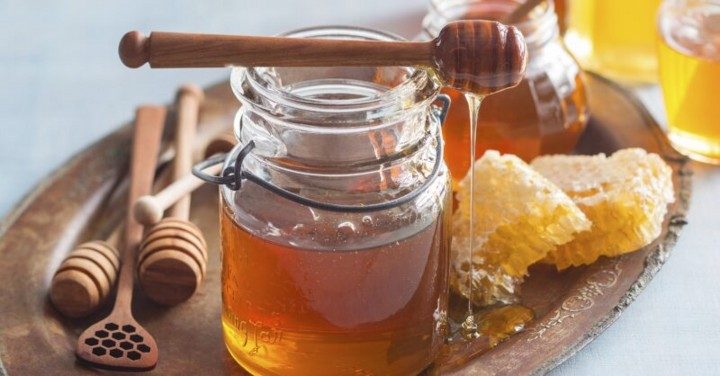
What makes honey a rare food that has no expiration date?
Well-preserved honey may never spoil. (Photo: iStock)Honey has long been considered nature's miracle food. While almost everything in the kitchen—from milk and bread to even rice—has an expiration date, a jar of pure honey stored properly can last from year to year.
Why does honey almost never spoil?
Archaeologists excavating ancient tombs in Egypt found pots of honey dating back 3,000 years, and astoundingly, they were still completely edible. This imperishability of honey is no accident; it is the result of a perfect interplay of chemistry, biology, and honeybee behavior.
Extremely low water content
The first and most critical factor that keeps honey from spoiling is its moisture content. In its natural state, pure honey contains only about 17% to 18% water. This is an extremely low ratio compared to conventional foods.
Biologically, all microorganisms such as bacteria, molds, or yeasts require an environment with a certain level of moisture to grow and reproduce. When bacteria enter honey, a physical phenomenon known as osmotic pressure takes place immediately.
Because the sugar concentration in honey is extremely high and the water content is very low, water from inside bacterial cells is drawn outward to balance the environment. This process radically dehydrates the bacterial cells, causing them to shrink and die before they can cause harm or spoil the honey. In essence, honey is a desiccated, hostile environment for any pathogen.
Honey has an extremely low moisture content, so bacteria cannot grow. (Photo: Dreamtines)High sugar concentration
Honey is a supersaturated solution containing mainly two simple sugars, fructose and glucose, which account for about 80% of its total weight. This concentrated sugar level creates immense osmotic pressure.
Sugar acts like a sponge, drawing out every free water molecule in the surrounding environment. Even if a few resilient mold spores accidentally drift into a jar of honey, they cannot find enough available water to trigger germination.
This high concentration turns honey into a barrier that shuts down any microbial life right from the start.
High acidity
Besides its dry and concentrated environment, honey also possesses another formidable chemical weapon: acidity. The average pH of honey ranges from 3.2 to 4.5.
To put this into perspective, this level of acidity is comparable to that of orange juice or lemon juice, making it a fairly strongly acidic environment. Most bacteria that cause harm and food spoilage prefer neutral or slightly alkaline environments in which to grow.
Honey's highly acidic environment acts as a natural antibacterial agent. It disrupts the protein structure of bacteria, rendering them unable to perform basic life functions. The combination of strong acidity and its properties destroys any microorganism attempting to invade a jar of honey.
Special enzyme from bees
The longevity of honey depends heavily on the bees' processing method. When worker bees collect nectar, they store it in a specialized stomach called the honey stomach.
Here, nectar mixes with enzymes naturally present in the bee's digestive system. One of the most important enzymes secreted is glucose oxidase.
When worker bees bring nectar back to the hive and begin fanning their wings to evaporate water, this enzyme reacts with the glucose present in the nectar. This chemical reaction produces two by-products: gluconic acid (which contributes to the aforementioned acidic pH) and hydrogen peroxide.
Hydrogen peroxide is an extremely potent antiseptic and antibacterial agent. Although the antiseptic content in honey is very small, it is just enough to completely eradicate any bacterial seeds attempting to form in the honey.
Molasses making process
The final reason lies in the bees' extremely sophisticated production and packaging craftsmanship. Nectar freshly collected from floral nectaries has a very high water content, which can reach up to 80%.
Left as it is, nectar would quickly ferment and spoil in just a few days. To solve this problem, after depositing the nectar into honeycomb cells, the worker bees work together to flap their wings continuously without rest.
Bees have a unique vacuum method for extracting honey. (Photo: iStock)This collective action creates strong drafts that accelerate the evaporation of water in nectar, reducing the moisture content from 80% to below 18%. As soon as this perfect golden ratio is reached, the bees secrete wax to seal the honeycomb cells.
This wax cap prevents the honey from coming into contact with humid outside air. It is nature's original and most perfect vacuum-packaging process, preserving honey intact for centuries.
Notes on storing honey
Although theoretically and scientifically honey never spoils, that is only entirely true when honey is stored in an ideal environment or kept tightly sealed. In daily life, honey can still deteriorate in quality or turn sour due to improper usage habits.
The biggest threat to honey is moisture from the air. Honey is hygroscopic, meaning that if you leave a jar of honey uncapped for too long in the air, it will naturally absorb water vapor from the surrounding environment.
When the water content in honey exceeds the 20% threshold, dormant yeast spores immediately wake up and initiate the fermentation process, converting sugar into alcohol and acid, turning honey sour and spoiled. Therefore, the core rule is to always tightly seal the jar's lid after every use.
Another phenomenon that often confuses many people is crystallization. After a period of storage, you may notice honey developing gritty solid particles or solidifying at the bottom of the bottle.
Many people mistakenly think this is a sign of fake honey mixed with sugar or spoiled honey. However, this is entirely a natural physical phenomenon where glucose naturally separates from water to form crystals.
Crystallized honey still retains its quality and safety. Simply place the honey jar in a bowl of warm water at around 40 to 50°C, and the crystals will dissolve on their own, returning the honey to its original smooth, golden liquid state.
Finally, to keep honey delicious and preserve all of its precious nutrients, you should prioritize storing it in high-quality glass or ceramic jars rather than low-quality plastic bottles. Place the honey jars in a cool, dry place away from direct sunlight, and never store honey in the refrigerator, as low temperatures will accelerate the crystallization process.