
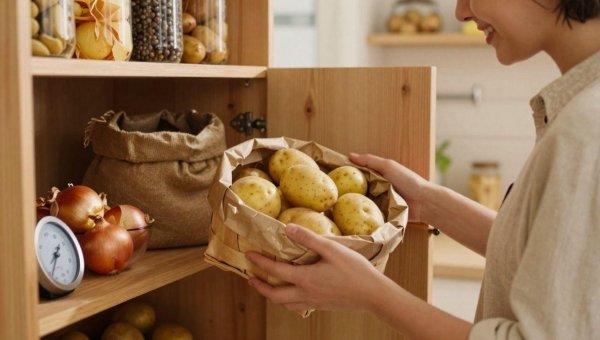
How to store potatoes to prevent sprouting, keep them fresh longer, and ensure health safety
Potatoes are a staple food in many households thanks to their delicious flavor, easy preparation, and rich nutritional value. However, if stored improperly, potatoes can easily sprout, turn green, and become unsafe to eat. So how can you keep potatoes fresh for a long time without sprouting? Here are simple yet effective methods you can apply right at home.
Why shouldn't you eat sprouted potatoes?
Potatoes are usually harvested in the fall and can be stored for months. However, as the weather turns warm and humidity increases, especially in spring, the tubers begin to sprout to enter a new growth cycle.
According to health agency recommendations, sprouted potatoes or those with green skin may contain high levels of solanine – a naturally toxic glycoalkaloid compound. Ingesting large amounts of solanine can cause nausea, vomiting, abdominal pain, diarrhea, dizziness, and even affect the nervous system in severe cases of poisoning.
Therefore, consumers should not use potatoes that have heavily sprouted or turned green to ensure their health and safety.
Principles of proper potato storage
To minimize sprouting, control the three main factors that affect potato growth: light, temperature and humidity. Potatoes retain their quality longer when stored in a dark, dry and well-ventilated environment.

Store in a dark-colored bag to limit light exposure
Light is one of the factors that trigger potatoes to sprout and turn green.
A simple method is to place potatoes in a black plastic bag or a thick, light-blocking paper bag. Then, squeeze out excess air, tie the bag tightly, and store it in a cool, dry place away from direct sunlight.
This method helps reduce the impact of light, thereby slowing down sprouting and extending shelf life for several weeks.
Keep the environment dry using cardboard boxes
High humidity also creates favorable conditions for potatoes to sprout.
You can prepare a clean cardboard box, line the bottom with newspaper or moisture-absorbent paper, and place the potatoes inside. If you have many potatoes, arrange them in layers and place paper between the layers to minimize moisture buildup.
Some people also sprinkle a small amount of baking soda to help absorb moisture in the bin. However, direct contact between the powder and other food should be avoided, and the lining paper should be replaced if there are signs of dampness.
Keeping the container in a cool, dry place with good air circulation will help potatoes retain their quality longer.
Store with apples to slow down sprouting
Some studies show that ethylene gas emitted by ripe apples can help slow down the sprouting process of potatoes under proper storage conditions.
You can place one or two apples in the same bag or container with the potatoes. However, check regularly and replace the apples if they show signs of overripening or spoiling to avoid affecting the quality of the potatoes.
Note that ethylene can also accelerate the ripening process in many other vegetables. Therefore, this method should not be used with ethylene-sensitive produce such as broccoli, peaches, melons, or onions.
Potatoes should not be stored in the refrigerator
Many people assume that low temperatures will keep potatoes fresh longer, but in reality, this is not a suitable choice.
In excessively cold conditions, the starch in potatoes converts to sugar. When cooked at high temperatures, such as during frying or roasting, this sugar can increase the formation of acrylamide – a compound that scientists recommend limiting in food.
Instead of storing them in the refrigerator, potatoes should be kept in a dry, cool place with a stable temperature, away from direct sunlight and heat sources.
Key tips for storing potatoes
To keep potatoes at their best for as long as possible, home cooks should keep the following in mind:
-
Only store intact roots and tubers that are not crushed or scratched.
-
Do not wash potatoes before storing, as moisture will cause them to spoil faster.
-
Inspect regularly to immediately discard any tubers showing signs of softness, rotting, or sprouting.
-
Do not keep potatoes in completely airtight bags if the environment is too hot, as moisture can easily accumulate.