
Tea region identity and the organic development direction
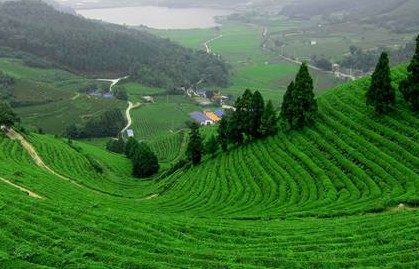
Tan Cuong tea hills (Thai Nguyen)
Thai Nguyen and Shan Tuyet tea regions
When speaking of the most famous tea regions in Vietnam, one cannot overlook Thai Nguyen—known as the "king of teas". Thai Nguyen tea is renowned for its delicate young green rice aroma, gentle astringency, and deep sweet aftertaste that lingers long on the tip of the tongue. What makes its reputation is not only the tea variety, but also the terroir, climate, and the skillful hands of tea growers. Regions such as Tan Cuong, La Bang, and Trai Cai have long become symbols of premium tea. Early morning mist drifting over the tea hills, moderate sunshine, and mineral-rich sandy hill soil create lush green tea buds, converging the essence of heaven, earth, and humankind.
In the high mountains of the Northwest, Suoi Giang (Yen Bai) stands out as a natural treasure. It is home to ancient Shan tuyet tea trees hundreds of years old, their trunks covered in moss and their branches reaching high into the clouds. Suoi Giang tea has a distinctive flavor: bold and wild, with both pronounced astringency and deep sweetness, truly reflecting the spirit of the mountains and forests. The snow-white down on the tea buds not only gives them a unique beauty but also signals exceptional quality. For the Hmong people, tea is not merely an economic product but also the soul of the mountains, a bond connecting people with nature.
Also bearing the profound imprint of Shan Tuyet tea, Ha Giang is a destination sought out by many tea lovers. Ancient tea forests in Hoang Su Phi, Xin Man, Vi Xuyen, and Dong Van grow at altitudes above 1,200 meters, where the climate is harsh and fog is dense. It is precisely these conditions that produce slow-growing tea buds rich in nutrients. Ha Giang tea has a bold flavor and deep aroma, carrying an antique and enduring character, much like the people at the frontier of the country. Each cup of tea is not just a beverage, but a story of time, of the resilience of the tea plants and those who preserve them.
Midland, North Central, and Lam Dong tea
Heading northeast, Tuyen Quang is also a tea-growing region with a long-standing tradition. The rolling tea hills in Son Duong and Yen Son are not too high, but the mild climate and fertile soil allow tea plants to thrive stably. Tuyen Quang tea has a gentle aroma and smooth taste, appealing to many palates. This tea region is gradually transforming towards safe, organic production, bridging economic development with environmental protection.
One cannot overlook Phu Tho, considered the cradle of Vietnamese tea. The tea hills in Thanh Son, Tan Son, and Doan Hung stretch out like lush green carpets. Phu Tho tea possesses a rustic, simple flavor—not overly sharp but enduring, much like this midland region itself. This place was once a center for tea research and breeding, playing an essential role in the development of the nation's tea industry.
Heading to the North Central Coast, Nghe An stands out with the Thanh Chuong tea region. The tea hills here roll softly and vibrantly green amidst the sun and wind of Central Vietnam. Thanh Chuong tea has a bold flavor, a yellowish-green brew, and a distinct aroma, reflecting a climate characterized by intense sunshine and strong winds. These tea hills not only provide a livelihood for local people but have also become an attractive ecotourism destination where visitors can reconnect with the tranquility of nature.
In the Central Vietnam - Central Highlands region, Lam Dong, particularly Bao Loc and Cau Dat (Da Lat), is a hub for high-quality tea production on an industrial scale. Thanks to its year-round cool climate, ideal elevation, and fertile basalt soil, tea thrives in Lam Dong, delivering consistent yields and quality. The region's oolong, green, and black teas not only serve the domestic market but are also exported to many countries. Cau Dat tea is renowned for its pure aroma and delicate flavor, with a refined, modern character that reflects the meeting of tradition and technology.
Beyond the major tea regions mentioned above, many other localities contribute to enriching Vietnam's tea map, such as Son La, Lai Chau, and Lao Cai with their Shan Tuyet tea hills sprawling across high mountains; or Quang Tri and Gia Lai with emerging tea areas establishing their standing. In each place, tea plants take on a unique shape and flavor, closely intertwined with the natural conditions and local culture.
Human values and tea culture
What creates the enduring value of Vietnam's renowned tea regions lies not only in yield or reputation, but also in human stories. They are the diligent farmers picking tea from early dawn, the tea-roasting artisans preserving generational secrets, and the young generation striving to bring Vietnamese tea to the world through a clean and sustainable path. In the context of climate change and market pressures, many tea regions are shifting toward organic farming, preserving ancient tea trees, and respecting the natural growth cycle of the plants.
Tea is not just a crop, but part of culture, a symbol of slowness and depth in Vietnamese life. Amid the rush of modern life, an aromatic cup of tea can still slow people down, reminding us of the land, mountains, forests, and green tea regions that have endured through the years. Vietnam's most famous tea-growing regions are therefore not only a source of pride, but also deserve to be cherished and preserved as a living heritage of nature and humanity.
Đồi chè Thanh Chương (Nghệ An)Organic farming and the value of Vietnamese tea
Organic farming is opening up a new, sustainable, and promising direction for Vietnamese tea plants. By gradually phasing out chemical fertilizers and synthetic pesticides, tea plants grow in a healthier natural environment, soil fertility is restored, and the microbial ecosystem is balanced. As a result, tea plants are robust from the roots, and tea buds develop slowly but steadily, accumulating richer nutrients and a purer flavor.
Organically farmed tea differs not only in quality but also in value. Its aroma is deeper, the astringency delicate, and the sweet aftertaste lingering and stable, clearly reflecting the terroir of each growing region. More importantly, organic tea meets the growing domestic and international market demand for safe, transparent, and eco-friendly products. When consumers are willing to pay a premium for kindness to the soil and health, the economic value of Vietnamese tea is also elevated. Organic farming is therefore not merely a production method, but a pathway for Vietnamese tea to affirm its quality, build its brand, and claim its rightful place on the global tea map./.