
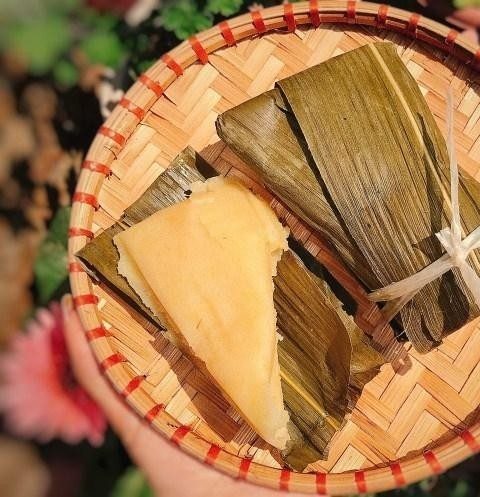
Ingredients and cultural significance of young corn cakes
Chewy, soft corn cake, rich with rustic flavors.For mountain communities, corn is an important crop in daily life and economic development. Beyond being an important staple food, corn kernels are used to make many dishes with a strong local identity, such as: men men, banh duc ngo, che ngo and ruou ngo men la… Among these, banh ngo non is a favorite for its natural aroma, soft, chewy texture and rich taste of home.
Select corn and prepare the dough
Ms. Dam Thi Liet, from Ban Luoc hamlet, Nguyen Binh commune, who has many years of experience making corn cakes, shared: The cake-making season usually starts from June to August, when the glutinous corn is in its milky stage, with plump kernels and a mild sweet taste. I go to the fields early in the morning, carefully select each ear of corn, bring them home to husk, remove the kernels, and grind them finely. To make the cakes chewy and fragrant, no water is added during grinding to preserve their natural sweetness. Depending on each family's taste, the amount of sugar or molasses is adjusted accordingly, creating a unique flavor unlike anywhere else.
Besides the main ingredient of young corn, many families also add a small amount of glutinous rice or yellow corn to create an appealing color and enhance chewiness for the cake. Some places still preserve the tradition of using well-filtered wood ash water so that the cake gains a natural golden luster and turns softer after steaming.
Wrapping in corn husks and steaming the cakes
To fully preserve the distinctive flavor of young corn, the makers wrap the cakes exclusively in corn husks. The husks are carefully selected, softened and skillfully wrapped around the ground corn thoroughly mixed with sugar. Each small cake is wrapped firmly, arranged neatly in a steamer and cooked over medium heat for more than an hour. Once cooked, the gentle, sweet scent of young corn blends with the natural aroma of the husks, creating a distinctive, irresistible appeal.
Unwrapping the outer leaf layer reveals the cake's beautiful golden hue. Soft, chewy, subtly sweet, and infused with the fragrance of young corn, it offers diners a distinct taste of the rustic cuisine of the highlands. On rainy days or chilly afternoons, savoring the warm cake alongside a cup of green tea makes its flavor even richer.
Rustic countryside gifts in memory and tourism
For many people in Cao Bang, banh ngo is also closely tied to childhood memories. When life was full of hardship, this simple treat accompanied adults to the upland fields and children to school. Prepared by mothers and grandmothers early in the morning, these cakes not only filled hungry stomachs but also embodied the love and tireless dedication of highland women.
Nowadays, despite the emergence of many modern cakes and pastries, fresh young corn cakes still retain their distinct appeal. At local periodic markets or community tourism sites, this rustic delicacy is always sought after by visitors as a gift deeply imbued with Cao Bang's identity. Many businesses and restaurants have also added corn cakes to their menus to introduce the beauty of local culinary culture to tourists near and far.
Without fussy ingredients or elaborate preparation, young corn cakes still carry the distinctive flavor of the mountains and forests, along with the craftsmanship of the baker. Through all of life's changes, that rustic countryside treat is still preserved as part of memories and a fine feature in the culinary culture treasure of Cao Bang.