
Growing and marketing Buddha's hand bananas for Tet
Appearance and decorative meaning
These days, the praying-hands banana garden—also known as Buddha's hand banana—owned by Mr. Truong Hoan Thien in Tan Yen hamlet, Gia Kiem commune (Dong Nai province), is gearing up for harvest to supply the Lunar New Year market.
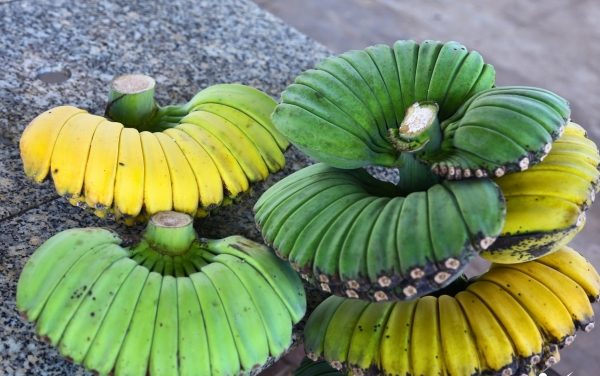
In the middle of a lush green banana orchard of about 1 hectare, unusually shaped banana bunches gradually appear as they are carefully shielded and tended by growers. Each bunch spreads its hands evenly, resembling hands clasped in prayer, creating a unique look completely distinct from conventional banana varieties.
Research indicates that Buddha's hand bananas are a relatively new banana variety in Vietnam. Beyond their striking appearance, these bananas are popular for their auspicious and spiritual symbolism, representing peace and prosperity. Consequently, during Tet, Buddha's hand bananas are sought after for decorative displays on the traditional five-fruit tray to welcome the new year.
The trial cultivation and garden expansion process
Mr. Thien shared that about two years ago, while visiting new agricultural production models, he accidentally discovered this unique banana variety. Recognizing its market potential, he decided to buy 200 seedlings for trial planting.
“At first, I planted this banana variety just to see whether it suited the local soil conditions. To my surprise, the plants grew well, were little affected by the weather and had a fairly stable market. Seeing the results, I felt confident enough to propagate more plants and expand the growing area to around 1ha, as it is today,” Thien shared.
Buddha's hand bananas have a growth period similar to many other banana varieties, but the care process requires more meticulous attention. As the plant produces banana bunches, growers must monitor them closely to ensure the hands develop evenly without breaking or warping, meeting the display demand for the Lunar New Year.
“People mainly buy Buddha’s hand bananas for display and ceremonial offerings, so they are very particular. The bunches must look attractive, with evenly spread hands resembling the Buddha’s hand, to fetch a good price. That is why they sell for much more than ordinary bananas,” Thien said.
Selling price and market demand
Thanks to expanding the cultivation area, this year's yield of Buddha's hand bananas at Mr. Thien's farm has increased significantly. On average, each bunch weighs between 2 and 5 kg, depending on size and shape. Farm-gate prices range in the hundreds of thousands of dong per bunch. Prime bunches that meet Tet display standards can fetch even higher prices.
Customers contacting Mr. Thien's banana plantation mainly come from HCMC and Hanoi, with most placing orders early to meet the Tet holiday market. In addition, many traders and fruit shops in Dong Nai, after learning about this banana variety, have also proactively reached out to buy.
“There is barely enough supply for this year’s Tết market. As Buddha’s hand bananas become more widely known, orders are increasing very quickly. I only dare to accept small orders because I cannot supply enough for traders buying in bulk,” Thien said.
According to several fruit traders in Dong Nai, there is a growing trend among consumers to seek out uniquely shaped fruits with symbolic meanings for display during the Lunar New Year. Alongside familiar fruits, novel and distinctive agricultural products like Buddha's hand bananas are creating a sensation in the market.
Potential to enhance agricultural product value
For farmers, boldly making transitions and exploring new crop varieties suited to market demand is seen as a sustainable direction, contributing to higher incomes, especially during peak occasions like the Lunar New Year.
Mr. Nguyen Van Thang, Deputy Director of the Dong Nai Department of Agriculture and Environment, stated that Buddha's hand banana is a new product introduced to Vietnam from abroad. If quality and market outlets are well controlled, this banana variety has great potential, contributing to enhancing the value of agricultural produce in the market, especially during the peak Lunar New Year season.