
Functions and management of nitrogen in farming
Nitrogen is the foundational nutrient for all vital activities in crops, but it must be applied at the right time, in the right dose, and balanced with other nutrients to avoid adverse effects. Clearly understanding the symptoms of nitrogen deficiency and excess will help farmers manage crop nutrition properly, thereby improving yield, quality, and plant longevity.
Nitrogen in plant structure and function
Nitrogen is the primary component of protein—the substance that builds plant cells and tissues. Proteins participate in almost all of a plant's vital processes, from forming new tissues to enzyme activities. When plants receive adequate nitrogen, protein synthesis occurs vigorously, helping them grow rapidly, develop lush green foliage, and enhance overall vigor.
Moreover, nitrogen is an essential component of chlorophyll—the green pigment that enables plants to photosynthesize. Thanks to chlorophyll, plants absorb sunlight and convert it into energy to produce organic matter. When nitrogen is deficient, chlorophyll content declines, leaves turn pale yellow, and photosynthetic capacity drops, resulting in stunted growth and low yields.
Another important role of nitrogen is promoting the growth of stems, leaves, and young shoots. Nitrogen helps enhance cell division, allowing plants to develop strong vegetative biomass. This is especially crucial for leafy crops like greens, or plants in their early vegetative stages. When supplied with adequate nitrogen, plants usually feature deep green foliage and large leaf surface areas, thereby increasing their capacity to absorb sunlight and accumulate nutrients.
Furthermore, nitrogen is involved in the formation of nucleic acids (DNA, RNA), which are the genetic material of cells. As a result, nitrogen helps regulate the growth, development, and heredity of plants. It can be said that nitrogen not only helps plants "grow" but also helps them "function" efficiently.
IllustrationForms of nitrogen absorbed by plants and signs of deficiency and excess
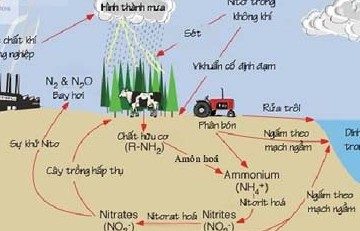
However, crops cannot directly absorb nitrogen in the form of atmospheric nitrogen gas (N₂). Nitrogen needs to be converted into readily absorbable forms, such as nitrate (NO₃⁻) or ammonium (NH₄⁺), through soil mineralization or microbial activity. This is why soil management and microbial ecosystems play a vital role in providing nitrogen to plants.
When plants lack nitrogen, common symptoms include yellowing leaves, especially older leaves turning yellow first because nitrogen is a highly mobile element within the plant. Plants grow slowly, with slender stems, few branches, and low yields. In many cases, plants may flower prematurely with poor quality. Prolonged nitrogen deficiency will severely affect the entire growth cycle of the plant.
Conversely, excessive nitrogen fertilization causes plants to overdevelop stems and leaves, leading to an imbalance with other parts such as roots, flowers, and fruits. Plants become prone to lodging, pest infestations, and delayed flowering and fruiting. In particular, excess nitrogen can reduce agricultural product quality, for example, causing vegetables to have high nitrate levels, which is harmful to consumers' health. In addition, excess nitrogen can be washed away, polluting water sources and the environment.
Nitrogen (N) is an essential macronutrient that plays a central role in plant growth and developmentApply nitrogen judiciously and supplement with natural sources
Therefore, nitrogen fertilizer must be applied scientifically and reasonably. Farmers need to base application rates on crop variety, growth stages, and soil conditions to apply the right dosage of nitrogen. Generally, crops require more nitrogen during periods of vigorous vegetative growth (leafing and stem development), with requirements tapering off as they transition into the flowering and fruiting stages.
Alongside chemical fertilizers, natural nitrogen sources such as well-rotted manure, green manure, or legumes also play an important role. Legumes have the ability to fix atmospheric nitrogen thanks to symbiotic bacteria in their roots, contributing to soil enrichment. Crop rotation with legumes is an effective practice for replenishing nitrogen naturally and sustainably.
In the trend of sustainable agricultural development, nitrogen management is receiving increasing attention. The goal is not only to boost yields, but also to minimize negative impacts on the environment. Solutions such as the use of slow-release fertilizers, smart fertilizers, or the application of fertigation technologies are being increasingly widely adopted.
It can be seen that nitrogen is an indispensable nutrient for crops, playing a decisive role in their growth, development, and yield. However, nitrogen is only truly effective when used properly. Understanding the role of nitrogen not only helps growers enhance production efficiency but also contributes to building a safe, sustainable, and eco-friendly agriculture./.