
Hue City: Various pests showing an upward trend on rice crops
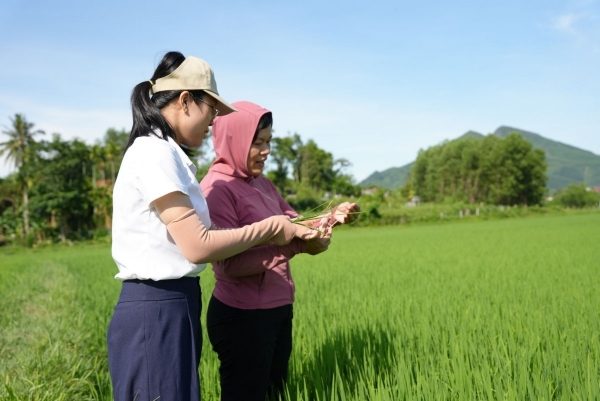
It is necessary to proactively inspect and assess pest and disease conditions in the fields. Photo: Thu PhuongAccording to Report No. 244/BC-TTBVTV dated June 25, 2026, from the Sub-Department of Crop Production and Plant Protection (Hue City Department of Agriculture and Environment), given the prolonged hot weather, high temperatures, and current summer-autumn crop production conditions, localities and farmers should proactively monitor the emergence and development of pests and diseases to implement timely and effective management and control measures, minimizing damage to agricultural production.
Many pests tend to increase on rice crops
According to forecasts, rats will continue to cause increasing damage in areas where control measures do not meet technical requirements, especially near graveyards, dikes, village outskirts, and places with favorable conditions for rats to inhabit and shelter.
According to forecasts, rats will continue to cause increasing damage to rice crops... Illustrative photoIn addition, rice leaf folders, planthoppers/leafhoppers, and sheath blight will continue to build up in density and infestation rates, especially in early rice crops currently at the panicle initiation stage. Other pests and diseases are present at low levels and have not significantly affected crop growth and yields.
To respond proactively, local authorities need to guide farmers to inspect their fields regularly, apply balanced top-dressings of fertilizer at the right time during panicle development, and maintain appropriate water levels in the fields from panicle development through heading and ripening to protect rice plants against heat shock during prolonged hot weather.
Rat eradication efforts must continue to be implemented synchronously and regularly to limit pest density in the fields. People must strictly avoid using electricity in any form to trap rats, in order to ensure human safety and comply with legal regulations.
In parallel, it is necessary to strengthen the investigation, forecasting, and prediction of other pests to proactively develop appropriate and effective management plans.
Notably, under the current high temperature conditions, farmers should spray plant protection products in the late afternoon, avoid mixing multiple chemicals in a single spray, and ensure the correct water volume per unit area according to specifications to improve pest control efficacy.
Proactively controlling diseases on rubber trees
For rubber trees, latex bleeding and tapping-panel stripe canker remain diseases of concern. Local authorities need to step up inspections, detect infections early and take prompt action to prevent widespread outbreaks.
Black stripe disease on rubber tapping panelsIn addition, it is necessary to continue monitoring the development of other pests and diseases to implement appropriate management measures, prioritizing localized treatment as soon as diseases emerge, contributing to protecting orchard yield and longevity.
Strengthen care and prevention of gummosis
On fruit trees, especially Thanh Tra pomelo, gummosis, leaf miners, stem borers, twig borers, and aphids continue to emerge and cause damage.
Specialized agencies recommend that farmers enhance crop care, apply balanced fertilization, and proactively irrigate to help trees nurture fruits well and improve their pest and disease resistance. At the same time, synchronized measures should be implemented to control gummosis on Thanh Tra pomelo trees to limit the risk of widespread outbreak.
Monitoring, projecting, and forecasting other pests and harmful organisms also need to be maintained regularly to ensure timely and effective management and control measures.
Strictly controlling mosaic disease and whitefly vectors
For cassava, mosaic disease continues to occur, especially in areas planted with infected stem cuttings from previous seasons.
Cassava mosaic disease continues to break out on cassava plants. Illustrative photoTherefore, localities need to strengthen monitoring, detection, and forecasting of pest populations, particularly whiteflies—the vectors transmitting cassava mosaic disease—in order to direct spraying at the right time and improve pest management efficiency.
Proactively preventing and controlling root rot and anthracnose
On lotus plants, diseases such as root rot, stem rot, anthracnose, and leaf spot, along with thrips and lotus leaf miners, are likely to emerge and cause localized damage in certain production areas.
Farmers need to enhance crop care and apply balanced fertilization to promote healthy plant growth; at the same time, spray against root rot, stem rot, and anthracnose as soon as the diseases appear to curb the spread and minimize damage.
Surveys, forecasting, and early warning for other pests and diseases also need to be carried out regularly to promptly implement effective prevention and control measures.
Monitor pests and diseases, care for crops properly
For vegetables, other field crops and flowers, leaf tip blight, leaf-eating caterpillars, flea beetles and several other harmful organisms are forecast to occur at low levels.
Hue City's agricultural sector advises farmers to continue caring for crops, replanting/thinning, and applying appropriate fertilizers for good crop growth and development, while regularly monitoring pest and disease developments to implement timely management and control measures, limiting impacts on crop yield and agricultural product quality.
Monitoring pests and diseases and properly caring for crops will play an important role in protecting production and enhancing economic efficiencyProactively forecasting, monitoring, and implementing pest and disease control measures in a synchronized and scientific manner will make a vital contribution to protecting production, improving economic efficiency, and ensuring the sustainable development of the agricultural sector amid today's complex weather developments./.