
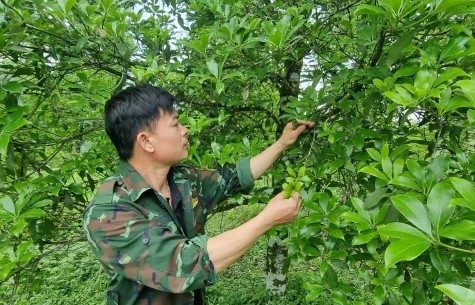
Propagating Star Anise Trees by Layering and Grafting
Propagating star anise through layering and grafting is fast and effective compared to traditional methods
However, propagating star anise from seed often leads to high variation rates, uneven tree growth, and slow yields. Therefore, grafting is considered an effective solution to maintain the desirable traits of the mother tree, shorten the initial establishment period, and improve the yield and quality of star anise orchards.
Advantages of grafting
Propagation by grafting is a method that combines a rootstock (a seedling grown from seed) and a scion (taken from an elite mother tree). This method offers many outstanding benefits. First, grafted plants retain the genetic characteristics of the mother tree, such as high yield, large fruit, high essential oil content, and good resistance to pests and diseases. Second, grafted plants grow faster, shortening the time to harvest to usually only 4–5 years after planting, while seed-grown trees can take 7–8 years. In addition, grafted plants have high uniformity, making care and harvesting convenient.
Selecting rootstocks
Rootstocks play a vital role in determining the growth vigor and adaptability of star anise trees. Rootstocks are typically grown from the seeds of healthy, vigorous, pest- and disease-free star anise mother trees. Seeds are harvested from ripe fruits, cleaned, and sown into loose, nutrient-rich potting bags. After about 8–12 months, when seedlings reach a height of 25–40 cm and a stem diameter of about 0.5–0.8 cm, they can be used as rootstocks. The plants must show balanced growth, have straight stems, be free of deformities, and carry no pathogens. Prior to grafting, proper care is required to ensure strong seedlings and a high graft success rate.
Select scions for grafting
Scions should be taken from high-yielding, stable, and high-quality elite mother trees. Choose semi-woody branches (neither too young nor too old), with a diameter similar to or slightly smaller than the rootstock. The scions must be healthy, pest- and disease-free, with clearly visible dormant buds. The best time to harvest scions is early morning or cool late afternoon when plant moisture is high. After cutting, scions must be stored in cool conditions to prevent dehydration. A damp cloth or plastic bag can be used for temporary moisture retention before grafting.
Grafting season
The star anise grafting season is usually carried out in two main periods: spring (February–April) and autumn (August–October). During these times, the weather is cool and humidity is high, which favors the healing process and the growth of the scion. Avoid grafting during periods of intense heat or prolonged severe cold, as this will reduce the survival rate.
Common grafting methods
Various grafting methods are applied to star anise trees, with the most common being bud grafting and scion grafting. Bud grafting (T-budding): Make a T-shaped incision on the rootstock and gently peel back the bark. Then, take a bud from the mother branch, insert it into the incision, and wrap it tightly with plastic tape. This method saves grafting material and yields a high survival rate when properly performed. Scion grafting (side-cleft grafting or approach grafting): Cut the top of the rootstock, make a small cleft, bevel the scion, and insert it into the cleft. Secure it with tape and seal the graft union. This method is suitable when rapid propagation of a large number of seedlings is needed.
Grafting technique
When grafting, use a sharp, clean grafting knife to ensure clean cuts without crushing the plant tissue. Movements must be quick and precise to prevent moisture loss and minimize disease infection. Once grafted, wrap the graft union tightly with specialized plastic tape to retain moisture and secure the union. After about 15–25 days, if the bud remains green and has not dried out, it is a sign of successful grafting. As the graft shoot develops, remove the tape at the right time to avoid constricting the plant's growth.
Post-grafting care
Post-grafting care is the decisive step for the survival rate and quality of saplings. Grafted plants should be placed in an environment with mild light, away from direct sunlight. Water regularly to maintain moisture without causing waterlogging. At the same time, inspect and remove shoots growing from the rootstock to concentrate nutrients on the scion. After 2–3 months, once the scion develops stably, light fertilization can be applied to stimulate growth. When the plant reaches a height of about 40–60 cm, it can be taken from the nursery for planting.
To improve the effectiveness of propagation by grafting, keep the following points in mind: select the right elite mother plant; keep grafting tools clean; graft at the appropriate time of year; care for the rootstock properly before and after grafting; and monitor regularly to address any problems promptly.
Propagating star anise trees through grafting is an effective and viable approach to developing high-quality star anise raw material areas. Applying proper techniques not only helps improve yield and product quality, but also contributes to conserving and promoting the valuable genetic resources of Vietnamese star anise. As market demand continues to grow, scaling up this model will bring great economic benefits to farmers and the agricultural sector./.