
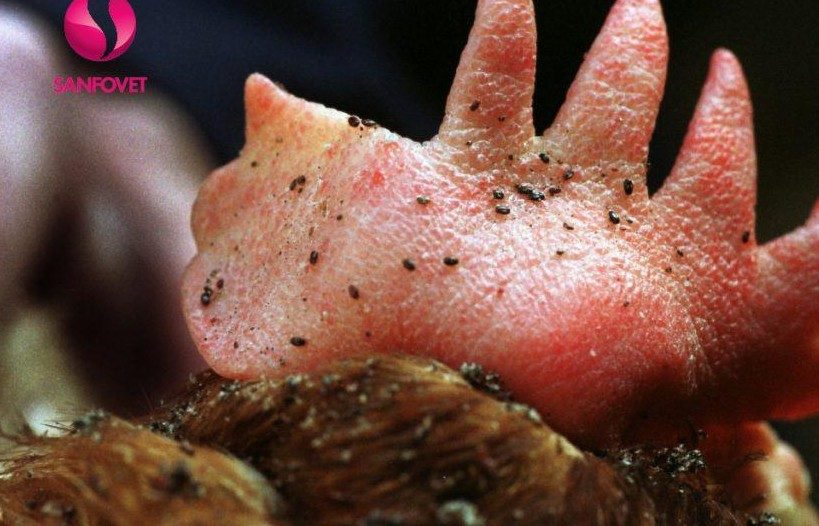
Poultry mites - the farmer's hidden enemy
Illustration
Although this parasite is only a few millimeters in size, the damage it causes can reduce productivity, weaken chicken flocks, and even lead to mass mortality if not controlled. Poultry mites are arthropod parasites that survive by sucking host blood. They often hide in coop crevices, nesting boxes, straw, or dark corners during the day, coming out only at night to feed on chickens. The most common species is the red poultry mite (Dermanyssus gallinae) – a nightmare for poultry farmers. What is dangerous is that the mite's life cycle is very short (only about 7–10 days), but their reproduction rate is extremely fast. A single female mite can lay dozens of eggs, and in a short time, the mite population in the coop can swell to thousands or even millions.
Signs to identify chicken mites
Poultry mites are mainly active at night, making them difficult to detect by daytime observation alone. However, farmers can recognize them through several characteristic signs: Chickens are itchy and restless: constantly preening and scratching, especially at night. Reduced feed intake and egg production: chickens become stressed from blood loss, eating less and laying significantly fewer eggs. Pale skin: continuous blood-sucking can lead to anemia. Feather loss and ruffled appearance: feathers lose their smoothness and shed easily. Blood-stained or dirty eggs: mites crawling into nesting boxes contaminate the eggs. Presence of mites in the coop: inspecting at night with a flashlight may reveal mites crawling on coop walls or on the birds' bodies.
Harmful effects of poultry red mites
Poultry mites are not only bothersome but also severely affect livestock farming efficiency: Reduced livestock productivity: hens lay fewer eggs, and broilers grow more slowly. Anemia and weakness: high mite density can lead to exhaustion in birds. Disease transmission: mites can act as vectors for dangerous pathogens. Increased production costs: farmers incur additional expenses for medications and labor. Impacts on human health: mites can bite humans, causing itching and allergies. On large-scale farms, poultry mites can cause tens of millions of VND in losses per flock if not addressed in time.
Causes of poultry red mite outbreaks
Many factors create favorable conditions for mites to thrive: Damp poultry housing and poor hygiene; High stocking density; Infrequent litter replacement; Lack of periodic disinfection measures; Hot and humid weather—ideal conditions for mites to multiply; In particular, in tropical climates like Vietnam, poultry red mites can develop year-round without a dormant season.
Poultry red mite prevention and control measures
Prevention is always better than cure. To control poultry red mites, farmers need to apply an integrated set of measures: Clean the coop; regularly clean manure and replace bedding; keep the coop dry and well-ventilated; seal cracks and crevices—where mites hide; Disinfect regularly; sprinkle powdered lime on the coop floor; spray disinfectant 1–2 times per week; use a blowtorch or boiling water to kill mites in cracks and crevices; Flock management; do not raise at excessive density; isolate newly introduced chickens; inspect chickens regularly at night; Use biological measures; use herbs such as chinaberry leaves, lemongrass leaves, and neem leaves to repel mites; provide wood ash for chickens to dust bathe—helping reduce parasites
Treatment when mites are present
When mites are detected, take prompt and thorough action: Spray specialized miticides such as permethrin, cypermethrin, etc., according to instructions; Treat the entire coop, not just the chickens but their living environment as well; Repeat after 5–7 days to eliminate newly hatched mites; Combine with comprehensive sanitation to prevent recurrence. Note: strictly adhere to dosages and withdrawal periods to ensure food safety.
Practical experience from farmers
Many experienced farmers share that poultry mites “are not terrifying because they are strong, but because they are stealthy.” Some chicken flocks look completely normal on the outside, but their productivity gradually drops; by the time mites are detected, they have already infested the entire coop. A few valuable tips: Inspect the coop at night once a week; Place white paper in nesting boxes—red dots indicate mites; Always follow the rule of keeping “the coop cleaner than the house.” Poultry mites are one of the quiet yet dangerous threats to the poultry industry. With their tiny size, rapid reproduction, and sophisticated hiding habits, they can easily slip past farmers' notice if not given proper attention.
To protect their flocks and ensure profitability, farmers need to raise their awareness, take preventive measures, and respond promptly. Only by effectively controlling “hidden enemies” such as poultry mites can the livestock sector develop sustainably and safely. Poultry mites are not a new problem, but farmers' attitudes and actions will determine the extent of the damage. Clean housing and a science-based care routine are the best “vaccine” against this dangerous parasite./.