
Using organic production as a foundation to "awaken" the potential of Nghe An's arid land
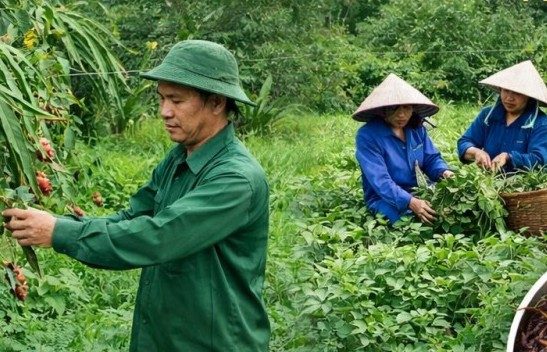
Illustration
It is precisely these factors that have led many lands in the Nghe region to be considered "barren land," difficult to cultivate, and of low economic value. In this context, using organic production as a foundation to awaken the potential of barren land is opening up a new, sustainable direction suited to the unique conditions of Nghe An.
Barren soil – challenge or opportunity?
In reality, "arid land" in Nghe An is not synonymous with dead soil. Most of this area consists of mountainous ferralitic soil, coastal sandy loam, and land degraded by prolonged chemical farming. The core issue is not that the land cannot produce, but that it has lost its biological balance, is deficient in humus, has depleted microbial life, and possesses low water- and nutrient-retention capacity. Meanwhile, organic farming focuses on restoring the soil ecosystem rather than short-term exploitation. The very "finicky" nature of arid land becomes an advantage when transitioning to organic, as areas with less impact from intensive chemical farming often have a "cleaner" soil base that is easier to regenerate sustainably compared to soil that has grown "addicted" to inorganic fertilizers.
Organic production – the path to regenerating the land
Organic production is not merely about avoiding chemical fertilizers or synthetic pesticides; it is a farming system based on natural laws. Through the use of organic compost, green manure, biological products, and crop rotation/intercropping, the soil is gradually restored in its structure, humus content, and microbial ecosystem. In many mountainous areas of Nghe An, models of growing fruit trees, medicinal herbs, and indigenous plants under organic practices have shown remarkable results. Arid hilly soils gradually become looser, moisture retention improves, and soil erosion during the rainy season is mitigated. More importantly, the soil is not only "revived" but also lays the foundation for a long-term, stable agricultural ecosystem.
Suitable for the harsh natural conditions of the Nghe region
The harsh climate is a major challenge for agriculture in Nghe An, yet it is a "test" that validates the sustainability of organic production. Organic systems focus on soil cover, increasing humus content, and biodiversity, thereby helping crops better withstand drought, heat, and heavy rains and floods. Utilizing agricultural by-products and livestock waste to produce organic fertilizer, combined with circular models such as vermiculture and black soldier fly farming, not only lowers input costs but also solves rural environmental problems. This is an approach particularly suited to arid lands where investment resources are limited but biological resources are readily available.
Awakening economic potential from organic agriculture
Organic production does not chase yield at all costs, but aims for added value and high-quality niche markets. For Nghe An, this opens up opportunities to leverage unique advantages: indigenous crops, medicinal plants, and regional specialty agricultural products. Products grown on "difficult" soil under harsh natural conditions carry distinctive value when tied to the narrative of organic, ecological farming and the identity of the Nghe region. When production is systematically organized, certified, and linked to consumption channels, organic agriculture can turn barren lands into stable livelihoods and higher incomes for local people.
The role of science, cooperatives, and businesses
For organic production to truly unlock the potential of barren land, science, technology and production organization are essential. Advances in microbial preparations, soil improvement techniques and biological pest management must be transferred in ways suited to local conditions. Cooperatives and businesses play a pivotal role in connecting farmers with markets and building organic value chains, from production and processing to sales. When farmers are no longer working alone but participate in a shared production ecosystem, risks decrease and the motivation to transition to organic farming grows stronger.
Organic – a sustainable path forward for the future of Nghe An
Within the green, sustainable agricultural development strategy, Nghe An possesses all the conditions to become a leading locality in organic and circular land exploitation. Lands once deemed "barren" can completely transform into strategic resources if approached correctly. In several mountainous and semi-mountainous districts of Nghe An, such as Nghia Dan, Quy Hop, and Anh Son, multiple organic production models have shown clear effectiveness in rehabilitating degraded, depleted soils. A prime example is the model of growing fruit trees and medicinal plants under forest canopies following an organic-circular approach. On degraded hilly land, local farmers minimize chemical fertilizers, substituting them with well-rotted animal manure and microbial fertilizers, combined with cover grass and legumes to retain moisture and build soil humus.
Several households have also adopted integrated farming models that treat waste to produce organic fertilizer, utilizing agricultural by-products and livestock waste for microbial composting or raising earthworms and black soldier flies. The processed organic fertilizer is cycled back to nourish crops, creating a closed-loop system directly on the farm. After a few years of implementation, the cultivated soil has become looser, moisture retention has improved, and crops grow steadily even in hot and dry conditions. More importantly, this model not only "revitalizes" barren land but also yields safe agricultural produce, increases income, and moves toward sustainable development for rural Nghe An.
Adopting organic production is not merely a technical solution, but also a shift in development mindset: from exploitation to nurturing, from short-term to long-term, and from quantity to quality. When the soil is restored, the environment protected, and the value of agricultural products enhanced, agriculture in Nghe An will no longer be a story of hardship, but a journey of awakening potential and rising sustainably from seemingly silent, barren lands.