
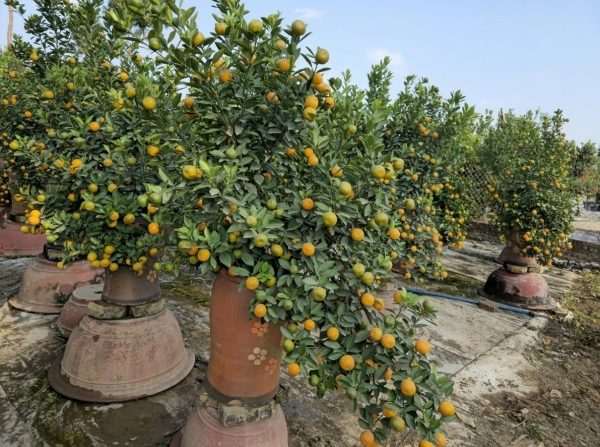
Techniques for recovering and nourishing kumquat trees after Tet
Speaking with reporters, Assoc. Prof. Dr. Dang Van Dong, Deputy Director of the Fruit and Vegetable Research Institute, noted that ornamental kumquat trees after Tet are not "worthless" as many people think. With proper techniques, the plant can completely recover and be nurtured to display for Tet in subsequent years.
Common mistakes when displaying kumquat trees indoors
Assoc. Prof. Dr. Dang Van Dong noted that during Tet, bringing kumquat trees from outdoors inside for display forces the tree to adapt to lower light conditions, temperature fluctuations, and different humidity levels. Without proper management, the tree is prone to "physiological shock," manifested by leaf drop, fruit drop, or branch withering.
Specifically, when displaying kumquat trees for Tet, many families place them right next to air conditioners, near the kitchen, or in spots with harsh direct sunlight through glass windows. These locations cause sharp temperature fluctuations around the tree canopy, affecting photosynthesis and metabolic processes.
Another common mistake is overwatering. Seeing the plant show slight signs of wilting, many people immediately water it continuously. Meanwhile, the soil volume in the pot is naturally limited; heavy watering will cause localized waterlogging, leaving roots oxygen-deprived and quickly weakened. It is recommended to water only when the surface of the growing medium is dry to the touch, while ensuring the pot has good drainage holes.
Many people also have the habit of applying fertilizer or spraying growth stimulants right during the display period in the hope of keeping fruits longer and leaves greener. However, this can disrupt the plant's physiology and even cause it to deplete more quickly. During the Tet display period, the most important principle is to maintain a stable condition and avoid excessive intervention.
Moreover, moving the tree back and forth between indoors and outdoors too frequently prevents the kumquat tree from adapting in time. Sudden environmental changes increase the risk of leaf and fruit drop.

Steps to revive plants after Tet
According to Mr. Dong, the recovery capability of kumquat trees after Tet largely depends on the tree's original vigor and the degree of technical "forcing" applied earlier. Trees that were sensibly shaped, not overexploited, still have healthy roots, and suffered minimal leaf drop will have better recovery prospects.
Immediately after the display period ends, the plant should be moved to a well-ventilated outdoor environment with natural light. However, this should be done gradually so that the plant can slowly acclimatize to natural light and outdoor temperatures.
All remaining fruits should be removed, along with dry and weak branches, to reduce nutrient consumption. After about 10–15 days of stabilization, the plant can be repotted or have some old soil replaced with loose potting mix to stimulate new root growth. Fertilization should be done gently on a "little but often" basis, helping the plant regenerate its foliage sustainably.
“With proper care, miniature ornamental kumquat trees can be maintained for many years, shaped further, and bear fruit in subsequent seasons,” said Associate Professor Dr. Dang Van Dong.
Caring for shaped kumquat trees and miniature landscapes
Assoc. Prof. Dr. Dang Van Dong stated that for elaborately shaped kumquat pots featuring artificial mountains, rocks, moss, or miniature landscape decorations, the basic principles remain unchanged; however, care requires greater diligence.
The reason is that the root ball is usually small and covered with rocks and moss, which reduces drainage and aeration compared to regular potted kumquat trees. Prolonged overwatering poses a very high risk of localized root rot. Growers need to carefully regulate water amounts and avoid keeping the root ball constantly wet for extended periods.
The moss and decorative elements should only be kept slightly moist to ensure aesthetics, not waterlogged. When placing the plant, choose a location with diffused light, avoiding harsh direct sunlight that increases the temperature of the root ball and quickly dries out the moss.
Moving shaped kumquat pots also requires care and minimal shaking, as the miniature landscape structure can easily damage roots and branches. According to experts, for this type of kumquat, growers should prioritize environmental stability and "less is more, but done right" care, avoiding aggressive interventions.
The long-term reusability of miniature potted kumquats largely depends on the growing space of the root system. If the root ball is too small, the plant is only suitable for short-term care and struggles to maintain sustainable vitality over multiple seasons. Therefore, when conditions allow, consider repotting into a more suitable container once the plant has stabilized.
According to Assoc. Prof. Dr. Dang Van Dong, from display to post-holiday recovery, the most critical factor remains properly understanding the plant's growth characteristics and maintaining a stable care environment.
"When properly cared for, kumquat trees are not merely ornamental plants for a few days of Tet, but can become perennial ornamentals, continuing to bring spring back year after year," affirmed Mr. Dong.