
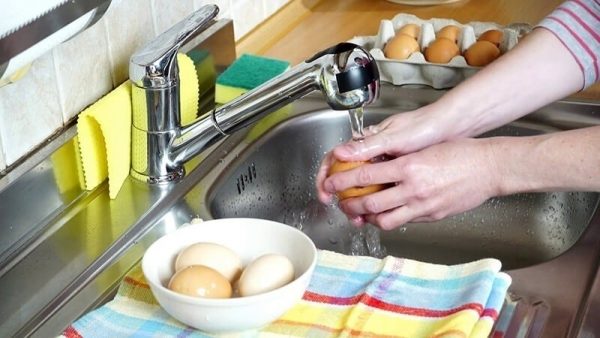
Why You Shouldn't Wash Eggs Before Storing Them in the Fridge
Washing eggs before storage is a common mistake that can lead to food poisoning. This action inadvertently destroys the natural protective layer (cuticle), creating conditions for Salmonella bacteria and dirt to penetrate through thousands of tiny pores on the eggshell into the egg white and yolk.
Why Shouldn't You Wash Eggs with Cold Water?
An eggshell is not a completely sealed solid object, but rather contains between 7,000 and 17,000 tiny pores. When freshly laid, eggs have a natural cuticle membrane that seals these pores. According to the United States Department of Agriculture (USDA), washing store-bought eggs can increase the risk of cross-contamination.
In particular, washing eggs under cold running water is a serious physical error. The low temperature causes the contents inside the egg to contract suddenly, creating a vacuum effect that pulls dirty water from the shell (which often harbors Salmonella bacteria) directly inside. The nutrient-rich egg white then becomes a perfect breeding ground for bacteria, posing a significant risk to consumer health.
Proper Egg Handling Instructions by Type
Depending on the source of the eggs, homemakers should handle them differently to ensure hygiene:
-
For supermarket-purchased eggs: Absolutely do not wash them with water because they have already been industrially cleaned. If you notice any dust, simply use a dry paper towel or clean cloth to wipe gently. You should only wash eggs right before cracking them for cooking.
-
For farm or backyard eggs: These often have mud or poultry droppings attached. If washing is unavoidable, use warm water (around 30°C, about 10–12°C warmer than the egg itself). Warm water causes the inside of the egg to expand slightly, creating positive outward pressure that prevents bacteria from seeping back inside.
-
Important rule: Do not soak eggs in a basin of water, as this dissolves bacteria and causes mass contamination. After rinsing under running water, immediately dry them completely with a clean paper towel.
How to Store Eggs in the Fridge with Maximum Efficiency
To keep eggs fresh for 3 to 5 weeks while preserving their nutritional value, you should follow these principles:
-
Storage placement: Store eggs on a refrigerator shelf, ideally at a temperature below 4°C. Avoid placing eggs on the refrigerator door, as this area experiences constant temperature fluctuations every time it opens and closes, causing eggs to spoil faster.
-
Egg orientation: Place the pointed end down and the rounded, larger end (which houses the air cell) facing up. This keeps the yolk centered and preserves freshness longer.
-
Inspect the shell: Always inspect each egg carefully before storing. Cracked or broken eggs should be cooked immediately or discarded, as their protective layer has been entirely compromised.
Changing the habit of washing eggs and adopting scientific storage practices not only keeps food fresher and tastier, but is also the simplest way to protect your family from foodborne illnesses.