
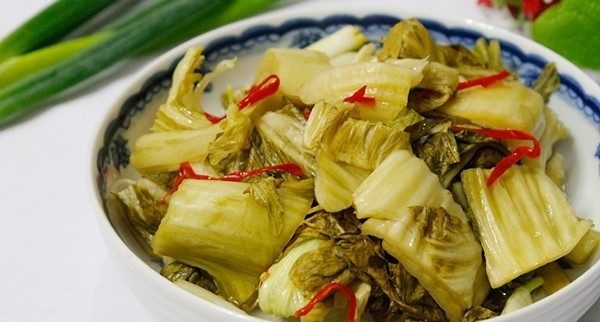
One thing you should strictly avoid when eating pickled mustard greens
The mild sourness and crisp, delicious texture of pickled mustard greens not only enhance everyday meals but are also tied to the culinary memories of many people. However, pickles are also believed to pose potential health risks.
Nutritional value
According to research by Chinese scientists published on MDPI, pickled mustard greens are the product of a natural fermentation process. When the greens are mixed with salt, moisture is drawn out from the vegetables, creating an anaerobic environment. Lactic acid bacteria present naturally on the vegetables and in the surrounding environment proliferate, converting sugars in the greens into lactic acid. It is this acid that creates the characteristic sour flavor while inhibiting the growth of harmful bacteria, helping preserve food for a long time—a clever solution devised by ancient people before refrigeration existed.
The fermentation process not only develops flavor but also transforms the nutritional structure of pickled mustard greens. A portion of the protein is broken down into more easily absorbable amino acids, while organic acids help stimulate digestion. Furthermore, this process generates several B-group vitamins and beneficial gut bacteria, contributing to digestive health and improving bowel function.
Risks
Mustard greens naturally contain nitrates. When the pickling process begins, bacteria can convert these nitrates into nitrites. Typically between the 3rd and 7th day, nitrite levels reach their peak, then gradually decline as the environment becomes more acidic and lactic acid bacteria become dominant.
If you consume pickled greens before they have fermented sufficiently, health risks can increase. Nitrites can react with amines in the body to form nitrosamines—compounds with carcinogenic potential. Additionally, pickled mustard greens often contain high amounts of salt; frequent consumption may increase the risk of high blood pressure, put strain on the kidneys, and irritate the stomach lining.
How to eat pickled greens safely
Despite certain risks, pickled mustard greens are not harmful food if prepared properly and consumed in moderation. Beneficial lactic acid bacteria in pickled greens help balance the gut microbiota, aid digestion, and can relieve constipation. Their natural tanginess also stimulates the appetite.
To minimize risks, consumers should choose pickled mustard greens from reputable producers with clean processing standards and clear fermentation controls. When pickling at home, ensure utensils are clean, use an appropriate amount of salt, and allow enough fermenting time to pass the high-nitrite phase.
Before eating or cooking, pickled greens should be rinsed with water to reduce excess salt and residual nitrites. In addition, pickled greens should only be eaten as a side dish, avoiding excessive or prolonged continuous consumption. Pairing them with fresh vegetables and fruits rich in vitamin C also helps curb the formation of nitrosamines in the body.