
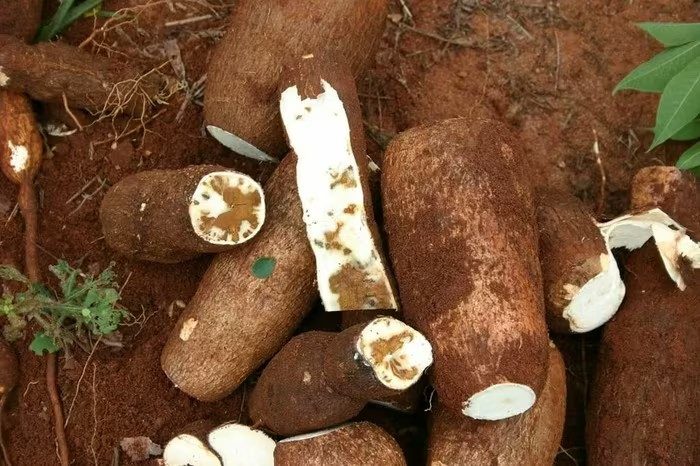
Characteristics of cassava plants and notes on natural toxins
Origin and adaptability
One of the world's most important food crops. Cassava (Manihot esculenta) is the primary source of starch for hundreds of millions of people, particularly in Africa, South America, and Southeast Asia. Thanks to its excellent adaptability, cassava has become a vital crop for global food security.
Originating from South America. Cassava was domesticated thousands of years ago in the Amazon region. It was later introduced to Africa and Asia by Europeans during the Age of Discovery, quickly becoming a popular crop in many tropical regions.
Highly drought-tolerant. One of the outstanding advantages of the cassava plant is its high drought resistance. It can grow in nutrient-poor soils and low rainfall conditions where many other crops struggle to survive.
Toxins in the root and differences between cassava groups
Cassava roots contain natural toxins if eaten raw. Cassava contains cyanogenic compounds that can release cyanide when not properly processed. Therefore, cassava roots must be soaked, cooked, or thoroughly processed before consumption to remove toxins.
There are many varieties with different toxicity levels. There are two main groups of cassava worldwide: sweet cassava and bitter cassava. Bitter cassava contains higher levels of toxins and requires more thorough processing before use, while sweet cassava is safer with simple preparation.
Starch applications, propagation, and leaf usage
A raw material for many industrial products. Cassava starch is not only used as food but is also applied in the production of paper, textiles, adhesives, and biofuels. This makes cassava a crop with diverse economic value.
Can be grown from cuttings instead of seeds. Cassava is usually propagated by stem cuttings rather than sowing seeds. This method helps the plant grow quickly and retain the characteristics of the mother plant, while being convenient for farmers in cultivation.
Cassava leaves are also a food source in many places. Not just the roots, cassava leaves are also used as food in some countries, especially in Africa. However, like the roots, cassava leaves must be thoroughly cooked to remove toxins before eating.