
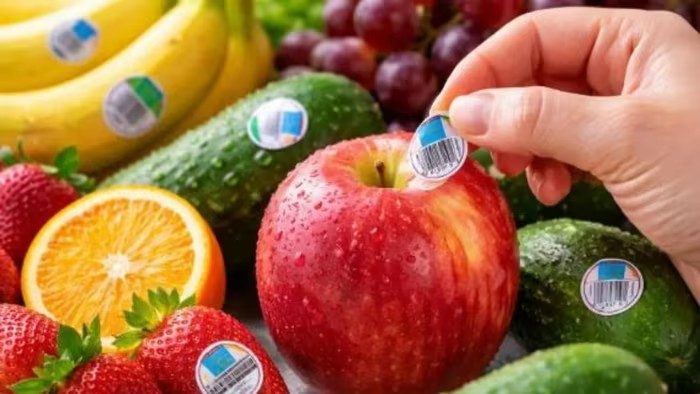
Fruit Stickers Seem Harmless but May Pose Health Risks
Small stickers on fruit are not only for identification but can also trap dirt, bacteria, and chemicals if not removed properly.The Food Safety and Standards Authority of India (FSSAI) recently issued a new food safety advisory that has garnered significant consumer interest: avoid directly eating fruits and vegetables with stickers still attached.
According to the agency, these seemingly harmless little labels can leave behind adhesive residue that is unsafe for the body if accidentally swallowed. In its latest post on Instagram, the FSSAI emphasized: "Think twice before biting into the portion with a sticker. Although very common, the adhesive used on stickers can leave behind residues not suitable for consumption."
To ensure hygiene and reduce the risk of chemical exposure, the FSSAI advises consumers to peel off stickers and peel the skin of labeled fruits or vegetables before consumption.
Why Are Fruits Labeled with Stickers?
Fruit stickers, also known as PLU (Price Look-Up) stickers, are commonly used by supermarkets to identify products, distinguish organic produce from conventional produce, and assist with checkout and inventory management.
While the stickers themselves are manufactured according to food safety standards, experts note that the adhesive is not always safe to ingest, particularly because the surface around the label can accumulate dust, bacteria, or pesticide residues.
Potential Health Risks
Accidentally ingesting a small amount of adhesive residue may not cause immediate harm, but repeated exposure still carries potential risks, especially for young children.
Some potential concerns include:
Ingestion of chemicals: Adhesives contain compounds not intended for consumption.
Contamination risks: Stickers can trap dirt, bacteria, or pesticide residues.
Digestive irritation: Individuals with sensitive digestive systems may experience mild stomach discomfort.
Experts note that "food-safe" is not synonymous with "edible." Therefore, even when adhesives meet food industry standards, consumers should still avoid ingesting them.
How to Eat Fruits and Vegetables More Safely
As consumers become increasingly mindful of food contamination risks and chemical exposure, small hygiene habits can make a significant difference for health.
To minimize risks, consider following these steps:
Always remove stickers before eating
Rinse fruits and vegetables thoroughly under running water for at least 5 minutes
Peel the skin whenever possible on produce that can be peeled
Avoid biting directly into the area where the sticker was placed
Use a clean produce brush to gently scrub firm-skinned fruits like apples, pears, or cucumbers
Do not use soap, disinfectant wipes, or chemicals to wash fresh produce
Store items properly in the refrigerator if they require cold storage
Do not leave fresh produce in cars, garages, or outdoors for extended periods
Wipe down sinks and food prep areas after washing produce