
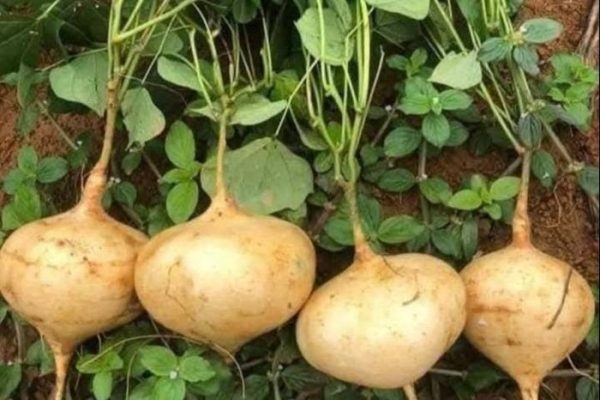
Jicama is Very Good, but One Part is "Poison": Did You Know?
Jicama is an ideal food for those on a diet or maintaining their weight. Photo: H.G Trinh
Jicama is low in calories, rich in energy
According to data from MyFoodData, jicama is an ideal food for people pursuing a diet or maintaining weight. One cup of raw, sliced jicama contains 46 calories and is completely free of fat and cholesterol.
Most of the calories in jicama come from carbohydrates, with 10.6 grams (g) per cup of raw tuber. This is an essential fuel source that provides energy for muscles, helps keep the brain sharp, and maintains the stability of the cardiovascular and nervous systems. Although not a rich source of protein (only about 0.9 g per cup), jicama makes up for it by being a natural "multivitamin."
Jicama contains a wide variety of vitamins and minerals
The most impressive highlight of jicama's nutritional composition is vitamin C. A single cup of fresh jicama provides up to 27% of the daily value (DV) of this vitamin, helping to boost the immune system and provide powerful antioxidants. In addition, it also provides:
Vitamin E and folate: Account for 4% DV, supporting cells and pregnancy health.
B-complex vitamins: Including thiamine, riboflavin, niacin, pantothenic acid, and B6 – crucial factors in the energy metabolism process.
Choline: Accounts for 3% DV, supporting memory function in the brain.
In terms of minerals, jicama provides a rich list that helps balance electrolytes and support bone and joint health:
Copper: 6% DV.
Iron and potassium: 4% DV.
Magnesium and manganese: 3% DV.
Phosphorus and zinc: 2% DV.
Jicama is a "superfood" for the digestive system
One of the reasons nutritionists highly regard jicama is its abundant fiber content. Daily fiber requirements range from 22–28 g (women) and 28–34 g (men). Just by eating one cup of jicama, you take in 5.9 g of fiber, equivalent to 24% of the daily value (based on a 2,000-calorie diet). Fiber helps regulate bowel function, prevent constipation, and create a favorable environment for beneficial bacteria.
However, you should also be mindful not to eat too much at once, as an excessive amount of fiber can cause bloating or digestive upset.
Things to know about the toxicity of the jicama plant
Recently, several members of a family in Dong Duong village, Xuan Truong commune, Ninh Binh province were hospitalized with suspected food poisoning after eating seeds from the jicama plant, presenting symptoms such as nausea, severe abdominal pain, extreme agitation, cyanosis, and altered consciousness. Among them, two patients developed severe conditions and were transferred to Bach Mai Hospital (Hanoi) in a coma.
Although the tuberous root is very nutritious, other parts of the jicama plant harbor risks that require caution.
According to "Medicinal Plants and Herbs of Vietnam" by Prof. Đỗ Tất Lợi, jicama seeds contain a toxic substance called rotenone C,H,O and tephrosin C23H22O7. The proportion of rotenone in jicama seeds ranges from about 0.56% to 1.01%. The leaves also contain the same substances found in the seeds.
According to the Cleveland Clinic, with the exception of the succulent tuberous root, the remaining parts such as stems, leaves, and especially the seeds all contain rotenone.
This is a natural isoflavone compound that acts as the plant's built-in insecticide against pests. However, for humans, rotenone is a potent toxin if ingested in large quantities, capable of inhibiting cellular respiration and leading to acute poisoning, seizures, or even death.
Jicama seeds contain toxic substances called rotenone C,H,O and tephrosin C23H22O7. Photo: VNRAS.COMHow to eat jicama safely
To maximize its health benefits without any risks, keep these rules in mind:
Only eat the tuber: Absolutely do not experiment with eating jicama leaves or seeds in any form (including using them as folk remedies).
Peel thoroughly: The outer skin of jicama is often thick, fibrous, and can harbor pesticide residues or soil bacteria; therefore, wash it thoroughly and peel it completely before consumption.
Store properly: Keep jicama in a cool, dry place or in the refrigerator crisper drawer to maintain its crispness and nutrients.
Jicama is a healthy food if consumed properly. Make it a part of your daily menu to supplement vitamin C and fiber, but always exercise caution with the toxic parts of this plant.