
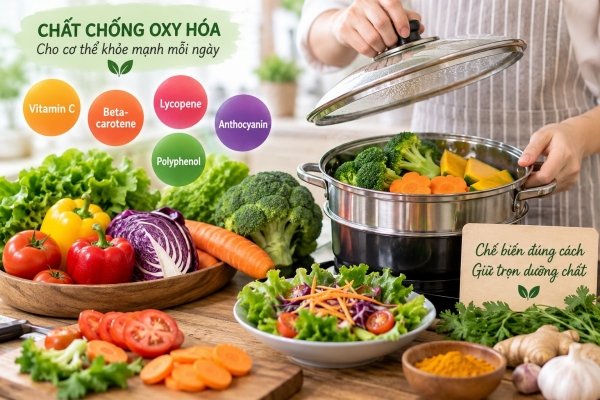
Food preparation tips to preserve antioxidants
Illustrative photo.
1. Antioxidants in food are easily lost during cooking
Antioxidants (such as vitamins C, E, beta-carotene, polyphenols, anthocyanins, etc.) are natural compounds in food that neutralize free radicals, slow down aging, and reduce the risk of chronic diseases.
According to Dr. Trần Thị Bích Nga, a Nutrition Specialist, many antioxidants are highly sensitive to heat and cooking processes. High temperatures, prolonged cooking times, and using excessive water are the primary causes that break down sensitive antioxidants. Specifically:
Vitamin C: Extremely sensitive to high temperatures and highly water-soluble. Boiling foods rich in vitamin C (such as broccoli and bell peppers) can lead to significant loss of this vitamin into the cooking water.
Flavonoids and polyphenols: Often concentrated in the outer skin and prone to breakdown under prolonged high-temperature cooking.
Chlorophyll:Prone to color changes and reduced biological activity when overcooked.
Eating a variety of colorful fruits and vegetables helps maximize antioxidant intake. AI-generated illustration
2. Food preparation tips to preserve antioxidants
Eat fruits and vegetables in diverse colors: The natural colors of produce reflect specific groups of pigments, vitamins, and characteristic antioxidant compounds contained within them.
For example: Orange colors (carrots, pumpkins, etc.) are rich in beta-carotene (a precursor of vitamin A) which supports eye health and protects skin cells from aging.
Red colors (tomatoes, watermelons, etc.) are high in lycopene, a potent antioxidant that supports cardiovascular and vascular health.
Purple colors (eggplants, blueberries, purple cabbage, etc.) are concentrated with anthocyanins, antioxidants that protect neurological and cardiovascular cells.
Therefore, you should consume a diverse variety of colorful vegetables and fruits to optimize your intake of different vitamins and antioxidants from your diet.
Eat immediately after peeling/cutting: When food is peeled or chopped, its surface area exposed to oxygen increases, causing antioxidants to oxidize directly on the surface. Fresh fruits should be consumed right after preparation.
Eat with the skin on (if safe): The skins of fruits such as apples, grapes, plums, and guavas contain significantly higher levels of polyphenols and dietary fiber than the flesh.
Lightly steam or quick-stir-fry:These methods preserve the highest amount of antioxidants due to minimal water use and brief exposure to heat.
Eat raw or make salads: Best suited for vegetables containing sensitive vitamin C and polyphenols (bell peppers, fresh herbs, fruits).
Make use of boiling water: If boiling vegetables, repurpose the broth for soups or broths to utilize the dissolved antioxidants.
Limit deep-frying or charring: Excessive heat not only destroys antioxidants but also produces inflammatory compounds that accelerate aging.
Add herbal spices to dishes: Turmeric (containing curcumin), cinnamon, ginger, onions, and similar ingredients are densely packed with antioxidants. Incorporating a touch of these spices into daily dishes significantly boosts antioxidant content.
Note: Not all antioxidants are destroyed by heat. Some, such as lycopene (in tomatoes) or beta-carotene (in carrots and pumpkins), actually become more bioavailable to the body when cooked or consumed alongside healthy fats. Therefore, it is recommended to sauté tomatoes with olive oil or enjoy a carrot salad with avocado to enhance nutrient absorption.