
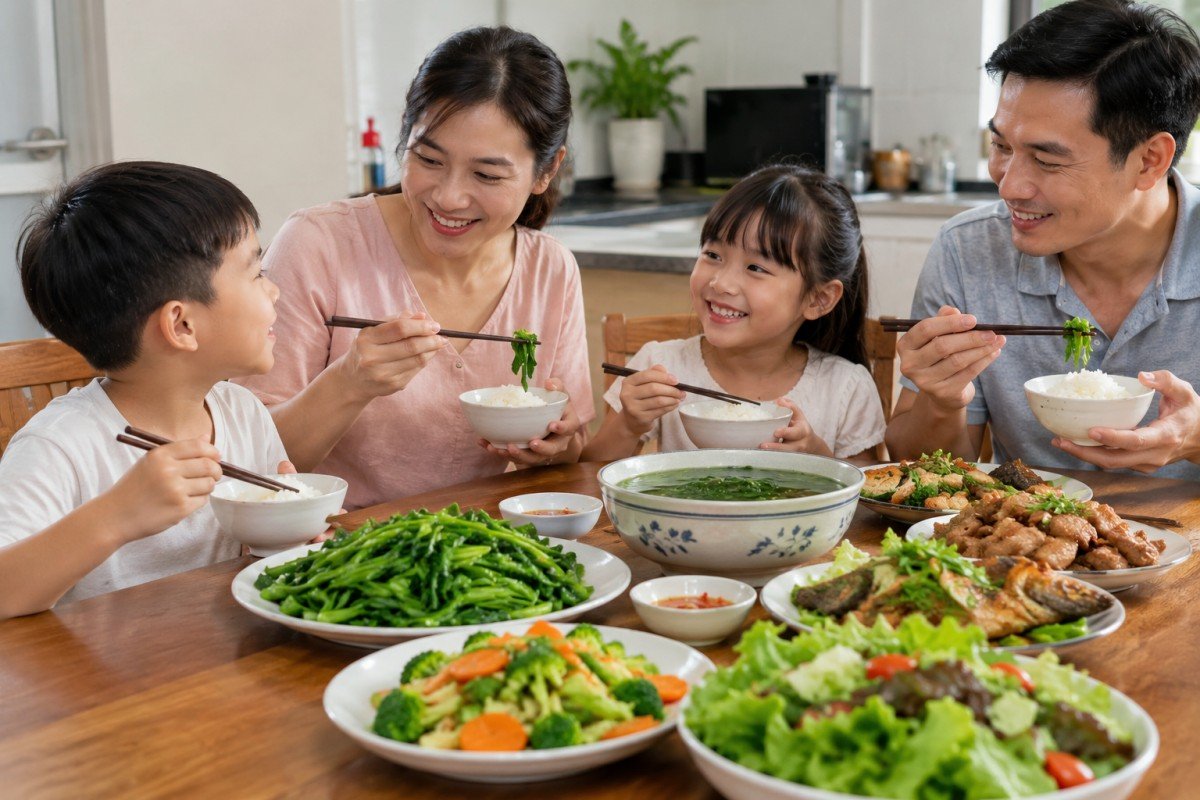
Tips to increase vegetable intake for family meals
Vegetables are an important component of a balanced diet, providing fiber, vitamins, minerals, and many beneficial plant compounds for health. However, not every family maintains the habit of eating enough vegetables every day.
Instead of forcing sudden portion changes, you can start with simple ways like adding a vegetable dish to the main meal, incorporating vegetables into favorite dishes, and varying colors and cooking methods. When vegetables become delicious and convenient, eating them will be easier to maintain.
Every main meal should have at least one vegetable dish
A plate of boiled vegetables, a bowl of vegetable soup, stir-fried vegetables, or a salad can all help increase the amount of vegetables in a meal. With familiar dishes like noodles, vermicelli, pho, or fried rice, you can add mustard greens, bean sprouts, mushrooms, carrots, or herbs.
Vegetables contain a lot of fiber, which helps increase satiety and supports digestive system activity. A diet with sufficient fiber is also beneficial for weight management and cardiovascular health.
Some types of vegetables such as sweet potato leaves, Malabar spinach, and okra also contain soluble fiber. This component can slow down the absorption of carbohydrates and contribute to blood sugar control.
Instead of viewing vegetables as a side dish, consider them a permanent part of the family meal.
Incorporate vegetables into the family's favorite dishes
If family members are not used to eating many vegetables, it is not necessary to start with a large plate of greens. A more feasible way is to incorporate vegetables into already familiar dishes.
You can add green onions, tomatoes, and mushrooms to fried eggs; add pumpkin, carrots, or star gooseberry leaves to porridge; add peas, corn, and carrots to fried rice. Stir-fried noodles and vermicelli can also be combined with green mustard, cabbage, bean sprouts, and mushrooms.
For young children, vegetables should be finely chopped, cooked soft, and combined with dishes they are already familiar with. Do not force children to eat a lot right from the start. Parents can give children a choice between two types of vegetables or encourage them to try a small amount.
The important thing is to create a positive experience so that children gradually form the habit of eating vegetables.
Eat a variety of colors and change according to the season
Each type of vegetable has different nutritional components. Therefore, instead of just eating a few familiar types of vegetables, you should rotate many types throughout the week.
Dark leafy greens like star gooseberry leaves, amaranth, green mustard, and spinach provide many vitamins, minerals, and folate. Yellow, orange, and red vegetables such as carrots, pumpkins, tomatoes, and bell peppers provide many beneficial plant compounds.
In addition, cabbage, cauliflower, radishes, onions, and mushrooms are also easy-to-prepare ingredients.
No need to choose expensive vegetables. Seasonal, fresh, and easy-to-buy vegetables are usually the right choice for family meals. You can change vegetables daily to make the menu richer.
Pre-prepare to make eating vegetables convenient
One of the reasons many people eat few vegetables is lack of preparation time. Pre-preparing a portion of vegetables can help save significant time.
After purchasing, you can remove damaged parts, wash properly, drain, and divide into portions sufficient for each meal. Suitable vegetables can be stored in specialized containers or bags for convenient use.
Cucumbers, cherry tomatoes, carrots, or lettuce can also be prepared to take along for lunch.
For the elderly, priority should be given to soft, easy-to-chew vegetables such as pumpkin, Malabar spinach, star gooseberry leaves, and young mustard greens. Vegetables need to be prepared appropriately for chewing and swallowing abilities.
Change cooking methods to make vegetables more appetizing
Eating boiled or steamed vegetables continuously can make the menu boring. You can vary this in many ways, such as quickly stir-frying with garlic and mushrooms, roasting pumpkin, cooking vegetable soup, making salads, or wrapping vegetables with lean meat and eggs.
Spices like onion, garlic, ginger, pepper, herbs, lemon, or vinegar can help make vegetable dishes more attractive without needing too much oil, salt, or dipping sauce.
When cooking, do not leave vegetables on the stove for too long. Cooking until just tender usually helps the dish retain its color, crispness, and natural flavor.
Start with small changes
Eating more vegetables does not necessarily mean changing the entire menu immediately. The family can start by adding a vegetable dish to dinner, preparing vegetables for the next day, or trying a new type of vegetable each week.
When vegetables become a familiar, easy-to-prepare, and delicious choice, the whole family will find it easier to maintain a more diverse and balanced diet.
In addition to the diet, you should combine regular exercise, get enough sleep, drink enough water, and limit alcohol and tobacco to protect long-term health.