
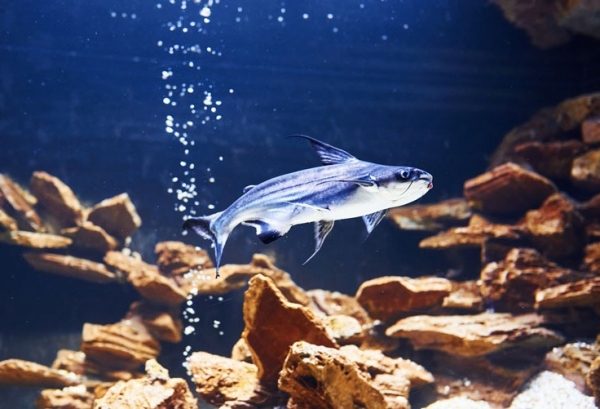
Prevention and Treatment of Hemorrhagic Disease in Pangasius
Causes
The causative agent is the motile Aeromonas spp. bacteria group, including Aeromonas hydrophila, A. sobria, and A. caviae. Among them, Aeromonas hydrophila is considered the most critical pathogen in freshwater fish. These are short, rod-shaped Gram-negative bacteria with rounded ends, measuring 0.5 x 1 – 1.5 µm, and are motile via a single polar flagellum.
Characteristics
The disease was first recorded in the United States on freshwater salmon in 1979, and subsequently appeared in several Asian countries. In Vietnam, it was recorded before 1993. Currently, the disease occurs in almost all freshwater fish farming areas and causes major economic losses to farmers across the Mekong Delta provinces.
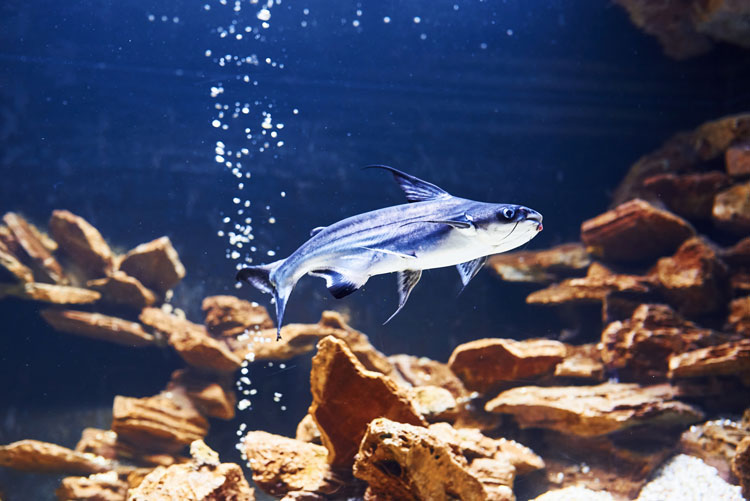
Susceptible species: Tra catfish (P. hypophthalmus), Basa catfish (Pangasianodon bocourti), and several other freshwater fish species. In our country, the disease affects almost all fish species raised in cages, rafts, and freshwater ponds. The disease occurs in fish at all farming stages. It spreads rapidly, with a high mortality rate (up to 90%) in severe cases.
Seasonal occurrence: In Vietnam, hemorrhagic disease caused by A. hydrophila occurs year-round, peaking at the beginning of the dry season, especially when fish experience stress, such as after rainfall.
Transmission routes: The disease spreads from sick fish to healthy fish within the same pond. Pathogens present in the environment can directly infect healthy fish via contaminated handling equipment (basins, dip nets, seines, etc.). The pathogen can persist and multiply in the pond water environment, spreading from pond to pond and from one farming area to another.
Symptoms
In the early stages of infection, fish exhibit poor appetite or stop feeding entirely, swimming sluggishly near the water surface. The skin often turns dark, loses its silvery sheen, and the fish lose their protective mucus layer. In later stages, hemorrhagic spots appear on the body, at fin bases, and around the mouth, eyes, and anus.
Deep ulcers develop, eroding into the muscle tissue. Fungi and parasites often colonize these open ulcers. Eyes become exophthalmic and cloudy, with swelling and mucus loss around the eye sockets; the anus is inflamed and hemorrhagic; the abdomen is distended, and fins become frayed and torn.
Pathological Lesions
The intestine may be filled with gas; the liver and kidneys often exhibit necrosis. The abdominal cavity shows hemorrhaging, the liver is pale, the gall bladder is enlarged, and the kidneys are swollen and hemorrhagic.
In acute cases, internal examination reveals abundant red, bloody fluid in the abdominal cavity, along with visceral hemorrhages, leading to mass mortality within a short period.
Diagnosis
Clinical diagnosis: Based on typical visible symptoms.
Laboratory diagnosis: Collect samples following standard guidelines. Send diseased fish samples to designated testing laboratories.
Disease Prevention
Ponds should be fenced with netting all around, with embankments firmly fortified and leak-free; pond rehabilitation and environmental treatment must strictly follow technical procedures. Water supplied to the pond must be treated to ensure quality, filtered through a two-layer filter net with a mesh size of 40 µm.
Pangasius fingerlings must be healthy, have clear origins, be certified disease-free, and comply with National Technical Regulations on aquatic breeding stock; fingerlings sourced from out-of-province hatcheries or imported must possess Quarantine Certificates and undergo quality inspections as prescribed.
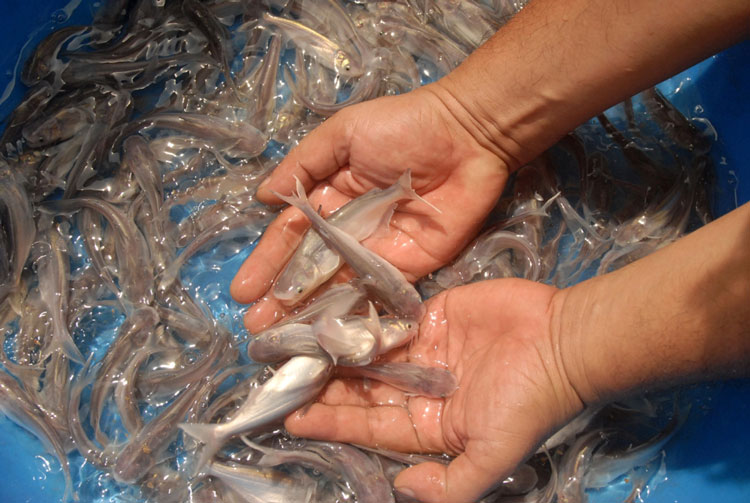
Select healthy pangasius fingerlings with traceable origins. Photo: LHV
Before stocking, fish can be dipped in approved disinfectant solutions to eliminate pathogens.
Adhere to stocking densities recommended by aquaculture management authorities.
Use vaccines according to the instructions of manufacturers or specialized aquatic veterinary agencies. Only use veterinary medicines, chemicals, and biological products permitted for aquatic veterinary circulation in Vietnam and follow the guidance of specialized aquatic veterinary agencies; cease usage prior to harvest as directed by manufacturers.
Use commercial feed in powder, flake, or pellet form with sizes suited to the mouth size of the fish; protein content and other essential components must meet the requirements for each growth stage. Properly manage feeding rates to avoid feed waste and pond water pollution. Compound and farm-made feeds must be stored properly to prevent mold and bacterial contamination; fresh, raw feeds must be treated to ensure they are pathogen-free before feeding.
Supplement with vitamins, minerals, etc., to enhance fish immunity prior to and during disease-prone periods.
Monitor fish health daily, including body coloration, activity levels, and feed consumption. Regularly check pond water parameters: DO (daily); pH, alkalinity (every 2 days); H2S, NH3 (once a week).
Do not share equipment across different ponds, cages, or tanks. Production equipment must be cleaned and disinfected before and after use.
Prevent fish from experiencing shock caused by adverse environmental shifts: temperature fluctuations, low dissolved oxygen, and water contamination.
For cage aquaculture, lime bags should be suspended regularly: once every 2 weeks during peak disease seasons, and once a month during normal periods. Lime serves to disinfect and alkalize the water. The average dosage is 2 kg of quicklime per 10 m3. Hang more bags in large cages and fewer in small cages, concentrated around feeding areas and upstream water inlets.
Personnel working at farming facilities must perform sanitation and disinfection upon entry and exit.
Collect fish samples for pathogen testing periodically at least once a month per pond for commercial grow-out fish, and twice a month per pond for the nursery stage.
Farm owners must monitor and stay informed about the disease situation in the area/region, weather forecasts, and disease warnings from specialized agencies to take proactive measures for disease prevention. When fish show abnormal signs, the farm owner must immediately notify the veterinary authority for timely identification of the pathogen.
Diseased fish, dead fish, and waste from infected ponds must be collected and treated promptly according to the instructions of technical officers and specialized aquatic veterinary management agencies.
Tra fish farming facilities must maintain a system of logs to monitor fish health, the use of medicines, chemicals, biological products, and environmental treatment products throughout the production process. Records must be fully kept for presentation upon request.
Pond monitoring logs must be certified by competent specialized aquatic veterinary authorities to serve inspection and traceability requirements when requested by importing countries.
Disease treatment
To treat hemorrhagic disease in Tra fish, the water environment should be treated with disinfectants, and antibiotics should be added to the feed (such as florfenicol, doxycycline) for 5–7 days, with dosages and usage following the manufacturer's instructions.
In the case of fingerlings or high density, bactericidal products can be used as fish baths with appropriate dosages and durations.
Along with that, supplement probiotics and Vitamins C and E to help fish recover faster. At the same time, water quality should be controlled, high-quality feed should be used, and minerals should be added to enhance the fish's resistance.