
How to treat leafminers to prevent damage to crops
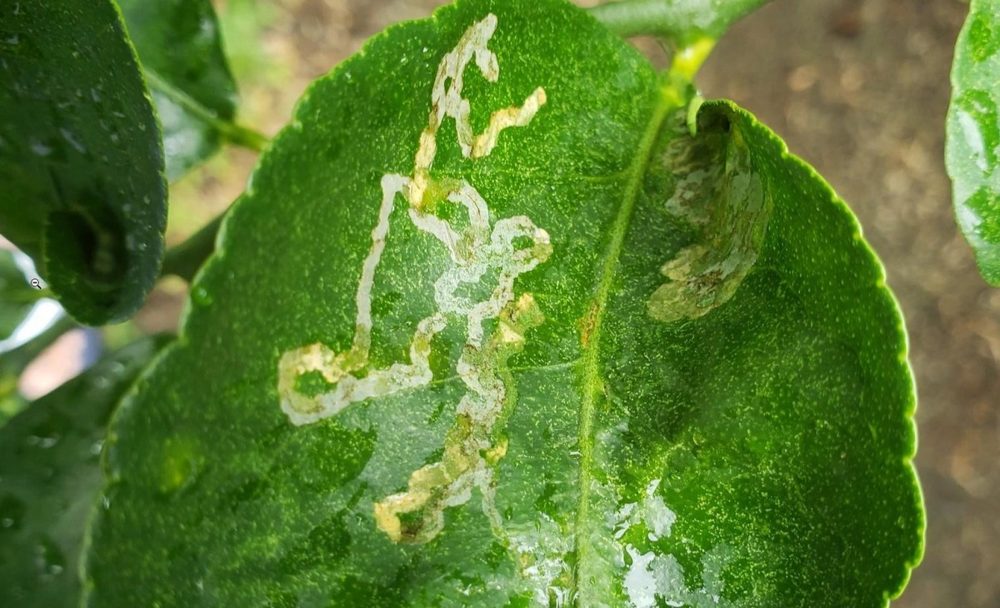
Leafminer damaging plants (Photo: Ecologiaverde.com)
Characteristics of leafminers
The adult leafminer is a small moth, with a body length of 2-3 mm and a wingspan of 4-5 mm. Its entire body is pale yellow with a silvery sheen. The hindwings are very narrow compared to the forewings, and both pairs have long fringed edges.
The eggs are oval-shaped and small, measuring 0.2-0.3 mm. Initially transparent, they turn yellowish-white when about to hatch.
Fully grown larvae are 4 mm long, flat-bodied, legless, with a tubular final abdominal segment.
The pupa is about 2-3 mm long, yellowish-brown, with a tubercle bearing a single hair on the lateral side of each body segment.
Moths are active at night and usually lay eggs on the underside of leaves near the main veins of newly emerged young shoots. An adult leafminer typically lays 70-80 eggs, with the oviposition period lasting from 2-10 days.
Newly hatched larvae burrow through the leaf epidermis to feed on the leaf parenchyma, creating winding serpentine mines beneath the epidermis, followed by a thread-like trail of frass; the epidermis may peel off or look like snail slime. The tunnels bored by leafminers lengthen and expand as the larvae grow.
When fully grown, the larvae bore to the edge of the leaf and pupate at the leaf margin near the veins, where the leaf is curled, using silk to fold the leaf over and protect the cocoon.
How leafminers damage crops
When infested, leaves become small and distorted, hindering the development of young shoots. Flowers and fruits may drop when plants are heavily infested. During the nursery stage, frequent attacks will cause poor plant development and result in smaller canopies than normal. Leafminers are also vectors transmitting citrus canker disease.
Leafminers cause damage year-round, but they peak heavily in July, August, and September because plants produce many young shoots during this time, providing an abundant food supply. Favorable conditions for infestation are usually temperatures between 23 - 29°C and humidity levels between 85 - 90%.
Leafminers primarily attack young shoots and leaves. As soon as young leaves emerge, newly hatched larvae burrow through the leaf epidermis to feed on the soft internal tissues; as they feed, the leaf epidermis swells, creating winding tunnels.
How to prevent and control leafminers
Regularly monitor and inspect orchards to protect flushes of young shoots, detecting pests and diseases promptly to determine appropriate management solutions.
In case of severe infestation, prune and remove damaged branches, leaves, and young shoots, then destroy them.
Spray preventive biological insecticides appropriately before each flush of new growth.
Care for plants to ensure healthy growth, prune branches, shape canopies, and topdress to synchronize young shoot flushes, thereby limiting pest damage.
Provide adequate nutrition for crops using organic fertilizers, foliar fertilizers, and secondary and micronutrient fertilizers to boost plant resistance; healthy, vigorously growing plants with large leaves and thick epidermises make it difficult for larvae to penetrate, minimizing damage.
In addition, protect and foster natural enemies in the orchard, such as weaver ants and parasitic wasps, to eliminate leafminers naturally.