
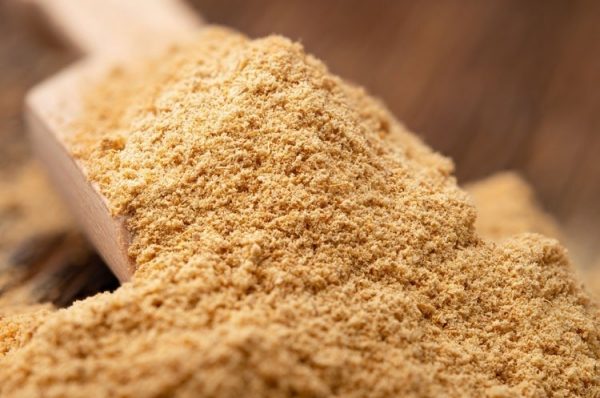
Fermented Rice Bran: A Protein-Rich Feed Ingredient for Black Tiger Shrimp
Solid-State Fermentation Technique
Many Asian countries still rely on imported feed ingredients for black tiger shrimp, of which soybean meal (SBM) is the most important protein source. However, the aquaculture industry is competing for soybean meal supplies with the livestock industry. Therefore, local feed raw materials like rice bran attract attention due to their low cost and abundant supply.
Rice products are often not used in shrimp feed because they are priced similarly to wheat products but lack feed binding properties.
Many studies have been conducted to improve the quality of rice bran to increase its usability as a livestock feed ingredient. Biomass transformation through solid-state fermentation (SSF) is one such technique. This process helps increase nutritional availability through changes caused by microbial metabolic activities, increasing protein and soluble sugars while reducing complex carbohydrates.
To date, no reports have been published on the use of fermented rice bran (FRB) in shrimp feed. Recently, the hatchery of the Institute of Aquaculture, College of Fisheries and Ocean Sciences, University of the Philippines Visayas in Miagao, Philippines, conducted trials with fermented rice bran on high-quality and disease-free black tiger shrimp larvae (PL15).
Shrimp larvae were acclimatized and raised in tarpaulin ponds for 30 days. At the end of the nursery stage, the shrimp were transferred to the experimental system. The seed shrimp were randomly distributed into 20 60-liter plastic tanks with a recirculating seawater system, at a density of 15 shrimp/tank, and acclimatized for 7 days.
The experiment used fermented rice bran (FRB) as an alternative protein source to soybean meal (SBM) in the basic diet of black tiger shrimp. Specifically, FRB replaced SBM at rates of 0% (T0), 12.5% (T12.5), 25% (T25), 37.5% (T37.5), and 50% (T50). All five treatments had a crude protein content of 44%, each treatment was repeated 4 times and lasted 50 days.
Improving the Nutritional Value of Rice Bran
The results of the study showed that the fermentation process reduced the fiber content in rice bran by about seven times compared to unfermented rice bran. The total dietary fiber (TDF) content in rice bran ranged from 20-30%, and nearly 90% of that was insoluble fiber (IDF). High insoluble fiber content is the reason for the low nutritional value of rice bran and the limited use of rice bran in feed.
Solid-state fermentation techniques increased the protein content in rice bran by about three times compared to the raw material. The number of amino acids in FRB also increased compared to unfermented rice bran, indicating an improvement in protein quality. Other studies have also recorded similar improvements in protein content and amino acid quality. The protein improvement is related to microorganisms, which are natural protein essences, as they contain highly digestible proteins with a full range of essential amino acids.
The essential amino acid index of FRB reached 84%, assessed as a good quality protein source equivalent to soybean meal. The chemical score index of FRB showed that tryptophan is the limiting amino acid. The amino acids of fermented rice bran depend on the microbial species and the raw materials used in the fermentation process.
Replacing Soybean Meal
The results of this study confirm the feasibility of FRB in replacing soybean meal in diets for black tiger shrimp larvae. Replacing 25% of soybean meal with FRB brought about a clear improvement in weight gain, specific growth rate, feed conversion ratio, and protein efficiency ratio. However, there was no significant impact on growth performance when replacing soybean meal at higher levels. This suggests that the fermentation process can improve the nutritional value of rice bran and can be used to partially replace soybean meal in the diets of black tiger shrimp.
In a previous study on pangasius, FRB replaced 20% of SBM. Other studies have also reported positive effects on shrimp growth when replacing SBM with agricultural waste. For example, whiteleg shrimp showed improved growth when fed fermented sweet potato powder.
FRB did not negatively affect the nutritional composition of black tiger shrimp. Furthermore, protein retention in shrimp was improved when replacing SBM by up to 25%. However, when replacing SBM at higher levels, the protein retention level was similar to the control group due to the increase in essential amino acids in diets containing FRB, leading to more efficient protein retention. This result contrasts with other studies where partial replacement of SBM with fermented agricultural waste had no significant impact on shrimp protein retention.
Amino acid analysis of black tiger shrimp after the feeding trial showed that lysine levels in shrimp fed 50% FRB replacing soybean meal were significantly higher than in the control group. Lysine, along with many other amino acids, plays an important role in the flavor of shrimp. Furthermore, glutamic acid – a flavor-determining substance – was higher in the group of black tiger shrimp fed 50% FRB. These results suggest that FRB can improve the sensory characteristics of black tiger shrimp.
The current study indicates that solid-state fermentation can improve the nutritional value of rice bran into a protein-rich feed ingredient for black tiger shrimp by increasing protein content, reducing fiber content, improving amino acids, and enhancing the digestibility of the material. The results show that FRB can partially replace SBM in diets without affecting the growth performance and nutritional value of the shrimp.
Replacing 25% SBM with FRB helps shrimp growth, and 50% FRB replacement can fully replace SBM without affecting shrimp development. Therefore, further research is needed to evaluate the total replacement of SBM with FRB.