
Carbon Credits - The "Golden Key" for Organic Agriculture - Part 3: The "Game" of Value Chain Linkages and the Power of Technology
Vietnam has sold 1 million tons of carbon credits from the North Central region to the World Bank
"Green Money" is not yet easy to reach
According to statistics from the Department of Climate Change (Ministry of Natural Resources and Environment), Vietnam currently has more than 300 programs and projects registered under carbon credit standards, of which about 150 projects have been granted over 40 million credits and have conducted transactions on the global market.
This figure makes Vietnam one of the four countries with the most projects under the Clean Development Mechanism (CDM), following only China, Brazil, and India, focusing mainly on renewable energy and energy efficiency. Recent projects such as the exchange of 10.3 million tons of CO₂ from North Central forests or the 1-million-hectare high-quality, low-emission rice project in the Mekong Delta all show positive prospects.
Dr. Tăng Thế Cường – Director of the Department of Climate Change: "Developing the carbon market is an irreversible trend that both helps green transition and promotes greenhouse gas emission reduction at low cost, while enhancing the competitiveness of enterprises. The carbon market is also expected to contribute significantly to the goal of net-zero emissions by 2050 that Vietnam committed to at COP26, while opening opportunities to attract international investment in renewable energy and green technology."We have also established policies such as Decree 06/2022/NĐ-CP and guiding circulars updated in 2024 and 2025 to create a "backbone" for the carbon market. Additionally, on October 1, 2021, the Prime Minister issued Decision No. 1658/QĐ-TTg approving the National Green Growth Strategy for the 2021-2030 period, with a vision to 2050; At the Plenary Session of the High-level Forum and Exhibition on Industry 4.0 in 2023 on June 14, 2023, Prime Minister Phạm Minh Chính emphasized that the Party and State of Vietnam highly value and view digital transformation, green transition, and sustainable development as key tasks in the process of industrialization and modernization.
However, practical implementation still encounters "gray areas." That is, there are gaps in the legal corridor regarding the promotion of carbon market development. So, why has a solution considered a "gold mine" like carbon credits not yet exploded as expected?
The first and biggest barrier is the cost and technicality of MRV (Measurement, Reporting, and Verification). For a ton of carbon to be recognized and listed, the verification process by international organizations such as Gold Standard or Verra can consume 30% to 50% of the value of the credit itself. For small-scale farming households, preparing carbon documentation on their own is almost impossible.
Meanwhile, the international voluntary carbon market in 2025 witnessed strict inspections regarding "Greenwashing." Agricultural projects that cannot prove parameters according to the CDM mechanism are refused credits. This requires Vietnamese organic agriculture to enter a stage of extremely high professionalization regarding data.
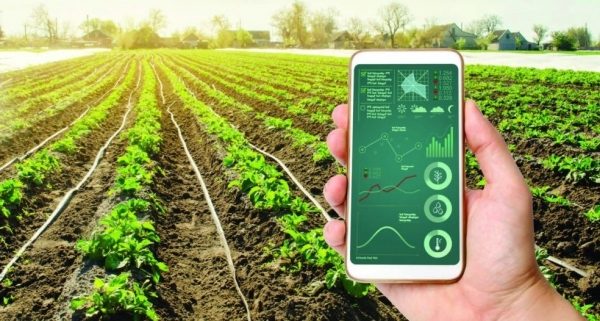
Applying IoT devices in organic agricultural production achieves high efficiencyDigital transformation is the key
For carbon credits to truly become an economic pillar for organic agriculture in the coming years, experts propose a 3-step roadmap to "realize" carbon value: Data Standardization - Domestic Market Operation - International Connection. Just as Prime Minister Phạm Minh Chính directed: Agriculture must be digitized!
The year 2025 shows that where there is digital data, there carbon becomes money. And the most practical roadmap to turn carbon credits from "paper dreams" into reality is digitizing the entire cultivation diary. Instead of manual notebooks written by intuition, pioneering organic farms in Hà Tĩnh or the Mekong Delta have begun applying Blockchain for carbon traceability. Every activity from organic fertilization and irrigation water management to byproduct collection is encrypted and cannot be edited or deleted.
To reduce MRV costs when participating in this "big game," small cooperatives can link up to aggregate their areas. That is, localities need to create and develop linked cooperative models. For example, a single farmer with only 1-2 hectares of land will never be eligible to sell carbon. But 1,000 farmers linked in a cooperative alliance with a scale of 2,000 hectares is a different story.
And large enterprises or cooperatives play the role of the focal point. They invest in measurement technology, handle legal documents, bear verification costs, and represent the group in trading on the exchange. Farmers contribute by strictly complying with organic processes and sharing profits according to the committed ratio.
In Hà Tĩnh, several linkage models between enterprises and organic tea growers in 2025 have shown effectiveness: Enterprises guarantee product purchase at 15% higher prices, while paying an additional 5% profit from carbon credit sales after deducting operating costs. This is the sustainable "multi-value" model we are aiming for.
Tea planting linkage model in Kỳ Văn commune, Hà Tĩnh provinceReality shows that carbon credits will be a "gold mine" if we view them as a high-end commodity, requiring absolute data transparency and connectivity.
The Prime Minister's affirmation of a generation of "civilized farmers" is the key. The civilized farmer of the future knows not only how to hold a hoe but also how to protect every gram of carbon in the soil like protecting assets in a bank. When every square meter of organic land becomes a digitized carbon storage unit, then Vietnamese agriculture will not only sell clean products but also sell life and trust to the world.
Therefore, the journey of building and developing an organic agricultural foundation has no room for opportunistic businesses. It is a roadmap of persistence, methodical investment in technology, and above all, a firm handshake between "State - Enterprise - Farmer" on the path to greening the future.