
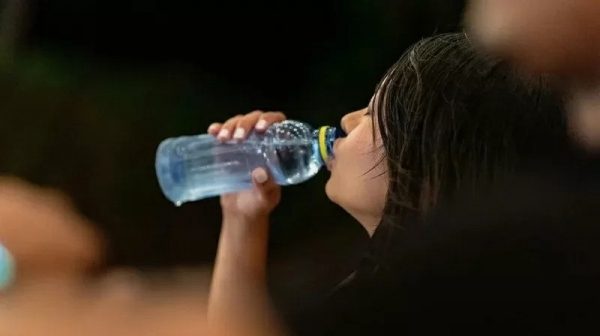
Water intake and stress hormone response
Research shows higher cortisol levels in people who drink little water. (Source: RTE)
Notably, this group did not feel thirstier, yet their bodies reacted more negatively under stress.
Study design and stress test
The study, conducted by experts at Liverpool John Moores University (UK) on 32 adults, included 16 people who drank less than 1.5 liters of water per day and 16 people who met water intake recommendations.
The researchers monitored the hydration status of both groups for seven days through urine and blood samples, then invited them to participate in a laboratory stress test.
The test included a surprise job interview: each person had 10 minutes to prepare, then had to enter another room with a fake video camera and answer before a "panel" of three people wearing white lab coats. Next, they were asked to do mental arithmetic, subtracting numbers as fast as possible.
Professor Neil Walsh from the School of Sport and Exercise Sciences, Liverpool John Moores University, described this as a "truly disconcerting" experience.
“We know that people who drink little water daily, failing to meet recommendations, are often dehydrated. But what we did not know was whether their stress hormone response would be stronger when placed in a controlled stressful situation,” said Professor Walsh.
Measuring cortisol and comparing the two groups
To measure cortisol levels, researchers collected saliva samples before and after the test. Cortisol, also known as the stress hormone, is produced by the adrenal glands when the body is stressed, and also plays a role in immune responses, metabolism, and blood pressure.
Professor Shaw noted that external stress reactions such as a racing heart, sweaty palms, and dry mouth were similar in both groups. “Both felt equally anxious and had similar heart rate increases during the test. However, the daily low-water-intake group had a much stronger cortisol response.”
Water intake recommendations and situational needs
The study's findings also reinforced advice from health agencies. Specifically, the European Food Safety Authority (EFSA) recommends that men drink 2.5 liters of water per day, while women drink 2 liters. Meanwhile, the UK's Eatwell Guide suggests that adults should drink 6–8 glasses of water per day, equivalent to 1.5–2 liters.
Experts emphasize that water needs may increase in hot weather, during vigorous physical activity, illness, or during pregnancy and breastfeeding.
According to the research team, keeping a bottle of water beside you during stressful times not only helps ease the mind but is also beneficial for long-term health.