
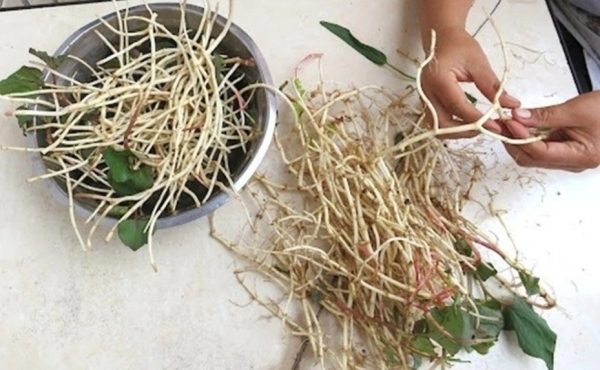
Exploring fish mint root in herbal medicine and cuisine
Plant characteristics and traditional medicine uses
Fish mint is an herb commonly served as a fresh side in Vietnamese meals. It has a sour taste and cooling properties. Due to its characteristic scent, it can be difficult to eat for those who are not used to it. However, those who are accustomed to it enjoy it very much. This plant possesses excellent medicinal properties.
Fish mint is also known by other names: rấp cá, diếp cá, cây giấp cá, dấp cá, and ngư tinh thảo. Its scientific name is Houttuynia cordata, belonging to the lizard's tail family Saururaceae. Fish mint is cultivated or grows wild in many places. It is very easy to find and inexpensive.
Chemical composition of fish mint: The entire plant contains essential oils, primarily composed of aldehydes. In addition, fish mint contains caprinic acid, laurinaldehyde, benzamide, decanoic acid, lipids, vitamin K, and more. Fish mint leaves contain β-sitosterol and alkaloids.
According to traditional medicine, fish mint root has a pungent, slightly bitter taste and slightly cold properties, entering the lung, liver, and spleen meridians. It works to clear heat, detoxify, drain dampness, promote urination, invigorate blood circulation, dispel swelling, regulate qi, and resolve stasis. It is commonly used to treat respiratory tract infections, urinary tract infections, digestive disorders, gynecological conditions, boils, and dermatitis.
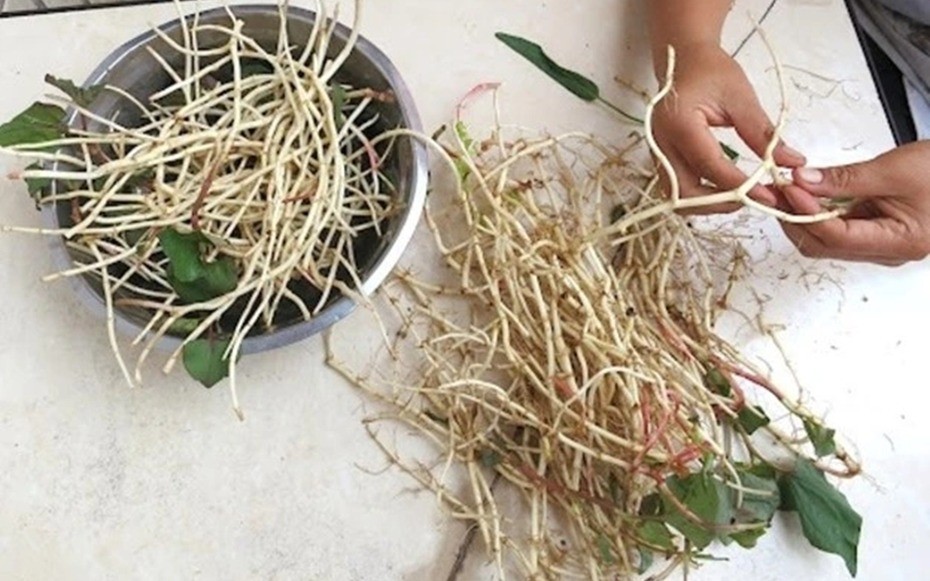
Herbalist Đỗ Minh Tuấn from the Hanoi Traditional Medicine Association shared that fish mint is not only a culinary herb in daily meals but also a "longevity" vegetable and a valuable remedy in traditional medicine, especially in protecting and enhancing lung health.
According to Mr. Tuấn, in traditional medicine, fish mint (also called dấp cá) has a sour taste and slightly cold properties, entering the liver and lung meridians. With these characteristics, fish mint is known for the following benefits:
Relieving cough and resolving phlegm: Reduces coughing and thins phlegm, helping clear the respiratory tract.
Clearing heat: Helps cool the body, particularly useful during sweltering summer days.
Draining dampness and reducing swelling: Promotes urination, reduces edema, and helps eliminate toxins from the body.
Cases requiring caution
Cases that should exercise caution when using include:
- People with low blood pressure: Fish mint can lower blood pressure. If you are taking antihypertensive medications or have low blood pressure, consult a physician before use to prevent unwanted side effects.
- Pregnant and breastfeeding women: Fish mint can cause uterine contractions; therefore, its use should be limited, especially during the first trimester of pregnancy.
- People with a cold constitution, frequent loose stools, cold stomach, or abdominal bloating should not consume raw leaves or fish mint leaf juice.
Preparing salad from fish mint root
Just like fish mint leaves, fish mint root can also be eaten raw alongside other dishes as a fresh vegetable. Additionally, fish mint root can be prepared into various dishes.
Tossing the salad: 100g fish mint root, 1 small carrot, 1 cucumber, 1/2 onion, 2 tablespoons rice vinegar, 1 tablespoon sesame oil, 1 teaspoon sugar, 1/2 teaspoon salt.
Thoroughly wash the fish mint root, carrot, cucumber, and onion; cut the fish mint root into short segments, thinly slice the onion, and julienne the carrot and cucumber.
Mix the rice vinegar, sesame oil, sugar, and salt in a small bowl until the sugar and salt are completely dissolved; then place the fish mint root, carrot, cucumber, and onion into a large bowl, drizzle the vinegar dressing over them, and toss well.
Let it sit for about 10 minutes for the ingredients to absorb the seasonings, then transfer to a plate and enjoy; you can add a bit of sliced fresh chili if you like spicy food.
How to make fish mint root juice
Fish mint root juice: 50g fresh fish mint root (washed, chopped). Honey, rock sugar, lime.
Wash the fish mint root thoroughly, place it into a blender, add filtered water, and blend until smooth.
Strain through a sieve or thin cloth to extract the juice.
Add honey or rock sugar and stir well; you can add lime to reduce the fishy scent.