
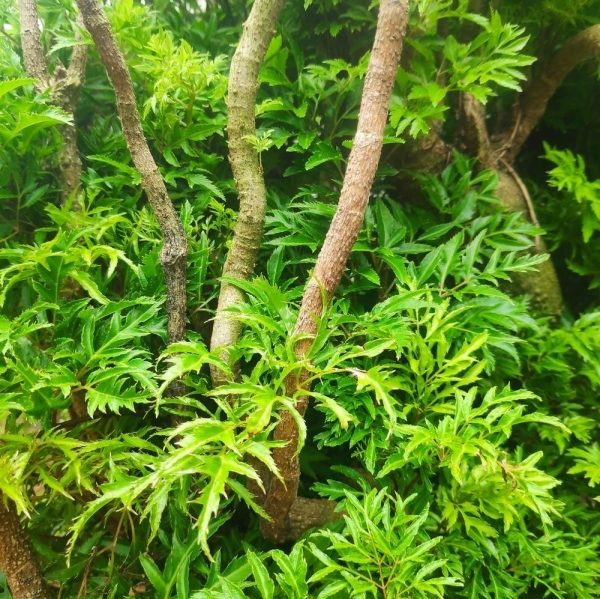
Dinh lang leaves can be eaten as a vegetable, but should not be overused
Dinh lang leaves (Polyscias fruticosa) have long been used in daily life and traditional medicine in several Southeast Asian countries. The leaves can be used as fresh herbs to accompany dishes, cooked in soups, or prepared with various dishes.
Studies on chemical composition show that dinh lang contains many groups of plant compounds such as triterpenoid saponins, flavonoids, polyphenols, sterols, and several other compounds. Certain antioxidant, anti-inflammatory, and metabolic activities have been documented in experimental research. However, these findings do not equate to eating dinh lang leaves being able to prevent or treat diseases in humans.
Who can consume dinh lang leaves?
People looking to diversify vegetable sources in their meals
Dinh lang leaves can be used as a vegetable in appropriate amounts to enrich the menu. Young leaves can be eaten alongside certain dishes or cooked into soups, according to taste.
Using dinh lang leaves in meals should be viewed as food supplementation, not a therapeutic treatment. A diverse, balanced diet across green vegetables, fruits, protein, fats, and carbohydrates remains an essential foundation for health.
People interested in foods rich in plant compounds
Chemical studies have identified many bioactive compounds in dinh lang, notably triterpenoid saponins, along with flavonoids and polyphenols. Several laboratory studies have documented the antioxidant capacity of dinh lang leaf extracts.
However, the activity of a substance in an extract or experimental model cannot be directly converted into a similar effect when humans consume dinh lang leaves in meals. Therefore, one should not rely on these results to use dinh lang leaves as a substitute for medication or treatment regimens.
People looking to increase the proportion of plant-based foods in their diet
For healthy individuals, dinh lang leaves can be used in moderation as a way to diversify the vegetable group and plant-based foods.
The important thing is not to focus excessively on a single type of food. The nutritional value of a diet comes from diversity and balance across multiple food groups.
The elderly can consume them in appropriate amounts
Elderly individuals, unless they have specific contraindications, can use dinh lang leaves as a vegetable in meals.
However, one should not assume that dinh lang leaves help maintain bone and joint health, improve memory, or prevent age-related diseases. Some effects studied with dinh lang extracts have only been observed in experimental models, lacking sufficient evidence to confirm efficacy in humans.
Do dinh lang leaves help reduce fatigue, insomnia, or control blood sugar?
Dinh lang has been used in traditional medicine for various purposes and is being studied for its biological activities. Some experimental studies have noted potential effects related to antioxidant, anti-inflammatory, metabolic, and neurological functions.
However, it should not yet be asserted that eating dinh lang leaves can treat insomnia, fatigue, headaches, or control blood sugar. In particular, results from studies on cells, animals, or concentrated extracts cannot replace clinical evidence in humans.
People suffering from medical conditions or taking medications still need to adhere to their doctor's treatment regimen.
Important notes when using dinh lang leaves
Eat in moderation
Dinh lang leaves can be used in culinary dishes, but should not be eaten in excessive amounts or used long-term as medicine.
Compounds in dinh lang are biologically active, including saponins, so using them in the form of extracts or concentrated preparations requires more caution than consuming a small amount of leaves in meals. Current research also indicates a lack of data regarding long-term use, reproductive safety, and drug interactions.
Do not use dinh lang leaves as a substitute for medication
If undergoing treatment for diabetes, metabolic disorders, bone and joint diseases, insomnia, or other chronic conditions, you should not arbitrarily discontinue medications to use dinh lang leaves.
Studies on the biological effects of dinh lang currently primarily provide a basis for further research, rather than sufficient evidence to use it as a therapeutic treatment.
Pregnant women, breastfeeding mothers, and people taking medication should exercise caution
Safety data on using dinh lang in high doses or over prolonged periods in certain special groups remains limited. Therefore, pregnant women, breastfeeding mothers, people with chronic illnesses, or those taking multiple medications should consult a doctor before using dinh lang regularly or taking concentrated preparations.
Prioritize appropriate preparation
Dinh lang leaves can be prepared into dishes rather than used in the form of concentrated extracts. When consumed as a vegetable, they should be washed thoroughly, sourced from transparent origins, and prepared appropriately.
Do not equate “food” with “medicine”
Dinh lang is a plant with a rich chemical composition and is attracting interest in research on natural compounds. However, the gap between laboratory bioactivity and clinical efficacy in humans still needs to be clarified through clinical trials.
Therefore, healthy individuals can consume dinh lang leaves as a vegetable in moderation to diversify their meals. For disease treatment purposes or when using high doses, especially in extract form, you should consult a healthcare professional rather than self-administering.