
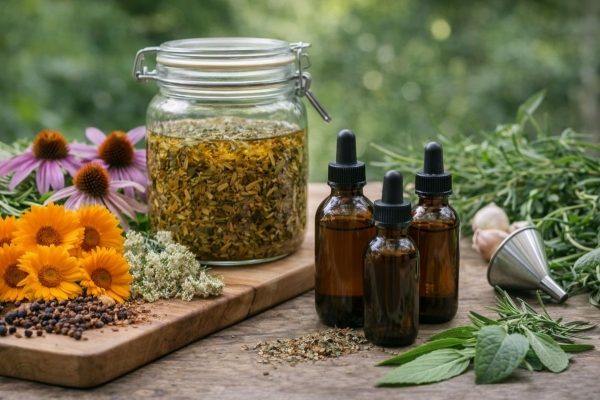
Herbal Tinctures: The Proper Way to Prepare Them for Flu Prevention and Immunity Boosting
Since ancient times, herbal decoctions have been used to prevent colds, flu, and support the treatment of many health issues. Today, alongside brewing herbal teas, tinctures are considered a more efficient and convenient extraction method. Alcohol helps dissolve many beneficial active ingredients that hot water struggles to extract fully, while also preserving the medicinal properties of the herbs for many years.
Although made with alcohol, the amount of alcohol in each dose is very small and does not cause intoxication. Compared to buying expensive store-bought products, you can easily make tinctures at home at a low cost while still ensuring quality.
Safety Precautions When Using Herbs
Not all plants are safe to use as medicine. Some herbs can cause side effects if used incorrectly or in excessive doses. Children, pregnant women, breastfeeding women, and people taking prescription medications should consult a doctor or traditional medicine specialist before using herbal tinctures.
Only use plants that you can identify with absolute certainty. Many wild plants look similar to medicinal herbs but contain dangerous toxins. Furthermore, not every part of a plant is used for medicine; some species only utilize the roots, leaves, or flowers, while other parts might be harmful.
Never harvest plants in areas at risk of contamination from pesticides, herbicides, or in public urban soil. Do not harvest on private land without permission, and do not extract plants from nature reserves without authorization from the relevant authorities. The safest way is to grow medicinal plants in your own home garden or purchase dried herbs from reputable sources.
Plants Suitable for Making Tinctures
Many familiar plants in the garden or nature can be used for tinctures, such as: dandelion, pennywort, plantain, nettle, peppermint, rosemary, garlic, raspberry leaves, cayenne pepper, thyme... Certain flowers like echinacea, yarrow, passionflower, and red clover are also commonly used. Additionally, some woody plants and shrubs like white willow, hawthorn, blueberry, ginkgo biloba, and black walnut contain active ingredients beneficial for health.
How to Prepare Herbal Tinctures
Prepare fresh or dried herbal ingredients and strong alcohol (preferably 40% proof vodka).
Steps to Follow:
-
Chop the herbs into short segments (about 1 cm or smaller). For roots and bark, chop as finely as possible for more effective extraction. Do not wash thoroughly if the plant isn't very muddy, as water can wash away essential oils.
-
Weigh the herbs:
-
If using fresh herbs: use twice the weight of the herbs in alcohol.
-
If using dried herbs: use five times the weight of the herbs in alcohol.
Place the herbs in a glass jar and pour the alcohol so that it completely covers the ingredients.
-
-
Seal the jar tightly, shake well, and place it in a cool, dry place for at least 2 weeks. Shake the jar gently once a day to help the active ingredients dissolve more evenly.
-
After the soaking period, filter out the herbal residue using a clean cloth or fine sieve, keeping the liquid tincture.
-
Pour the tincture into small glass dropper bottles (preferably dark brown bottles to prevent light from degrading the quality).
-
Label the herb name and the soaking date to easily track the duration of use.