
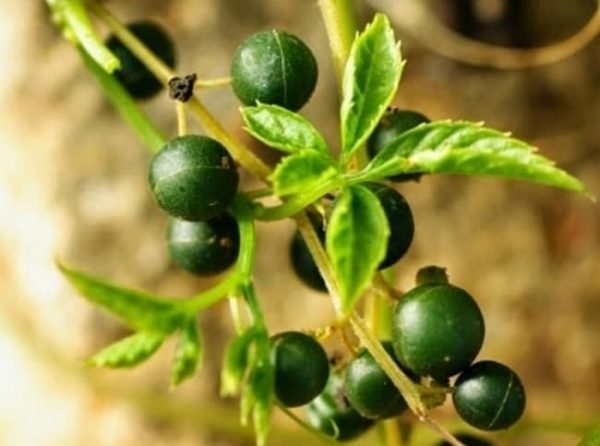
What makes this herbal remedy, hailed as "more precious than ginseng," so special that daily drinkers feel healthier and stronger?
What is Giao Co Lam (Jiaogulan), and what are its botanical features?
Giao Co Lam is also known by various names such as the "herb of longevity" (China), "fuku-in-sou" (Japan), five-leaf ginseng, and miracle grass. Its botanical name is Gynostemma pentaphyllum, belonging to the gourd family (Cucurbitaceae).
According to studies, Jiaogulan grows wild in sparse forests with high humidity and cool climates in regions such as Korea, Japan, and China. In Vietnam, it is abundantly found in the Fansipan mountain range around Sa Pa and the limestone mountains of Hoa Binh province.
While this medicinal plant has long been popular in China and Japan for its specialized herbal formulas and remarkable health properties, discoveries, harvests, and research in Vietnam have demonstrated that the quality of Jiaogulan found domestically is fully comparable to the varieties in China and Japan.
Jiaogulan is a herbaceous, climbing vine that uses simple tendrils originating from leaf axils to climb. Its leaves are palmately compound, fanning out like fingers on a hand. Each stem usually bears 5 to 7 leaflets, and occasionally 9. The leaf surface is slightly rough, with a deep green upper surface and a paler underside.
The flowers grow in panicle clusters resembling small batons, featuring tiny white petals spreading into star shapes, with 3 styles on the ovary. The fruit is spherical, measuring about 5–9 mm in diameter, turning black when fully ripe.
Jiaogulan is categorized into three types based on leaf characteristics:
3-Leaf Type: The 3-leaf variety typically has 3 leaflets at the thickest part of the vine; it is less frequently used, has a milder flavor, and is not as aromatic as the other varieties.
5-Leaf Type: The 5-leaf variety is the most widely utilized due to its superior efficacy. It offers a subtle, pleasant aroma; upon brewing, it presents an initial bitter note followed by a refreshing, lingering sweet aftertaste.
7-Leaf Type: The 7-leaf variety resembles the 3-leaf plant, but carries a harsher, more bitter taste that makes it less palatable.
In traditional medicine, Jiaogulan has a bitter, slightly sweet taste and a cooling nature, entering the Lung, Spleen, and Kidney meridians. It functions to clear heat, detoxify, tonify Qi, invigorate the Spleen, nourish Yin, and resolve phlegm to soothe coughs. Consequently, it is commonly used to support the management of hepatitis, dyslipidemia, chronic gastroenteritis, chronic bronchitis, bodily debility, and phlegm-laden coughs.
Health Benefits of Jiaogulan
Thanks to its rich composition of active phytochemicals, Jiaogulan is widely consumed to support health maintenance and help prevent various ailments.
Supports blood sugar stabilization
Saponin compounds in Jiaogulan assist in reducing and stabilizing blood glucose levels while improving systemic circulation. This botanical is frequently used as a complementary remedy for individuals with type 2 diabetes, helping mitigate the risk of long-term complications when consumed in appropriate doses.
Promotes cardiovascular and circulatory health
Studies indicate that Jiaogulan helps reduce blood lipids, inhibits atherosclerosis, and improves cerebral blood flow. In this way, it helps lower the risk of stroke and cardiovascular accidents while assisting in blood pressure management for heart patients.
Supports cancer prevention
Several studies have revealed that saponins in Jiaogulan can inhibit the proliferation of abnormal cells, thereby assisting in preventing the formation and spread of tumors. This effect has been observed in adjunct support against certain cancers such as lung, breast, colorectal, and cervical cancers. However, Jiaogulan serves strictly as a supportive botanical and does not replace medical therapies.
Protects liver function
Active compounds in Jiaogulan are shown to help safeguard hepatocytes, alleviate discomfort linked to liver disorders, and stimulate liver cell regeneration.
Boosts immunity and vitality
The saponins and flavonoids in Jiaogulan strengthen the immune system, boost resilience, and enhance physical endurance. Additionally, the herb offers gentle sedative effects, relieves stress, promotes restful sleep, improves appetite, and supports weight management.
All aerial parts of the Jiaogulan plant can be brewed into tea. After harvesting, these parts are thoroughly cleaned, sun-dried for about 2 to 3 days, and stored in airtight containers. This herbal infusion is naturally caffeine-free, unlike conventional green tea. It offers a delicate bitter-sweet flavor profile reminiscent of green or black teas. Pure 100% Jiaogulan tea is often rare and commands higher value.Key health benefits of Jiaogulan tea
Supports blood pressure reduction and enhances circulation
Jiaogulan contains saponins that promote mild vasodilation, improving blood flow. Consequently, the tea helps gently lower blood pressure in individuals with mild hypertension or chronic stress, relieving the workload on the heart.
Regulates blood sugar and balances energy
Polysaccharides in Jiaogulan assist in glucose regulation, preventing sudden postprandial glucose spikes. As a result, drinkers maintain steady energy levels throughout the day, experience fewer sugar cravings, and feel less fatigued.
Strengthens immunity and provides antioxidant protection
Flavonoids and saponins neutralize harmful free radicals, alleviate inflammation, and slow cellular aging. These active constituents also fortify the body’s natural immune defenses.
Promotes relaxation and improves sleep quality
This herb possesses mild adaptogenic and calming properties. Enjoyed in the afternoon, Jiaogulan eases nervous tension, relaxes tight muscles, and improves nighttime sleep quality.
Lowers blood lipids and protects the liver
Jiaogulan aids in balancing lipid profiles by lowering triglycerides and LDL cholesterol while elevating beneficial HDL. With healthier lipid levels, the liver experiences reduced metabolic stress, enhancing its long-term protection.
Recommended dosage and preparation methods
The parts most frequently used are the leaves and tender young stems. Summer is the primary harvesting season. Post-harvest, the plants are washed thoroughly and dried; young shoots are cut into 2–3 cm sections for further dehydration and storage. The dried leaves can be shredded for loose-leaf brewing or milled for convenient tea bags.
Preparation methods vary depending on your purpose, including simple steeping, decocting, or combining with other complementary herbs. However, drinking it as a plain herbal infusion remains the most popular practice.
Brewing Jiaogulan tea: Place 20 g of dried Jiaogulan into a teapot and pour freshly boiled water over it. It can be consumed throughout the day as an invigorating alternative to plain water.
Combining Jiaogulan with other medicinal herbs: Place Solanum procumbens (Ca gai leo - 20 g), Jiaogulan (30 g), and Ehretia asperula (Xa den - 30 g) into a pot or thermos flask, add 1.5 liters of boiling water, and infuse for about 30 minutes before drinking.
Jiaogulan is one of the most treasured ancient herbs, affectionately celebrated as the "herb of immortality." Far beyond being merely a traditional folk beverage, Jiaogulan has been extensively validated by modern scientific research.
Important precautions when using Jiaogulan
Given its strong biological activities, many people drink Jiaogulan daily as tea. Nevertheless, it must be consumed mindfully and correctly.
What to avoid
Do not drink Jiaogulan tea late in the evening as it may stimulate alertness and cause difficulty sleeping; do not exceed the recommended dose (maximum 20 g per day), and avoid continuous use for longer than 4 months without a break due to the risk of excessive hypoglycemia.
Teas or herbal decoctions made with Jiaogulan should be consumed fresh within the day and never kept overnight, as active ingredients can degrade or oxidize.
Who should avoid using it
Pregnant or breastfeeding women; individuals suffering from autoimmune disorders such as lupus, multiple sclerosis, or rheumatoid arthritis; and those with low blood pressure, particularly when taken on an empty stomach.
People preparing for surgery or in postoperative recovery due to the risk of affecting blood clotting; individuals taking medication or dietary supplements should consult a physician before using jiaogulan.