
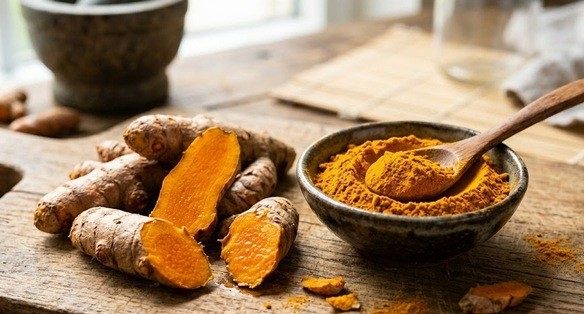
Should You Consume Fresh or Dried Turmeric to Absorb More Curcumin?
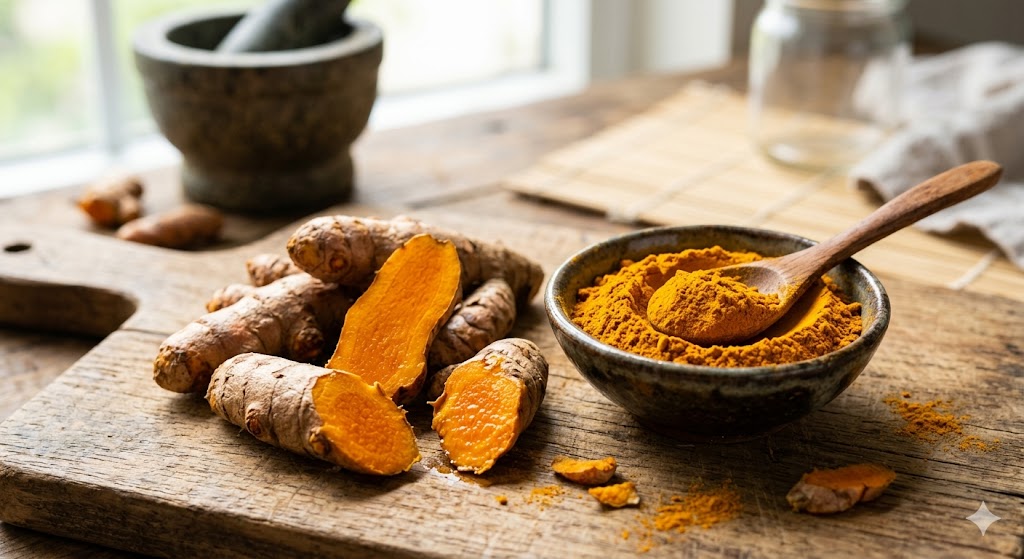
Dried turmeric provides a higher concentration of curcumin.
Fresh vs. Dried Turmeric: Which Contains More Curcumin?
Both fresh and dried turmeric contain curcumin, but fresh turmeric consists mostly of water (80–90%), meaning you receive significantly less curcumin from the same weight of turmeric.
Carefully dried turmeric (in powder form) removes moisture and concentrates the curcumin, delivering a more potent dose of this bioactive compound. However, not all dried turmeric is created equal. Research indicates that the drying method can significantly affect the final curcumin content.
In a study comparing freeze-drying, hot-air drying, and sun-drying, researchers found that:
Freeze-dried turmeric retained the highest level of nutrients, preserving the highest curcumin content (about 45%) and total antioxidant capacity.
Sun-drying led to the greatest loss of curcumin (about 72%), while hot-air drying resulted in slightly lower losses (61%).
Why Is Curcumin Difficult for the Body to Absorb?
A key challenge when consuming any form of turmeric is absorption and bioavailability. The main reasons the body struggles to absorb curcumin include:
Poor water solubility: Curcumin does not dissolve easily in digestive fluids, making it difficult to pass from the gut into the bloodstream.
Rapid metabolism: Once absorbed, the body quickly breaks curcumin down into metabolites that may not be as effective as the original compound.
Rapid elimination: Even the curcumin that gets absorbed tends to be excreted rapidly from the body.
Trapped in plant cell walls: In fresh turmeric, curcumin remains bound within plant cell walls, making it harder for the body to access and utilize.
When it comes to bloodstream absorption, dried turmeric may offer a slight edge over fresh turmeric. However, this also depends on processing methods, raw ingredient quality, and the accompanying foods consumed with it.
Grinding turmeric breaks down more plant cells, facilitating easier curcumin absorption. In one study, participants were given equal amounts of curcumin (400 mg from three different sources: grated fresh turmeric, pure curcumin powder, and turmeric powder mixed into a creamy dish). Researchers discovered:
Turmeric powder produced the highest blood concentration of curcumin, followed by fresh turmeric.
Under a microscope, researchers observed that in fresh turmeric rhizomes, most of the curcumin remained locked inside intact plant cells.
In dried turmeric, curcumin particles were more evenly dispersed and formed clusters, making them easier to dissolve and absorb.
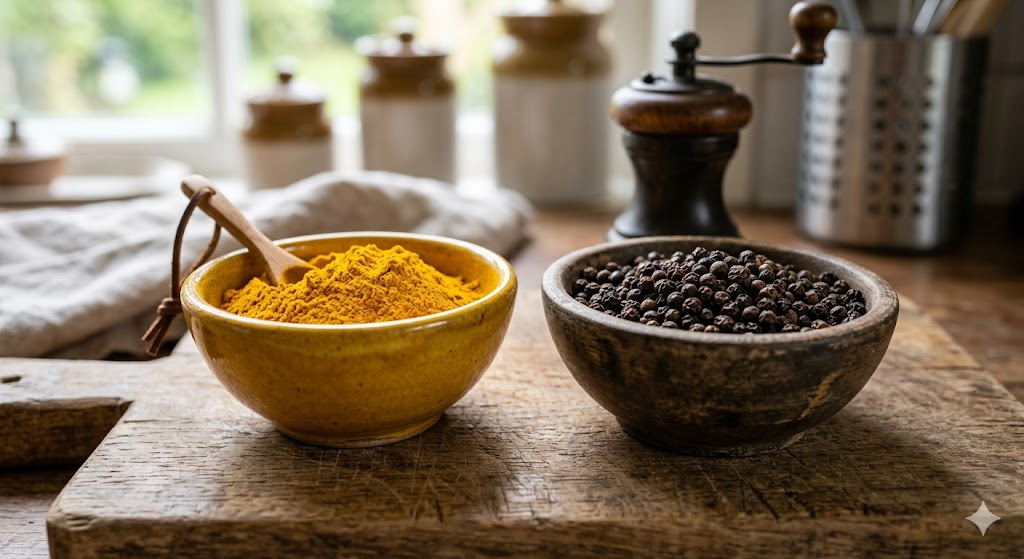
Consuming turmeric with black pepper enhances curcumin absorption.
How to Boost Curcumin Absorption
Research demonstrates that how you consume curcumin—rather than whether it is fresh or dried—is the most decisive factor for absorption. You can maximize curcumin absorption from either fresh or dried turmeric using the following strategies:
Because curcumin is fat-soluble, consume turmeric alongside dietary fats (such as plant oils, milk, nuts, cheese, etc.).
Add a pinch of piperine (a bioactive compound in black pepper), which has been proven to significantly enhance curcumin bioavailability.
Note: Specialized curcumin extracts (such as formulations with lipids, nanoparticles, phospholipids, or piperine) typically offer far superior bioavailability compared to plain fresh or dried culinary turmeric.