
Is Fresh or Dried Đinh Lăng Leaf Tea Better?
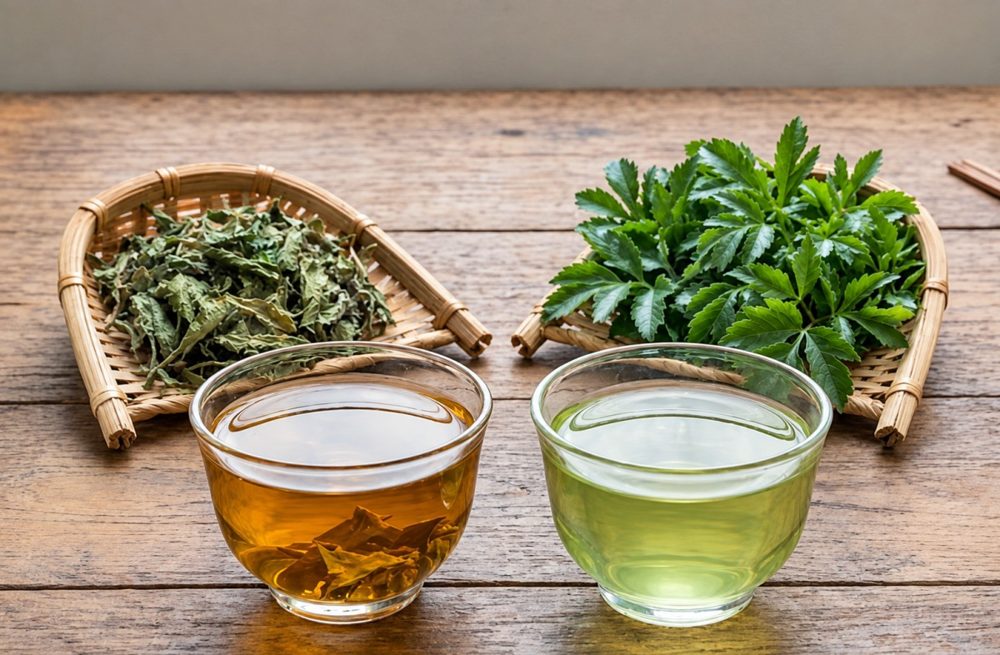
Illustrative image.
Đinh lăng leaf tea has long been used by many as a herbal beverage. Đinh lăng leaves can be used fresh or after being dried or dehydrated. However, there is currently insufficient scientific evidence to confirm whether tea brewed from fresh or dried leaves provides superior health benefits.
Drying, dehydrating, and storing can alter moisture levels, flavor, and the concentration of certain active components in the leaves. Therefore, choosing between fresh or dried leaves should be based on intended use, taste preference, ingredient sourcing, and convenience.
1. How Do Fresh and Dried Đinh Lăng Leaf Teas Differ?
Đinh lăng contains several natural active compounds, such as saponins, along with various other nutrients. However, the composition and levels of these substances can vary depending on the plant variety, the plant parts used, cultivation conditions, harvest timing, and processing methods.
Fresh đinh lăng leaves: Have high moisture content and retain the characteristic aroma of freshly harvested foliage. When simmered, the resulting liquid usually has a distinct herbal scent and a relatively rich flavor. The key advantage of fresh leaves is that they can be used immediately, provided they come from a clean and safe source.
Dried đinh lăng leaves: Are more convenient to store and use over time. After sun-drying or dehydrating, the leaves lose most of their water content, so the required weight differs significantly from fresh leaves. The flavor of tea infused or decocted from dried leaves may be milder or distinct compared to fresh leaves, depending on processing methods.
One should not rely solely on whether the leaves are fresh or dried to conclude which option contains more active compounds or offers greater health benefits.
2. Which Option Is Best for You?
If your family grows đinh lăng following safe, organic practices, fresh leaves can be harvested, thoroughly washed, and brewed directly. Avoid using leaves from plants that have recently been sprayed with chemical pesticides or come from untraceable sources.
Meanwhile, dried leaves are ideal for those who want long-term storage or prefer using them as a daily herbal tea. When purchasing dried products, choose reputable suppliers, check the origin, expiration date, and physical condition; avoid any product showing signs of mold, discoloration, or unusual odors.
3. How to Brew Đinh Lăng Leaf Tea
For fresh leaves, select healthy, pest-free leaves and rinse them thoroughly under running water. Add a moderate amount to water, bring to a boil, then simmer on low heat for a few minutes before turning off the stove.
For dried leaves, rinse quickly if necessary, then steep in hot water just like regular tea, or boil gently as a decoction.
The concentration of the tea depends on the ratio of leaves to water. Avoid brewing an excessively concentrated tea under the misconception that using more leaves yields better results.
4. Important Notes When Drinking Đinh Lăng Leaf Tea
Đinh lăng is a traditional herbal ingredient, but that does not mean it can be consumed indiscriminately or used as a substitute for prescribed medical treatments.
Users should not replace plain drinking water entirely with đinh lăng tea or consume it in high doses over prolonged periods without professional guidance. If unusual symptoms occur—such as nausea, dizziness, abdominal pain, or digestive upset—discontinue use immediately and monitor your health.
Pregnant or breastfeeding women, young children, the elderly, individuals with chronic health conditions, and those taking prescription medications should consult a physician or healthcare specialist before using it regularly.
Once brewed, đinh lăng leaf tea must be stored hygienically. It is best to prepare only the amount you intend to drink within the day, avoiding leaving it at room temperature for extended periods, especially in warm and humid weather.
In summary, both fresh and dried đinh lăng leaves can be used to make tea. Rather than debating which is "better," consumers should focus on clean sourcing, proper preparation, appropriate dosage, and their individual health status.