
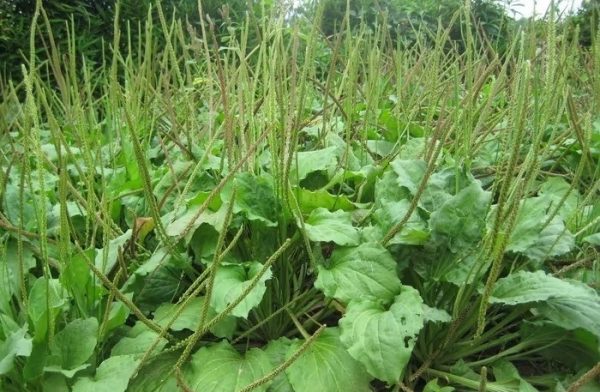
The Supportive Role and Limitations of Plantain Herb for Kidney Stones
For generations, broadleaf plantain has been regarded not merely as a wild weed, but as an essential folk herbal medicine for ailments related to "internal heat," "toxins," and the urinary tract. Easy to find and simple to use, it has long been featured in traditional remedies to support the treatment of kidney stones, painful urination, and frequent urination.
Broadleaf Plantain in Traditional Medicine
Dr. Ngo Duc Phuong, Director of the Institute of Traditional Herbal Sciences, noted that broadleaf plantain (scientific name *Plantago major*) is widely used not only in Vietnam but also across many Asian countries.
“In traditional medicine, plantain has a sweet taste and cooling properties, targeting the lung, liver, and kidney meridians. This herbal medicine is commonly used to clear heat, promote diuresis, relieve painful urination, and support cases of mild urinary tract infections and small urinary stones,” said Dr. Phuong.
Beyond medicinal concoctions, plantain is also used flexibly in everyday meals. Its young leaves can be boiled, cooked in soups, or eaten as greens to help cool the body and aid digestion—making it especially suitable for those prone to internal heat or urinary discomfort.
Diuretic Properties and Folk Remedies
From the perspective of modern science, numerous studies demonstrate that plantain, especially its leaves, possesses clear diuretic effects that promote the excretion of urea, uric acid, and mineral salts from the kidneys. This serves as the scientific foundation explaining why plantain is frequently used to help prevent and alleviate kidney stones.
A commonly used traditional folk remedy to support the treatment of urinary stones includes: 20g broadleaf plantain, 30g *Desmodium styracifolium* (kim tien thao), and 20g cogongrass rhizome. The herbs are decocted daily as one dose or steeped like tea, consumed in several servings throughout the day.
When Medical Treatment Is Necessary
However, Dr. Ngo Duc Phuong emphasized that plantain plays only a supportive role and is not a definitive cure, particularly in cases involving large kidney stones.
Adding to this, Dr. Bui Thanh Hoai from the Department of Traditional Medicine, Hospital 19-8 (Ministry of Public Security), cautioned patients against self-medicating or overusing herbal therapies. According to Dr. Hoai, herbal remedies are typically only effective for small stones. For stones larger than 10mm, those causing grade 2 or grade 3 hydronephrosis, or when severe renal colic occurs, patients require modern medical interventions such as lithotripsy or surgery.
Lifestyle and Clinical Examination for Kidney Stones
In addition to treatment, lifestyle habits and diet play a critical role. People with kidney stones should drink at least 2 liters of water daily to enhance kidney filtration and excretion; at the same time, they should limit salt intake and reduce oxalate-rich foods such as water spinach, strong tea, and chocolate.
Experts also advise that before taking herbal medicines, patients should undergo an ultrasound to accurately determine the size and location of stones, enabling the selection of an appropriate and safe treatment approach.