
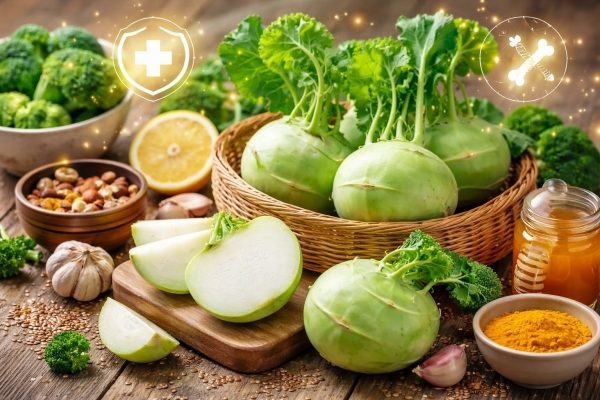
Nutrients and the Health Benefits of Kohlrabi
Kohlrabi—a familiar vegetable in Vietnamese home meals—is regarded as a winter "panacea" thanks to its rich content of vitamins and minerals. Inexpensive and readily accessible, kohlrabi delivers surprising health benefits: from improving digestion and boosting resistance to protecting cardiovascular health and helping prevent cancer.
Fiber and Vitamin C in Kohlrabi
Supporting digestion and effective weight management
Kohlrabi is an excellent source of dietary fiber, helping promote bowel motility, relieve constipation, reduce bloating, and nurture a healthy gut microbiome. Providing only about 27 kcal per 100g while being high in fiber, kohlrabi promotes prolonged satiety, making it ideal for those on a diet or managing their weight.
Boosting immunity during the cold season
The vitamin C content in kohlrabi ranks among the highest among common vegetables. Vitamin C helps neutralize free radicals and stimulates white blood cell production—an essential "shield" protecting the body against colds, flu, and seasonal winter infections.
Essential Minerals for Cardiovascular and Bone Health
Promoting cardiovascular health and regulating blood pressure
Potassium in kohlrabi acts as a natural vasodilator, reducing tension in blood vessels, supporting lower blood pressure, and enhancing circulation. The soluble fiber in kohlrabi also aids in removing bad cholesterol (LDL), thereby helping prevent arterial plaque buildup and lowering the risk of atherosclerosis and stroke.
Protecting bones and joints over time
Kohlrabi contains calcium, magnesium, and manganese—a crucial trio of minerals for the formation of connective tissue and skeletal structure. Incorporating kohlrabi into one's diet from an early age can help maintain bone density and reduce the risk of osteoporosis and joint disorders later in life.
Compounds Supporting Vision and Cellular Protection
Preserving sharp vision and preventing degeneration
Beta-carotene in kohlrabi serves as a precursor to vitamin A, essential for retinal health, while acting as an antioxidant that limits cellular damage caused by blue light exposure. Consuming kohlrabi regularly helps lower the risk of macular degeneration and cataracts.
Strengthening the "shield" against cancer
Compounds such as sulforaphane and isothiocyanates in kohlrabi have been scientifically demonstrated to eliminate damaged cells, inhibit their progression into tumors, and impede angiogenesis in tumor tissues. Eating kohlrabi consistently is considered a natural way to support the body's defense against colon, breast, and prostate cancers.