
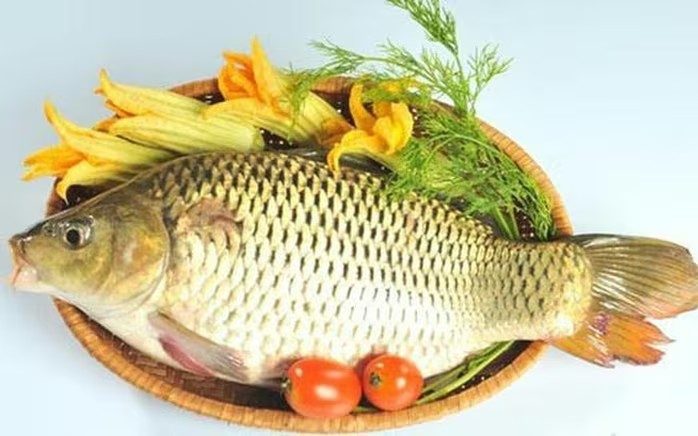
Carp is nutritious but "incompatible" with these foods
Foods that should not be eaten with carp
Despite being highly nutritious, carp is "incompatible" with several types of food. When combined inappropriately, users may experience indigestion, allergies, or a decreased ability to absorb nutrients.
Dog meat: According to Traditional Chinese Medicine, dog meat has "warm" properties while carp has "cold" properties. Eating them together easily causes a conflict in food properties, leading to stomach aches or digestive disorders.
Chicken: The combination of chicken and carp is believed to easily cause internal heat, acne, or indigestion in some sensitive individuals.
Shrimp: Both shrimp and carp are high in protein. Consuming them at the same time, especially for those with allergies, can increase the risk of itching or allergic reactions.
If combined incorrectly with certain foods, carp can cause digestive disorders
Vietnamese balm (Kinh giới): Vietnamese balm has a spicy taste and warm properties; when eaten with carp, it can cause some people to feel itchy or uncomfortable.
Perilla (Tía tô): Although often used to remove the fishy smell of fish, perilla is not suitable when prepared with carp because it can cause internal heat or acne.
Winter melon: Both carp and winter melon have cold properties; using them together easily makes the digestive system "chilly," causing indigestion or digestive disorders.
Licorice: Licorice has a sweet taste and cold properties. When combined with carp, it can cause a cold sensation in the stomach or gastrointestinal discomfort.
Pickles: Pickles contain nitrites, which when combined with the protein in fish can form nitrosamines - compounds that are not beneficial to health if consumed frequently.
In addition to the above foods, users should also note some principles when eating carp:
Do not eat carp with overly sour fruits such as green mango, tamarind, or vinegar because the high acid content can cause bloating and indigestion.
Limit consuming carp with beer, wine, or alcoholic beverages as it can increase the burden on the liver and digestive system.
Avoid combining carp with too many other "cold" property foods.
Do not eat carp with other purine-rich foods to limit the risk of increased uric acid.
Notes for eating carp safely
Properly preparing carp
Carp needs to be thoroughly cooked before consumption. Fish living in water can easily carry bacteria or parasites; if not cooked thoroughly, it can cause food poisoning or affect the liver and internal organs.
Groups that should be cautious
People with liver or kidney disease: The high protein content in carp can increase the burden on these organs.
People with blood clotting disorders: Certain fatty acids in fish can affect platelet aggregation.
People with gout: Carp contains purines, which can increase uric acid levels in the blood.
People with allergies: Should test with a small amount before eating to avoid allergic reactions.