
Vegetables That Nourish the Lungs and Protect Respiratory Health in Autumn
According to Resident Physician Nguyen Thanh Vuong from the Department of Traditional Medicine, Hanoi Medical University, early autumn brings transitional weather that is typically dry, which can easily deplete body fluids and strain the lung system. Therefore, incorporating appropriate leafy greens into your daily diet can play an important role in supporting health.
Green vegetables not only balance nutrition but also help the body adapt to changing weather conditions. Along with drinking plenty of water, choosing vegetables that moisten the lungs (lubricating the respiratory tract), promote body fluid production, and relieve dryness is an easy way to ease throat dryness and support respiratory wellness.
1. Vegetables with Lung-Nourishing Properties
1.1. Malabar Spinach – Clearing Heat and Relieving Dryness
In traditional medicine, Malabar spinach (rau mồng tơi) has a cool nature and a mildly sweet-and-sour taste, with properties that clear internal heat, cool the blood, and alleviate dryness.
Malabar spinach is rich in soluble mucilage, vitamin A, vitamin C, and antioxidants, which help soothe the throat lining and relieve constipation—a common issue when the body lacks sufficient fluids.
Malabar spinach can be prepared in various familiar dishes, such as soups cooked with field crab or shrimp, or simply boiled.
Individuals with a weak, cold digestive system or frequent diarrhea should avoid consuming it in excess.
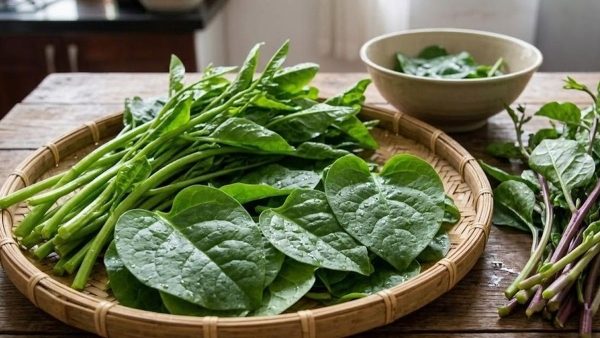
Malabar spinach helps relieve dryness and reduces dry throat during arid weather. Photo: AI.
1.2. Amaranth Greens – Nourishing Yin and Clearing Heat
According to traditional medicine, amaranth greens (rau dền) help clear heat, cool the blood, nourish Yin, and stimulate fluid production. Rich in vitamin C, beta-carotene, folate, and essential minerals, amaranth is an excellent addition to meals during dry autumn days.
Amaranth greens can be boiled, cooked in soup with shrimp, or added to porridge. It is particularly suitable for people who often feel internal heat, dry mouth, or mild constipation.
1.3. Spinach – Supporting Fluid Generation
Spinach (cải bó xôi) is packed with vitamins A, C, and E, alongside abundant antioxidants.
In traditional medicine, spinach nourishes Yin, generates body fluids, relieves dryness, and aids in clearing heat. It can be prepared in dishes such as minced pork soup, stir-fried with garlic, or added to warm soups.
It is best consumed shortly after cooking and should not be overcooked to minimize vitamin loss.
1.4. Celery – Clearing Heat and Soothing the Body
In traditional medicine, celery has a sweet, slightly bitter taste and a cooling nature, working to clear heat and soothe the liver. This vegetable contains high amounts of water, potassium, and antioxidants, helping hydrate the body during seasonal changes.
Celery can be stir-fried with beef or cooked in soups. People with low blood pressure or a cold digestive system should consume it in moderation.
1.5. Napa Cabbage – Promoting Fluids and Alleviating Dryness
Napa cabbage has high water content and is rich in vitamin C and dietary fiber. In traditional medicine, it helps clear heat, generate fluids, and relieve dryness, making it ideal for those who frequently experience dry throat and mouth as autumn arrives.
Napa cabbage can be made into meatball soup, stir-fried with mushrooms, or used in hot pots. Avoid overcooking to preserve its nutritional value.
1.6. Katuk (Sweet Leaf) – Replenishing Vitamins and Cooling the Body
Katuk (rau ngót) has a sweet taste and a cooling property, known for clearing heat, generating fluids, and promoting diuresis. It is also an excellent source of vitamin C, beta-carotene, and minerals, making it well-suited for daily meals.
Katuk soup cooked with lean pork is easy to digest, providing both greens and extra hydration, perfect for dry weather.
2. Dietary Tips to Relieve Dry Throat During Seasonal Transitions
In addition to consuming vegetables that moisten the lungs and generate fluids, it is essential to maintain a balanced diet and healthy lifestyle to prevent dehydration and throat dryness when weather patterns shift.
Those who often suffer from a dry throat should drink plenty of water throughout the day; add fruits such as pears, grapes, apples, and white-fleshed dragon fruit; limit spicy, grilled, and deep-fried foods; avoid smoking; get adequate sleep; and keep warm as temperatures drop.
If dry throat persists and is accompanied by fever, severe sore throat, difficulty swallowing, or a cough lasting over two weeks, you should consult a doctor to determine the underlying cause rather than relying solely on dietary adjustments.