
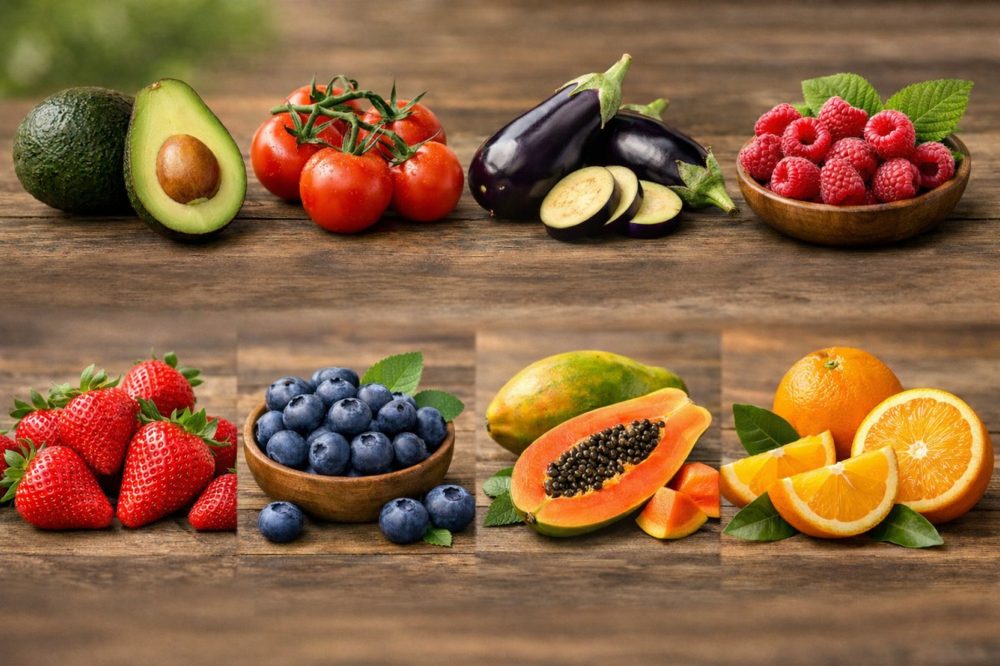
Low-sugar fruits that aid in weight loss
Avocado
All fruits are classified into two types: dry and fleshy.
Avocados are fleshy fruits. When eating an avocado, you do not have to worry about the amount of sugar it provides, but do keep an eye on the fat content if you are trying to lose weight. The total sugar in about half an avocado is 1.6g.
Tomato
Tomatoes are low in sugar yet rank among the top foods for salads.
Research suggests you should eat tomatoes every day due to their numerous benefits, such as providing lycopene—a member of the vitamin A family that helps support prostate health.
Besides salads, try eating more tomatoes by making tomato sauce for chicken dishes or pasta... The total sugar in a small tomato is about 2.2g.
Eggplant
Eggplant is botanically a fruit, though culinarily used as a vegetable. These purple fruits contain a wealth of fiber, potassium, folate, and cancer-preventing flavonoids.
Eggplant can be prepared into a variety of dishes, such as grilled as a meat substitute or in eggplant parmesan (a classic Italian baked dish). The total sugar in just under half a cup of eggplant is 3g.
Raspberries
These berries not only satisfy your sweet tooth but also curb hunger and keep you feeling full longer thanks to their high fiber content.
Top a cup of yogurt with raspberries, toss them into salads, or blend them into smoothies to give your body an extra boost of vitamin C and antioxidants. Total sugar in about 3/4 cup of raspberries: 3.7g.
Strawberries
If you want to enjoy fruit without worrying about natural sugar levels, strawberries are an excellent choice.
Strawberries are packed with vitamin C, which can help increase sperm count, and they are very easy to prepare as they pair well with both sweet and savory dishes. Total sugar in about 4 medium-sized strawberries: 4.1g.
Blueberries
Blueberries are a quintessential summer fruit, yet their nutrition and health benefits make them a worthy addition to your diet all year round.
The vitamins found in this fruit—notably vitamin K—have been shown to help lower the risk of prostate cancer, while manganese helps support steady testosterone production. Total sugar in about 1/3 cup of blueberries: 4.2g.
Papaya
Papaya may not be everyone’s favorite fruit, but once you taste it, you will find this tropical fruit sweet, musky, and ultra-soft (much like a ripe avocado).
Papaya also contains an enzyme called chymopapain, which can reduce inflammation, and it provides 144% of the daily value for vitamin C. Total sugar in about 1/3 cup of papaya: 5g.
Orange
Oranges naturally contain more sugar. It is far wiser to eat a whole orange rather than drink its juice. Juicing strips away much of the fiber, preventing it from slowing absorption and stabilizing blood sugar levels.
Although oranges are rich in vitamin C—known to help lower blood pressure and stress—they should be consumed mindfully so as not to cause a sharp spike in blood sugar. Total sugar in a small orange: 8g.