
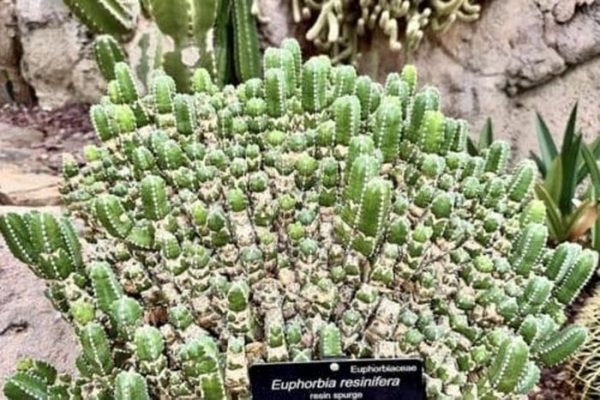
Resiniferatoxin in Euphorbia resinifera
Euphorbia resinifera (Photo: ODC)Origin and Level of Pungency
Capsaicin—the active chemical behind the characteristic pungency of hot peppers—has long been known for its powerful burning effect. However, when placed next to resiniferatoxin, capsaicin feels virtually as bland as plain water.
Resiniferatoxin is a naturally occurring compound found in Euphorbia resinifera, a cactus-like succulent native mainly to Morocco, as well as in related species found in Nigeria. It is recognized as the most potent pain-inducing substance known in nature.
For comparison, Pepper X—currently the world's hottest chili pepper—measures roughly 2.69 million Scoville Heat Units. Pure capsaicin reaches around 16 million units. Resiniferatoxin, however, shatters all limits at an astounding 16 billion Scoville Heat Units—roughly 1,000 times hotter than capsaicin.
Exposure Risks and the TRPV1 Mechanism of Action
At this level, the concept of "spiciness" is barely relevant. Resiniferatoxin does not merely provoke a burning sensation like chili peppers; it causes severe agony far beyond any culinary experience. Even minute contact with the skin can result in severe chemical burns and potentially destroy pain-sensing nerve endings.
What capsaicin and resiniferatoxin share in common is their activation of TRPV1 receptors in the body—the "switch" that signals heat and pain sensations. However, while capsaicin stimulates this receptor transiently, resiniferatoxin binds much more tightly, causing a massive influx of calcium ions into nerve cells, overwhelming them and causing nerve endings to die off. Consequently, this can result in permanent loss of pain sensation.
Scientists believe that Euphorbia resinifera evolved this formidable compound as a defense mechanism against herbivores. Unquestionably, this strategy is exceptionally effective: even the slightest encounter is enough to deter any creature.
So, the next time you wince from a hot chili or a spoonful of hot sauce, you might reconsider what "spicy" really means, because the plant kingdom harbors extremes that stretch far beyond the human imagination.