
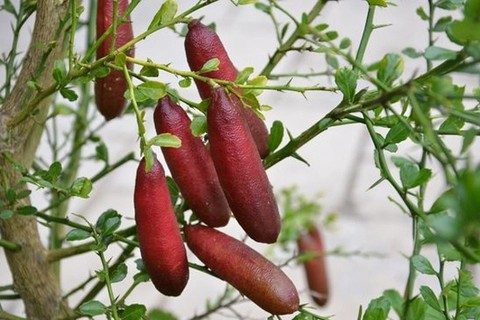
Finger Lime: From Native Fruit to the Market
Finger lime - Photo: AU Fingerlimes.
Cultivation Scale and Pulp Characteristics
The Australian agricultural industry is witnessing a boom in finger lime (Citrus australasica), a native fruit that once faced the brink of extinction due to past deforestation. Jade King, Chair of the Australian Native Fingerlime Alliance (ANFA), noted an increasing number of growers in recent years. The scale of production is now remarkably diverse, ranging from smallholder farmers to large farms in Queensland where more than 19,000 trees were recently planted.
Harvest yields currently average 10–15 kg per tree, bringing the total national output over the threshold of 110 tons per year. Key varieties such as Red Champagne, Chartreuse, Byron Sunrise, and Emerald are dominating the market thanks to their diversity in peel colors and vesicle sizes. The most distinctive feature of this specialty is its pulp, which consists of small, pearl-like beads that are lightly cohesive, juicy, and crunchy. Upon tasting, these tiny vesicles pop, creating a burst of refreshing tartness blended with citrus notes and a subtle floral aroma.
Culinary and Beverage Applications
In just a decade, public awareness of finger lime has experienced a dramatic change, rising from 10% to around 80%. From an unfamiliar curiosity, the "jewel of the rainforest" now features prominently on fine dining menus and retail shelves. Nicknamed the "botanical caviar," finger lime has become a top choice for professional chefs seeking to elevate the flavors of grilled seafood, sushi, or delicate pastries. The versatility of this fruit also extends to the beverage sector, serving as a standout element in cocktails like mojitos or martinis thanks to its luxurious appearance and rich aroma.
Nutrition and Export Markets
Historically, the finger lime belongs to the Rutaceae family and is the culmination of thousands of years of evolution in the rainforests of Eastern Australia. Its superior nutritional value is a key driver of consumer demand. Finger limes offer an abundant supply of Vitamin C, acting as an antioxidant that helps boost the immune system and reduce inflammation. The Vitamin E found in the fruit helps the body combat negative environmental stresses, alongside essential minerals such as potassium and folate. These biological properties give the fruit not only culinary value but also the ability to meet the growing trend toward health-protective functional foods.
Currently, around 50% of Australia's harvest is exported to demanding markets such as France, Japan, and Singapore in both fresh and frozen forms. Although this year's harvest in Southeast Queensland started later than expected due to weather fluctuations, the appeal of this ancient produce has by no means diminished. The combination of indigenous knowledge and modern farming techniques has forged a sustainable path forward, helping finger limes assert their standing as a premium agricultural product on the world food map.