
Regional identities and organic development trends
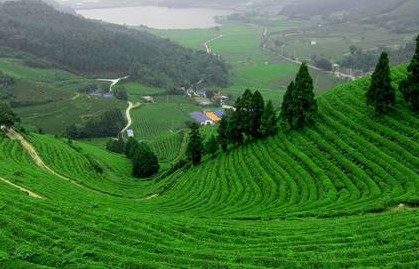
Tân Cương tea hills (Thái Nguyên)
Thái Nguyên and the Shan Tuyết tea regions
When mentioning the most famous tea regions in Vietnam, one cannot overlook Thái Nguyên - the place known as the "first tea danh" (top-tier tea). Thái Nguyên tea is famous for its gentle scent of young green rice, a clean astringent taste, and a deep, lingering sweet aftertaste. What builds that reputation is not only the tea variety but also the soil, climate, and the skillful hands of the tea farmers. Regions such as Tân Cương, La Bằng, and Trại Cài have long become icons of delicious tea. Early morning mist drifting over the tea hills, just enough sunlight, and mineral-rich sandy hill soil have created lush green tea buds, converging the essence of heaven, earth, and people.
In the high mountains of the Northwest, Suối Giàng (Yên Bái) emerges as a natural treasure. This place possesses ancient Shan Tuyết tea trees hundreds of years old, their trunks covered in moss, branches reaching high into the clouds. Suối Giàng tea carries a very distinct flavor: strong, wild, both deeply astringent and deeply sweet, reflecting the true character of the mountains and forests. The snow-white downy hair on the tea buds not only creates a unique beauty but is also a sign of premium quality. For the Mông people, tea is not just an economic product but also the soul of the mountain, a link connecting humans with nature.
Also bearing the strong imprint of Shan Tuyết tea, Hà Giang is a land sought after by many tea lovers. The ancient tea forests in Hoàng Su Phì, Xín Mần, Vị Xuyên, and Đồng Văn grow at altitudes above 1,200 meters, where the climate is harsh and the fog is thick. These conditions have created tea buds that grow slowly but accumulate full nutrients. Hà Giang tea has a bold taste, deep aroma, and carries an ancient, resilient quality, much like the people at the frontier of the country. Each cup of tea is not just a drink but a story of time, of the resilience of the tea plant and the people who guard it.
Midland tea, North Central Coast, and Lâm Đồng
Heading down towards the Northeast, Tuyên Quang is also a tea region with a long tradition. The vast tea hills in Sơn Dương and Yên Sơn are not too high, but the mild climate and fertile land help the tea plants develop steadily. Tuyên Quang tea has a light fragrance and a smooth taste, suitable for many people's palates. This tea region is gradually transforming towards safe, organic production, linking economic development with environmental protection.
One cannot miss Phú Thọ, considered the cradle of the Vietnamese tea plant. The tea hills in Thanh Sơn, Tân Sơn, and Đoan Hùng stretch out like green carpets. Phú Thọ tea carries a rustic, simple flavor, not too sharp but persistent, just like the midland region itself. This place was once a center for tea research and breeding, playing an important role in the development of the national tea industry.
Moving towards the North Central Coast, Nghệ An emerges with the Thanh Chương tea region. The tea hills here undulate softly and lushly amidst the Central region's sun and wind. Thanh Chương tea has a bold flavor, greenish-yellow liquid, and a clear aroma, reflecting the climate of abundant sun and strong winds. The tea hills not only provide livelihoods for local people but have also become attractive eco-tourism destinations where people return to the peace of nature.
In the Central Highlands, Lâm Đồng, especially Bảo Lộc and Cầu Đất (Đà Lạt), is the capital of high-quality industrial tea. Thanks to a cool climate year-round, ideal altitude, and fertile basalt soil, Lâm Đồng tea grows vigorously, providing stable yield and quality. Oolong tea, green tea, and black tea from here not only serve the domestic market but are also exported to many countries. Cầu Đất tea is famous for its pure aroma and mild taste, carrying a sophisticated, modern style that reflects the intersection of tradition and technology.
In addition to the large tea regions mentioned above, many other locations contribute to enriching the Vietnamese tea map, such as Sơn La, Lai Châu, and Lào Cai with Shan Tuyết tea hills stretching across high mountains; or Quảng Trị and Gia Lai with tea regions that are gradually asserting their position. In each place, the tea plant takes on a different shape and flavor, closely associated with local natural conditions and culture.
Human values and tea culture
What creates the sustainable value of Vietnam's famous tea regions lies not only in yield or reputation but also in the stories of the people. They are the diligent farmers picking tea from dawn, the tea roasting artisans preserving heirloom secrets, and the young generation striving to bring Vietnamese tea to the world through a clean and sustainable path. In the context of climate change and market pressure, many tea regions are shifting to organic farming, conserving ancient tea trees, and respecting the natural growth cycle of the plant.
Tea is not just a crop, but a part of culture, a symbol of slowness and depth in Vietnamese life. Amidst the hurried pace of modern life, a cup of fragrant tea is still strong enough to hold people back, reminding us of the land, the mountains, and the green tea regions that persist through the years. Vietnam's most famous tea regions are, therefore, not only something to be proud of but also need to be cherished and preserved as a living heritage of nature and humanity.
Thanh Chương tea island (Nghệ An)Organic farming and the value of Vietnamese tea
Organic farming is opening up a new, sustainable, and promising direction for the Vietnamese tea plant. By gradually abandoning chemical fertilizers and synthetic pesticides, tea plants grow in a healthier natural environment, soil fertility is restored, and the microbial system is balanced. Consequently, tea plants are healthy from the roots, and tea buds grow slowly but firmly, accumulating more nutrients and a purer flavor.
Organically grown tea differs not only in quality but also in value. The tea aroma is deeper, the astringency is clean, and the sweet aftertaste is long and stable, clearly reflecting the soil identity of each growing region. More importantly, organic tea meets the increasing demands of domestic and foreign markets for safe, transparent, and environmentally friendly products. When consumers are willing to pay a premium for kindness to the land and health, the economic value of Vietnamese tea is also elevated. Organic farming is therefore not just a production method, but a way for Vietnamese tea to assert its quality, build a brand, and rise to a worthy position on the world tea map./.