
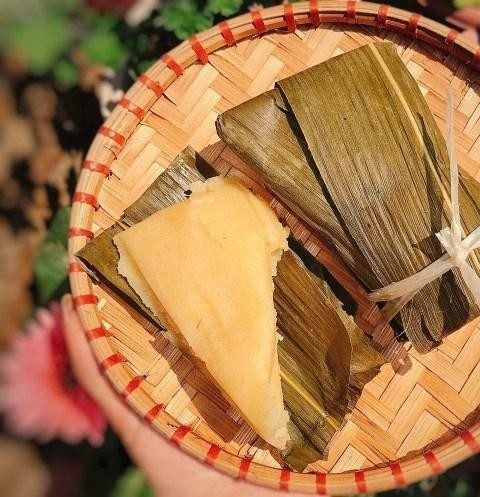
Ingredients and cultural significance of young corn cake
The corn cake is soft, chewy, and rich with rustic flavors.For highland ethnic communities, corn is an essential crop in daily life and economic development. More than just a vital staple food, corn kernels are crafted into numerous dishes rich in local identity, such as mèn mén (steamed corn flour), corn đúc cake, corn sweet soup, and herbal-fermented corn wine. Among these, young corn cake is cherished by many for its natural aroma, soft, chewy texture, and rich countryside flavor.
Selecting corn and preparing the batter
Mrs. Đàm Thị Liệt from Bản Luộc hamlet, Nguyên Bình commune, a veteran corn cake maker, shared: The cake-making season usually runs from June to August, when young glutinous corn is full of sweet milk, the kernels are plump and even, and they carry a mild, sweet taste. I head to the terraced fields early in the morning, carefully handpicking each ear of corn, bring them home to husk, remove the kernels, and grind them finely. To achieve a fragrant, chewy texture, no water is added during grinding so that its natural sweetness is preserved intact. Depending on each family's taste, the amount of sugar or sugarcane molasses is adjusted accordingly, creating an unmistakable, unique flavor.
In addition to the main ingredient of young corn, many families also add a small portion of glutinous rice or yellow corn to create an appealing color and enhance the cake's chewiness. Some places still preserve the tradition of using carefully filtered kitchen ash water to give the cake a natural golden sheen and a softer texture once steamed.
Wrapping in corn husks and steaming the cakes
To fully preserve the distinctive aroma of young corn, cake makers use only fresh corn husks for wrapping. The leaves are carefully selected, softened, and deftly wrapped around the corn batter already mixed with sugar. Each small parcel is wrapped firmly, neatly arranged in a steamer, and cooked over medium heat for more than an hour. When cooked, the gentle sweetness of young corn blends harmoniously with the natural scent of corn husks, creating an irresistible, distinct charm.
Peeling away the outer husk reveals a cake with a captivating golden color. Soft, chewy, with a gentle sweetness mingling with the fragrance of young corn, it allows diners to truly appreciate the rustic essence of highland cuisine. On rainy days or chilly afternoons, enjoying a hot cake paired with a cup of green tea makes the flavor all the more profound.
A rustic gift in memories and tourism
For many people in Cao Bằng, corn cake is intimately linked to childhood memories. In times of hardship, it was a simple treat accompanying adults to the fields and children to school. Prepared early in the morning by mothers and grandmothers, these cakes not only filled hungry bellies but were also steeped in the love and devoted labor of highland women.
Today, even as many modern pastries have emerged, young corn cake retains its unique appeal. At periodic village markets or community tourism spots, this rustic treat is always sought after by travelers as a gift embodying the essence of Cao Bằng. Many local businesses and restaurants have also added corn cake to their menus to introduce this local culinary gem to visitors from near and far.
Requiring neither elaborate ingredients nor intricate preparation methods, young corn cake still carries the distinct taste of mountain forests and the skilled craftsmanship of local makers. Through all the changes of life, this humble countryside gift is preserved as a treasured memory and a cultural jewel in the culinary heritage of the breathtaking landscapes of Cao Bằng.