
Many farmers could not persist because joining PGS required them to comply with strict standards, work in an organized manner, and observe discipline. Gradually, not only farmers but almost everyone involved in PGS began to realize many things, understanding how PGS had transformed them. Everyone became more conscious and confident, and farmers in particular gained a clearer awareness that the benefits they receive from participating in PGS are closely tied to their responsibility to the community and society.
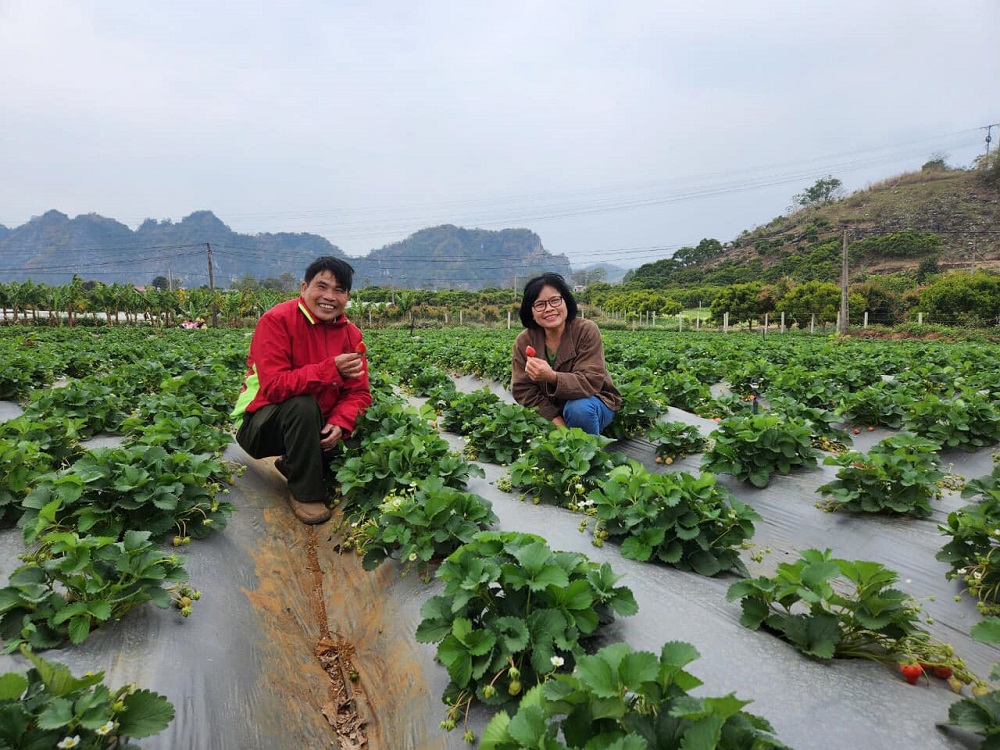
To better understand the role, functions, mission, and development of PGS Vietnam, a reporter from Vietnam Organic Magazine interviewed Ms. Tu Thi Tuyet Nhung, Head of the PGS Vietnam Coordination Committee.
**Carrying Out an "Impossible" Mission**
Early Steps in Building the PGS System
PGS (Participatory Guarantee System) is a concept that perhaps not everyone thoroughly and accurately understands. Yet Ms. Nhung and her colleagues have been carrying out what once seemed an "impossible" mission: explaining it so that farmers understand and voluntarily follow it.
Ms. Nhung shared that when they first began implementing PGS in 2008, not only farmers but everyone was unfamiliar with what PGS actually was, even though the phrase was translated into Vietnamese as "Hệ thống đảm bảo chất lượng có sự tham gia" (Participatory Quality Guarantee System).
The project invited experts from IFOAM to support, organized seminars introducing PGS, and developed guidelines alongside supporting forms. Only when genuinely rolling up their sleeves to build the system—with the direct participation of farmers and businesses operating, learning by doing, drawing lessons, and making improvements by handling real-world situations—did a thorough understanding gradually emerge.
In essence, a PGS is a quality assurance system, yet it encompasses a network with the participation of multiple stakeholders who inspect, ensure quality, support production, build capacity for all participants, and help farmers connect their products to the market.
**PGS Vietnam Continues to Grow Strongly**
Established in late 2008, PGS emerged at a time when the Government had not yet instituted policies for organic agriculture. A market that had lost trust in safe food posed an immense challenge to introducing organic products and convincing consumers that the produce was cultivated without chemicals.
It was the determination of farmers, the strong support on land policies from local authorities, and especially the decisive role of businesses and clean food stores such as Bac Tom, Tam Dat, Trang An, Soi Bien, etc., standing side by side in commitment with farmers that brought consumers to witness farming practices firsthand and share the hardships farmers were striving to overcome.
The market gradually embraced the first PGS organic products, and consumers actively seeking out PGS produce motivated farmers to confidently expand production. Growing media coverage on organic farming and the PGS system also spurred the development of today's policies for Organic Agriculture.
From the very first PGS established and registered with IFOAM International under the name "PGS Vietnam" in 2009, a set of PGS organic standards was developed to guide farmers in their application. Consumer trust fueled motivation for both farmers and stakeholders.
The PGS approach has been adopted across numerous development projects to support smallholders and has expanded to various localities. From a single initial PGS system with 200 farmers in 3 provinces—Hanoi, Ha Nam, and Hoa Binh—there are now 17 PGS groups across 13 provinces and cities throughout the Northern, Central, and Southern regions, with the participation of over 2,000 farmers. This also reflects the positive impact of State policies encouraging farmers to join PGS to establish stable, sustainable livelihoods for local farming communities.
**PGS as a Bridge Between Farmers, Businesses, and Consumers**
Ms. Nhung shared that farmers, or anyone producing goods—whether organic or conventional—aspire for their harvest to generate an income to cover daily living expenses. In addition to ensuring quality, PGS carries the vital mission of connecting farmers' organic products to the market.
Recognizing this role of PGS right from its inception, the project actively sought and engaged retailers and businesses to join PGS, collaboratively monitor production quality, and integrate products into supply chains serving their customers.
They serve as a vital driving force for production by bringing consumers closer to farmers, allowing them to understand and appreciate the hard work behind producing organic food while consuming it. This is precisely how PGS supports farmers in marketing their produce and generating a stable income to support their everyday lives.
Furthermore, through organic farming, farmers minimize exposure to chemicals, which improves their health and ensures a cleaner, safer living environment for both farmers and local communities.
For consumers, organic products carrying the PGS label provide quality assurance amidst market uncertainties and lack of oversight.
Farmers successfully market their organic produce, businesses sell their goods, and consumers have trustworthy destinations to rely on—this is the true role and mission of PGS.
Need Advice on PGS Certification?
Contact the PGS Vietnam Coordination Committee for support.
Contact Now