
Businesses report that organic sales have grown steadily over the years, with an average annual growth rate of 20–40%.
Organic Food Shopping Trends
Shifts in Consumer Food Choices
Hoa, a resident of District 5, gave up her habit of shopping at traditional wet markets to switch to an organic store near her home. Although prices there are twice as high, Hoa feels that organic produce not only stays fresh longer but also guarantees quality. “Some bunches of vegetables and scallions keep for a week and only wilt, without rotting quickly like produce from the wet market. This gives me greater peace of mind when using them,” she shared.
Hong Hanh in Go Vap District shares a similar story. Over the past year, she switched to buying organic fresh milk for her young child, despite it costing twice as much as conventional milk. For Hanh, the natural flavor and richness of organic milk are well worth the extra cost.
According to a report by Euromonitor, the organic food market in Vietnam reached a value of 100 million USD in 2023, representing a 20% growth compared to 2020. This growth is evidenced by the increasing presence of organic products in major supermarkets such as Co.opmart, Winmart, Lotte Mart, and MM Mega Market.
Le Thanh Trung, Commercial Value Chain Manager for Fresh Foods at Central Retail Vietnam, stated that organic vegetables grown by ethnic Churu women remain popular despite being 25–35% more expensive than conventional produce. “Many customers have to place pre-orders because the products frequently sell out on the shelves,” Trung shared.
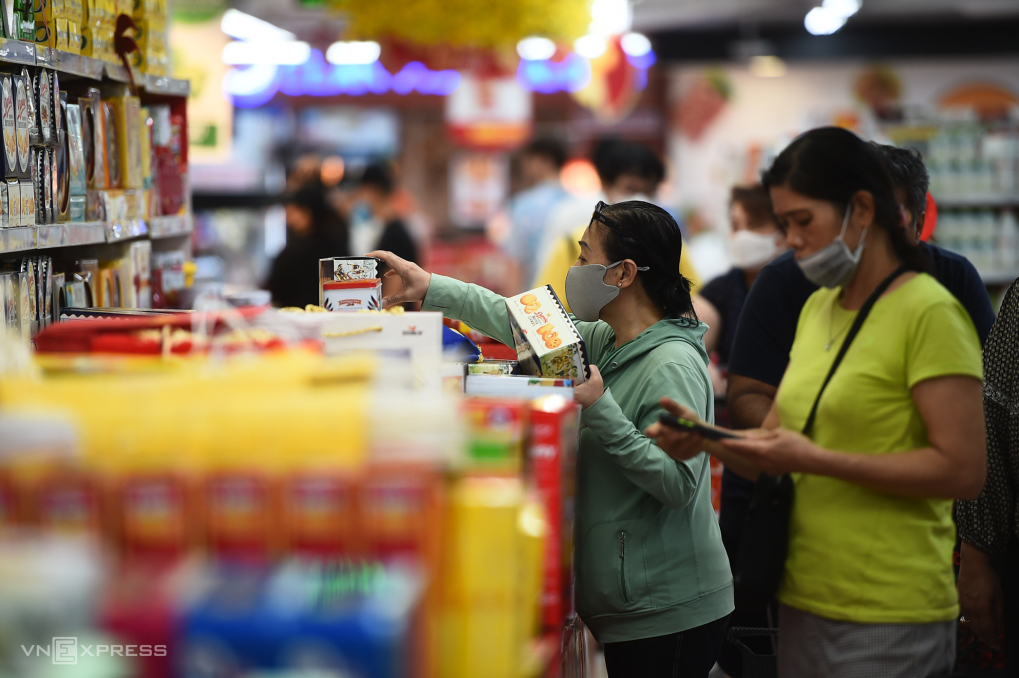
Nguyen Van Hiep, Director of Co.opmart Phu Tho, noted that green and organic foods experienced double-digit growth in the first six months of the year. Supermarkets have begun dedicating specific display areas to these products to meet the rising demand from consumers.
Interest in organic products is not limited to food; it has also expanded to beverages and cosmetics.
Leading sustainable development trends in Vietnam's dairy industry, a representative of Vinamilk said the company has launched its Organic and Green Farm milk lines. Revenue from these two product lines in 2023 rose by 40% compared to 2022, and continued to climb by 30% in the first quarter of this year.
Similarly, Phan Minh Thong, General Director of Phuc Sinh Corporation, said that the company's organic coffee and pepper are not only well-received abroad but are also experiencing strong domestic growth.
“In the first six months of the year, the company’s revenue reached 175 million USD, an increase of 40% over the same period last year, with domestic sales growing by 50%,” Thong shared.
Organic cosmetics are also gaining ground in Vietnam's beauty industry, remaining popular among consumers despite high prices. According to Vo Thi Lan, CEO of LCUK Company—the exclusive distributor of Protocol products from the UK—Vietnam leads direct sales, surpassing even France, Italy, and Dubai. Lan also revealed that within the next four months, the company will launch the premium organic cosmetic line Paoma from France, with pre-orders soaring upon its initial introduction. “We are even worried we might run out of stock,” Lan shared.
According to businesses, the surge in demand for organic products is not just a passing fad but has become part of a modern lifestyle. As consumers pay closer attention to product quality and origin, Vietnam's organic market promises to continue its robust growth in the future.
According to Mordor Intelligence, a prominent market research firm from India, the global organic food and beverage market is expanding rapidly. Valued at an estimated 174 billion USD in 2024, the market size is projected to exceed 233 billion USD by 2029, representing a compound annual growth rate (CAGR) of 6.02%. In particular, the Asia-Pacific region is leading the growth trend, with the most impressive growth prospects over the forecast period.
While not yet expanding as rapidly as these regions, Vietnam is regarded as an emerging hotspot for clean and organic goods. Over the past three years, the Vietnamese government has actively encouraged enterprises to develop sustainable organic agriculture to stabilize the market and meet growing demand. At the same time, the EU-Vietnam Free Trade Agreement (EVFTA) has facilitated the entry of European organic products into the Vietnamese market at competitive prices, offering consumers a wider variety of affordable options.
Thi Ha
Need advice on PGS certification?
Contact the PGS Vietnam Coordination Committee for support.
Contact Us