
Vietnam exports nearly 9 billion USD worth of coffee each year, yet most of the added value remains beyond its borders. At the 4th "Honoring Vietnamese Coffee and Tea" Festival in 2026, the focus has shifted from production volume to how the coffee industry can transition to deep processing to capture and retain higher value.
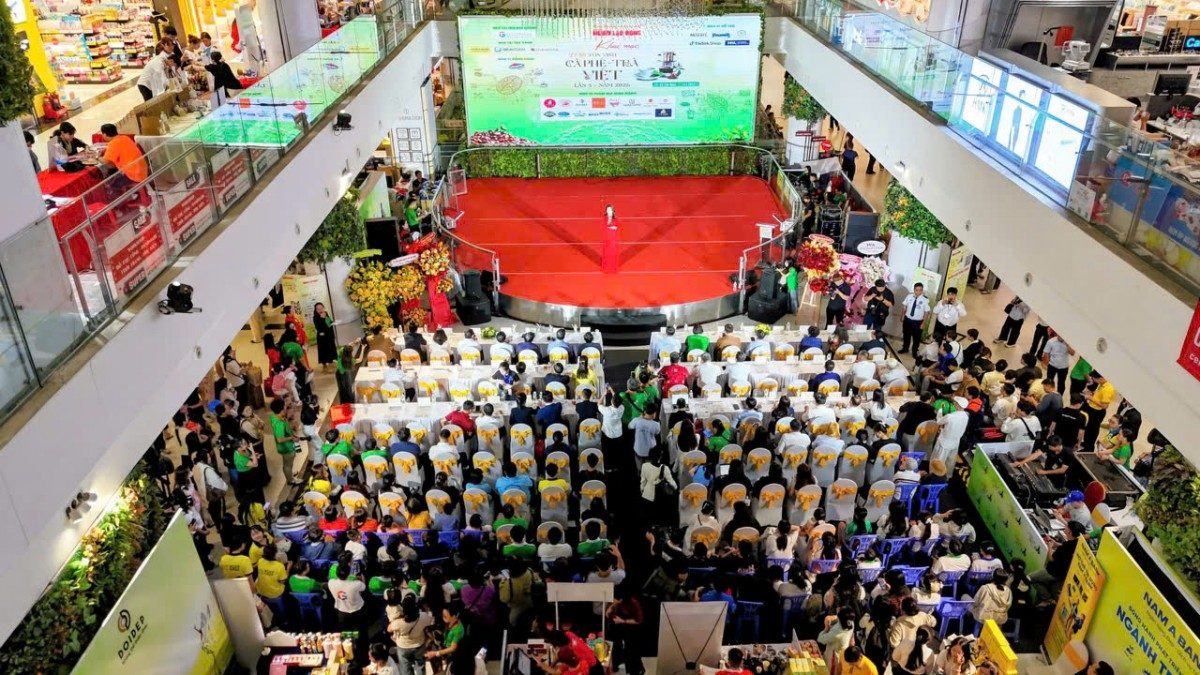
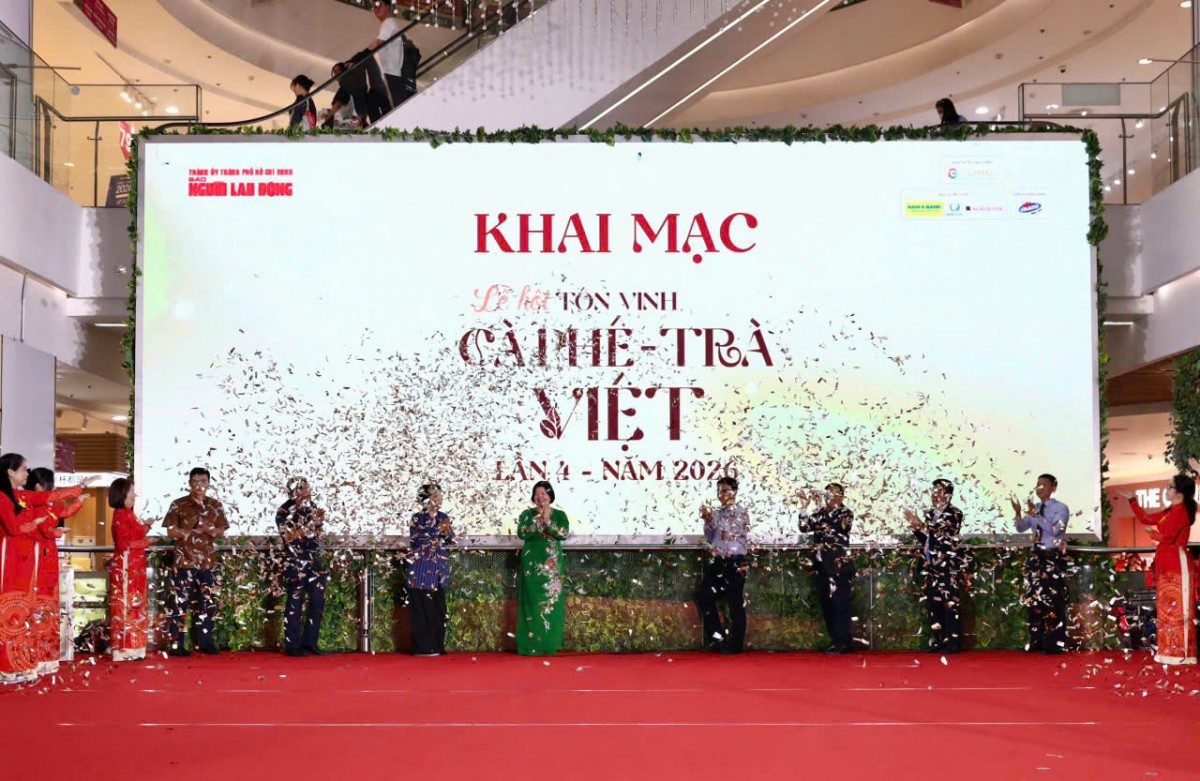
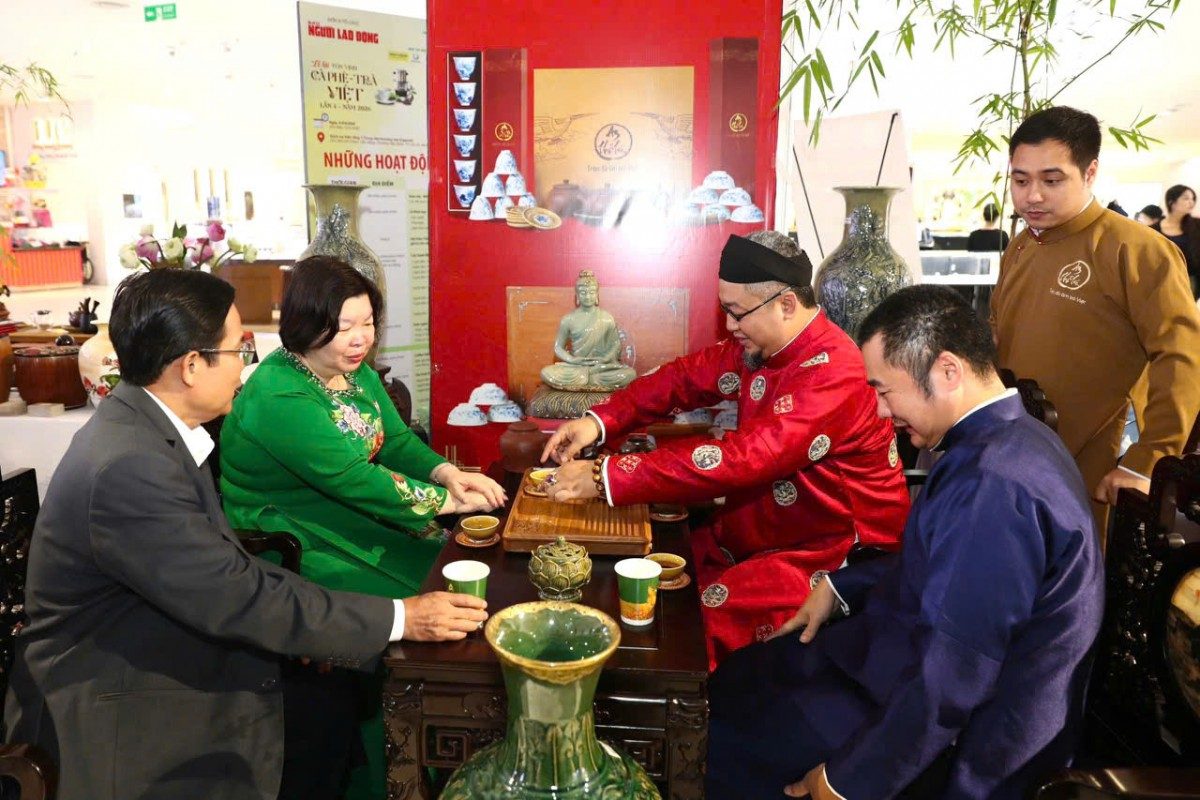
On April 4, at Gigamall Shopping Center (Ho Chi Minh City), Nguoi Lao Dong Newspaper held the opening ceremony for the 4th "Honoring Vietnamese Coffee and Tea" Festival - 2026, alongside the workshop "Solutions to Promote Deep Processing to Increase Value for Vietnamese Coffee."
The event brought together numerous representatives from ministries, sectors, local authorities, associations, enterprises, digital platforms, and industry experts, creating a comprehensive networking forum for the Vietnamese coffee and tea sector.
Attending the opening ceremony of the 4th "Honoring Vietnamese Coffee and Tea" Festival - 2026, on behalf of central ministries, boards, and sectors, were Ms. Cao Xuan Thu Van, President of the Vietnam Cooperative Alliance; Ms. Bui Hoang Yen, Head of the Trade Promotion Agency's Representative Office in Ho Chi Minh City - Ministry of Industry and Trade; Mr. Hoang Anh Tuan, Deputy Head of the Division of Crop Production and Plant Protection, Department of Crop Production and Plant Protection - Ministry of Agriculture and Environment; Mr. Pham Quy Trong, Deputy Director General of the Department of Local Affairs III - Central Commission for Information, Education and Mass Mobilization; Mr. Nguyen Huu Dat, Head of the Representative Office of the Ministry of Culture, Sports and Tourism in Ho Chi Minh City; and Mr. Cao Xuan Huan, Specialist at the Division of Crop Production and Plant Protection - Department of Crop Production and Plant Protection.
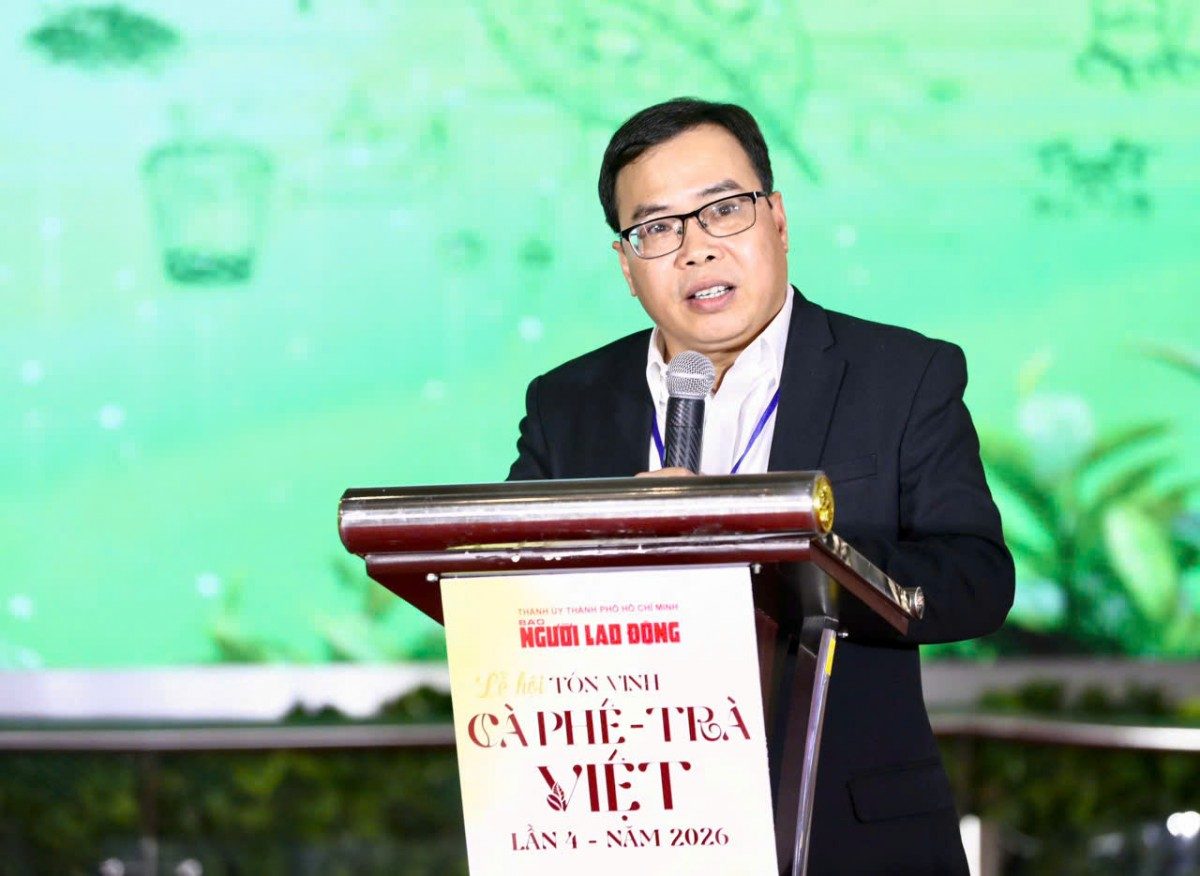
On behalf of Ho Chi Minh City leadership, participants included Mr. Nguyen Manh Cuong, Alternate Member of the Party Central Committee, Member of the Standing Committee of the City Party Committee, Vice Chairman of the Ho Chi Minh City People's Committee; Mr. Tang Huu Phong, Deputy Head of the Commission for Information, Education and Mass Mobilization of the City Party Committee; Mr. Nguyen Ngoc Hoi, Deputy Director of the Department of Culture and Sports; and Mr. Nguyen Tan Phong, Member of the Standing Committee of the Vietnam Journalists Association, President of the Ho Chi Minh City Journalists Association.
Representing local provincial leaders were Mr. Nguyen Thien Van, Vice Chairman of the Dak Lak Provincial People's Committee, and Ms. Ha Thi Thanh Huong, Deputy Director of the Department of Agriculture and Environment of Gia Lai Province.
Representing associations and enterprises were Ms. Nguyen Thi Minh Chau, Secretary-General of the Vietnam Coffee - Cocoa Association; Mr. Nguyen Thanh Tai, Executive Board Member of the Association; Mr. Le Viet Anh, Secretary-General of the Vietnam Pepper and Spice Association; along with representatives of numerous coffee production, processing, and export enterprises.
The event also welcomed representatives from digital technology platforms and independent experts, including Dr. Do Viet Ha, Vice President of the Vietnam Organic Agriculture Association.
Representing the organizing unit, Nguoi Lao Dong Newspaper, were Journalist & Dr. To Dinh Tuan, Editor-in-Chief and Head of the Steering Committee for the "Honoring Vietnamese Coffee and Tea" Festival; and journalist Duong Quang, Deputy Editor-in-Chief and Head of the Organizing Committee of the Festival. Leaders, reporters, and editors from central and local media outlets were also in attendance to cover the event.
Exports Surge, but Value Addition Remains Low
Export Scale and the Coffee Value Structure
Delivering the festival's opening address, Mr. Duong Quang, Deputy Editor-in-Chief of Nguoi Lao Dong Newspaper and Head of the Organizing Committee, stated that coffee is one of Vietnam's key industrial crops, contributing approximately 2.5% to national GDP and providing livelihoods for more than 2 million workers. Vietnamese coffee products are currently present in over 100 countries and territories. With more than 710,000 hectares under cultivation, Vietnam ranks 6th worldwide in coffee acreage and is the world's second-largest robusta exporter, behind only Brazil.
In the 2024–2025 crop season, coffee exports exceeded 1.5 million tons, earning over 8.4 billion USD; estimates for 2025 reach approximately 1.59 million tons, generating nearly 9 billion USD—the highest level ever recorded.
Regarding the tea industry, according to the Vietnam Tea Association, by late 2025, the country maintained around 128,000 hectares of tea. Exports reached nearly 137,000 tons, with a turnover exceeding 238 million USD and an average price of 1,737 USD/ton. Around 390 enterprises currently participate in tea exports, bringing Vietnamese tea to 72 international markets, 15 of which achieve an annual import volume of over 1,000 tons. The domestic market consumes roughly 75,000 tons, generating estimated revenues of 15,000 billion VND.
However, according to the Organizing Committee, the majority of Vietnamese coffee is still exported as raw green beans—the stage with the lowest added value in the chain. Meanwhile, deep processing, branding, and market development stages—where high added value is generated—still hold immense untapped potential.
Data presented at the workshop revealed a significant disparity in value: green coffee beans fetch only about 5,610 USD/ton, whereas processed coffee reaches nearly 9,760 USD/ton, and soluble (instant) coffee can command up to 11,180 USD/ton.

Deep Processing Is an Inevitable Path
Drawing from this situation, many presentations at the workshop focused on dissecting root causes and proposing strategic directions for the coffee industry. Mr. Nguyen Thanh Tai, Executive Board Member of the Vietnam Coffee - Cocoa Association (VICOFA), noted that Vietnam's coffee production volume has reached its peak; therefore, sustainable future growth requires shifting toward value creation.
According to him, the lion's share of the global coffee value chain resides in deep processing and final consumer products. Vietnam, meanwhile, remains largely confined to supplying raw materials.
Citing 2025 figures, he reported that Vietnam's processed coffee output reached approximately 143,425 tons, worth over 1.4 billion USD, with instant coffee accounting for 76,583 tons (equivalent to 856.2 million USD). Although this represents a modest share of total output, it signals tremendous headroom for growth.
He analyzed that deep processing not only enhances product value but also creates a diversified, multi-tiered revenue model, dampens vulnerability to raw material price fluctuations, and drives technological and raw material zone upgrades.
Nevertheless, he pointed out major barriers, including inconsistent raw material quality, substantial capital investment costs, a shortage of standards for innovative products, and stringent regulatory demands from importing markets.

The “Bottleneck” Lies in Raw Material Quality and the Value Chain
From an expert perspective, Dr. Do Viet Ha, Vice President of the Vietnam Organic Agriculture Association, argued that the industry's single greatest bottleneck sits at the very beginning of the supply chain.
According to Dr. Ha, despite reaching nearly 9 billion USD in export revenue in 2025, raw material quality remains uneven due to deficiencies in harvesting practices, primary processing, and post-harvest preservation. Proper sorting of fresh cherries, standardized drying processes, and thorough quality controls have not received adequate attention, preventing products from entering premium, high-value segments.
Meanwhile, achieving price points of 7,000 to 11,000 USD/ton for deeply processed coffee necessitates strictly standardized raw materials coupled with comprehensive traceability.
He also underscored that international markets are imposing increasingly rigorous standards, particularly regarding traceability and sustainability criteria, compelling the coffee industry to expedite data system development and bolster supply chain governance capacity.
“Although Vietnamese coffee has integrated into global supply chains and many processors generate hundreds of millions of dollars in exports, we do not lack processing technology. Rather, our core vulnerability lies in the foundational raw material base and the way production is organized within sustainable value chains. Unless we resolve this at the root, moving deeper into high-value segments will remain an uphill climb,” Dr. Ha concluded.
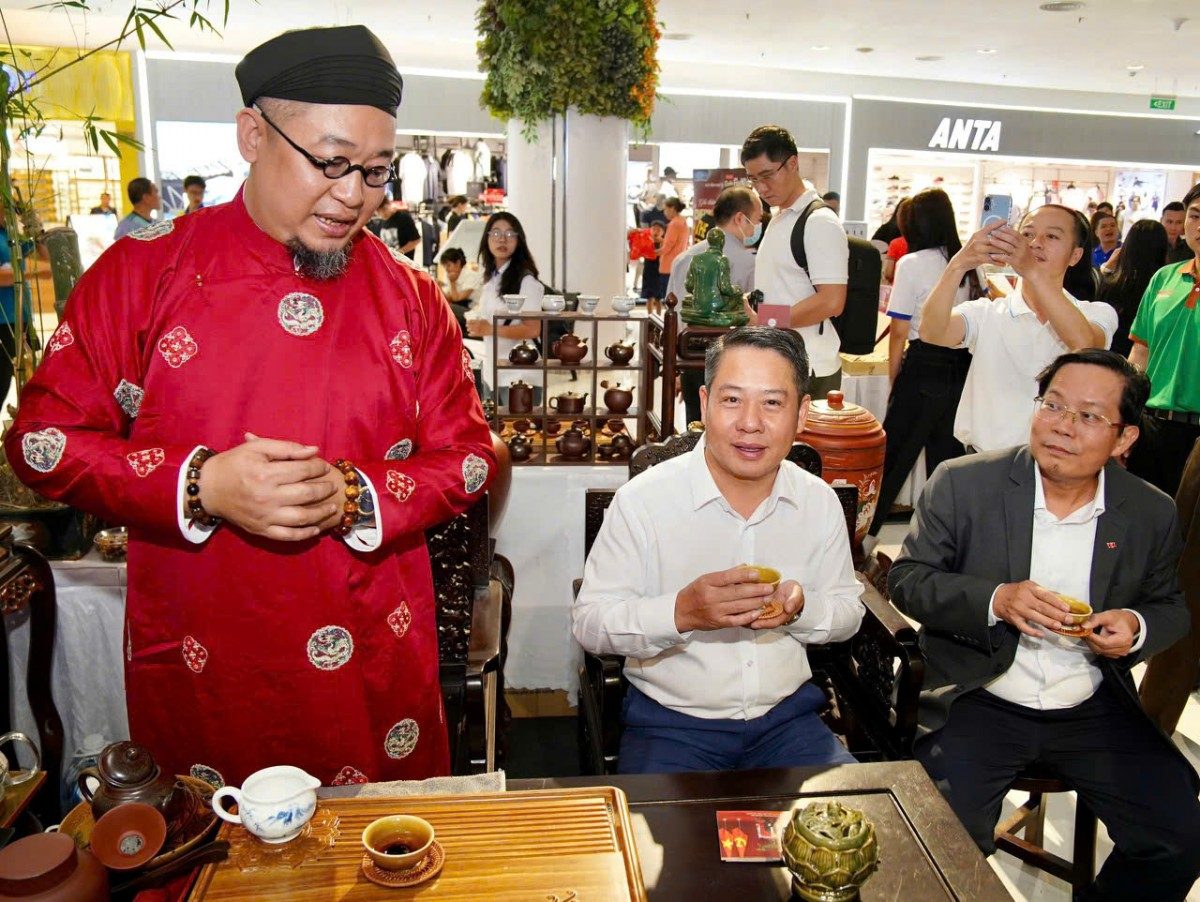
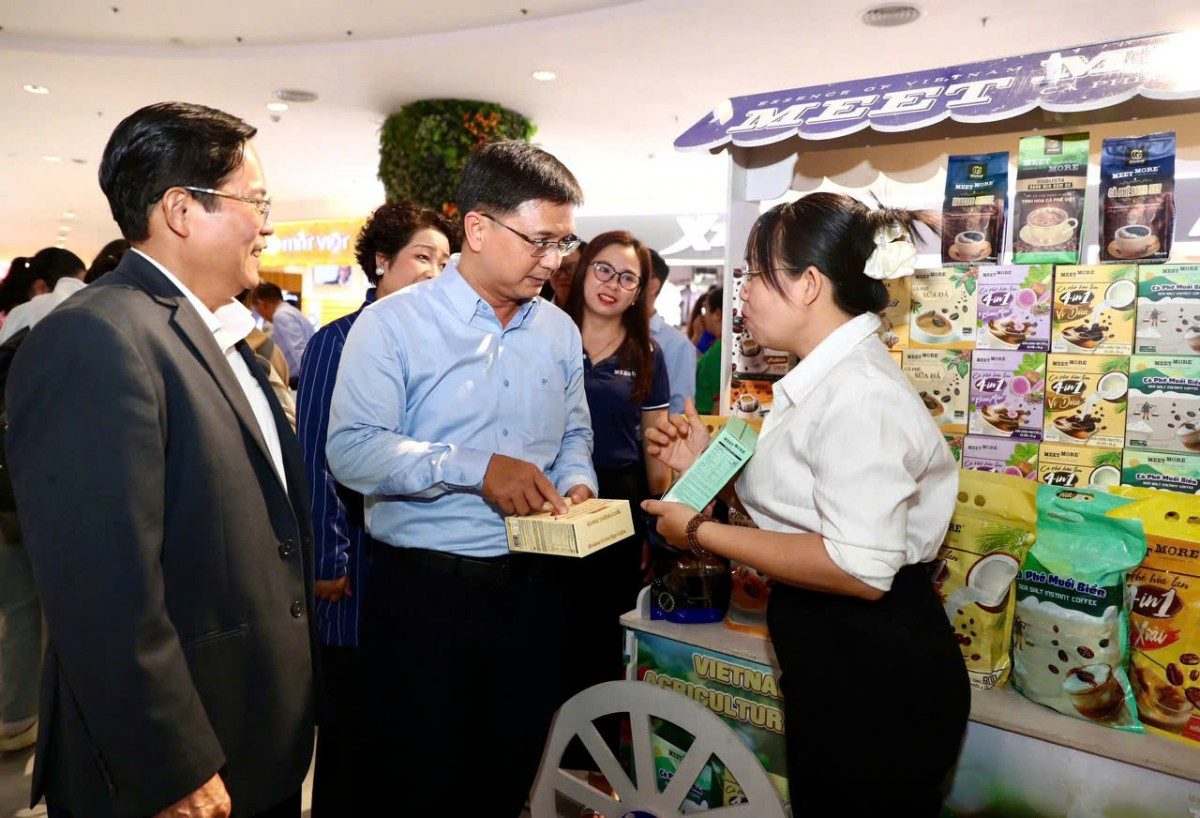
In addition, he stated that the Vietnam Organic Agriculture Association, together with the Ho Chi Minh City University of Technology, is ready to collaborate and support Vietnam's coffee sector in developing organic products and European-standard deep processing. However, to create a real breakthrough, a comprehensive strategy is urgently needed from the Government and the agricultural sector—not only in organizing production, but also in building and promoting the Vietnamese coffee brand on the international market.
Launch of the Vietnam Deep-Processed Coffee Alliance
Within the framework of the program, Nguoi Lao Dong Newspaper introduced the initiative to establish the Vietnam Deep-Processed Coffee Alliance.
The Alliance is designed as an action-oriented cooperation platform rather than an administrative entity, aimed at connecting businesses, banks, regulatory agencies, experts, and the media to promote deep processing, brand building, and market expansion.
During the 2026–2027 period, the Alliance will implement three key missions: building the "Vietnamese Coffee Economy" specialized portal, developing the "Map of Vietnam's Deep-Processed Coffee Ecosystem," and organizing business–finance–market matchmaking forums.
By 2027, the Vietnam Deep-Processed Coffee Alliance is expected to announce a list of the top 10 exemplary coffee processing enterprises, assessed on substantive criteria of value addition.
The 4th "Honoring Vietnamese Coffee and Tea" Festival in 2026 went beyond simple promotion, outlining a strategic direction for the Vietnamese coffee sector in a new era. Participants at the workshop unanimously agreed that sustainable growth cannot rely on raw exports; instead, the industry must make a decisive shift toward deep processing, brand building, and increasing added value.
As the value gap between raw coffee beans and processed products becomes increasingly pronounced, the primary challenge is no longer about output volume or export turnover, but about retaining value across every stage of the supply chain. And in addressing this challenge, deep processing is not merely an option—it has become the inevitable path if Vietnamese coffee is to elevate its standing and achieve sustainable development in the global market./.
Source: VOAA
← Activity News